In May 1667, the twenty-eight-year-old King Louis XIV of France launched his very first major war of territorial expansion, marching an elite army of fifty thousand soldiers across the northern frontier into the Spanish Netherlands—a prosperous region corresponding roughly to modern-day Belgium, Luxembourg, and northern France. Known to history as the War of Devolution (1667 to 1668), this brief fourteen-month conflict was justified by an obscure medieval inheritance custom from Brabant, yet its geopolitical consequences permanently altered the map of Western Europe, inaugurated half a century of French hegemony, and forced former enemies across the continent to unite in the first modern balance-of-power coalition.
The Legal Pretext: The Jus Devolutionis and the Unpaid Dowry
The roots of the conflict lay in the Treaty of the Pyrenees of 1659, which had ended decades of warfare between France and Habsburg Spain. To seal the peace, the young Louis XIV married Maria Theresa of Spain, the eldest daughter of King Philip IV. Seeking to prevent the crowns of France and Spain from ever uniting, the Spanish negotiators inserted a strict clause requiring Maria Theresa to renounce all future claims to the Spanish throne and its territories—specifically on the condition that Spain pay France a massive royal dowry of five hundred thousand gold ecus.
Because the Spanish treasury was bankrupt from decades of European warfare, those five hundred thousand gold ecus were never paid. When King Philip IV died in September 1665, leaving the vast Spanish Empire to his sickly four-year-old son from his second marriage, Charles II, Louis XIV’s legal counselors uncovered a clever legal loophole. First, they argued that Spain’s failure to pay the dowry rendered Maria Theresa’s renunciation null and void. Second, they cited the Jus Devolutionis—a local private property law practiced in the Duchy of Brabant and Hainaut within the Spanish Netherlands, which stipulated that if a man married twice, the landed property acquired during his first marriage “devolved” exclusively to the children of his first wife, taking precedence even over sons born to his second wife. Although the law was meant only for private citizen estates, Louis XIV audaciously applied it to sovereign provinces, claiming that much of the Spanish Netherlands rightfully belonged to his wife, Queen Maria Theresa.
The Promenade Militaire of 1667 and Vauban’s Sieges
On May twenty-fourth, 1667, Marshal Henri de la Tour d’Auvergne, Viscount of Turenne, crossed the border into the Spanish Netherlands accompanied by King Louis XIV himself. The Spanish governor in Brussels, the Marquis of Castel Rodrigo, had fewer than twenty thousand scattered troops to defend dozens of fortified walled cities across Flanders and Hainaut, while Madrid was too preoccupied by war with Portugal to send reinforcements.

The French campaign was so swift and methodical that courtiers called it a military promenade. Assisting Turenne was the brilliant military engineer Sebastien Le Prestre de Vauban, who revolutionized siege warfare by digging systematic parallel trenches to shelter French infantry and artillery as they crept up to Spanish bastion walls. One by one, the great commercial and strategic hubs of the southern Spanish Netherlands fell with minimal French casualties: Charleroi, Tournai, Douai, Courtrai, and Oudenarde surrendered in rapid succession, culminating in late August 1667 with the nine-day siege and capture of Lille, one of the wealthiest textile cities in Europe. In February 1668, a second French army under the Prince of Conde struck eastward, conquering the entire Spanish province of Franche-Comte in just seventeen days.
Panic in Amsterdam and the Triple Alliance of 1668
While the rapid French victories delighted Versailles, they triggered immediate panic in the neighboring Dutch Republic (the United Provinces). For eighty years, the Dutch had fought for their independence against Spain, yet by the 1660s, a weak, declining Spain governing the southern Netherlands served as a comfortable, harmless buffer zone separating Amsterdam from the military might of France. As Dutch Grand Pensionary Johan de Witt watched Turenne’s armies swallow Flemish fortresses one after another, the Dutch coined a famous political proverb: France was a wonderful friend, mind you, but a terrible neighbor.
Moving with extraordinary diplomatic speed in January 1668, Sir William Temple, the English ambassador in Brussels, and Johan de Witt negotiated a shocking diplomatic reversal. England and the Dutch Republic—who had literally just finished fighting each other at sea in the Second Anglo-Dutch War months earlier—joined forces with Sweden to sign the Triple Alliance of 1668. The three Protestant maritime powers issued a blunt ultimatum: Louis XIV must halt his advance and make peace with Spain on moderate terms, or face a united European military coalition.
The Treaty of Aix-la-Chapelle and the Transformation of the Frontier
Unprepared to fight England, the Netherlands, Sweden, and Spain simultaneously at sea and on land, and knowing that he had secretly signed a partition treaty with the Holy Roman Emperor should the sickly child-king Charles II of Spain die soon, Louis XIV agreed to negotiate. Signed on May second, 1668, the Treaty of Aix-la-Chapelle forced France to return the province of Franche-Comte to Spain, yet allowed Louis XIV to retain twelve strategic fortified cities deep inside the Spanish Netherlands, including Lille, Tournai, Douai, Charleroi, Armentieres, Courtrai, and Oudenaarde.
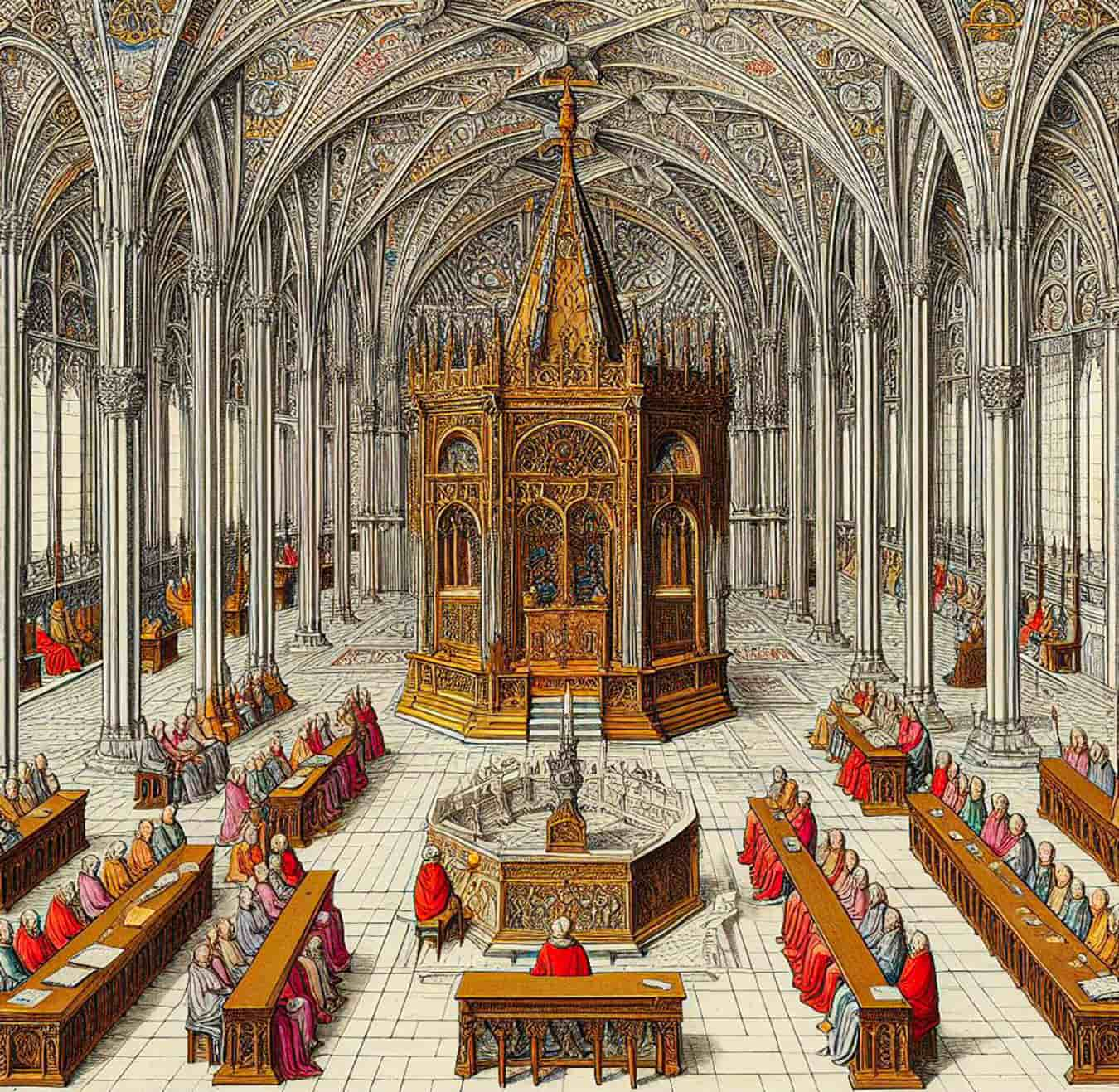
The impact on the Spanish Netherlands was profound and permanent. Geographically, the treaty left the border between France and the Spanish Netherlands looking like an jagged, indefensible puzzle, with isolated French-held enclaves jutting deep into Spanish Flanders. Economically, the loss of Lille and the upper Lys and Scheldt river valleys stripped Brussels of its richest southern tax base and agricultural hinterland. Militarily, Vauban immediately set to work turning these newly acquired Flemish cities into his famous Pré Carré (“square field”)—a double line of star-shaped fortresses that protected Paris from northern invasion and permanently incorporated French Flanders into the modern state of France, while leaving Louis XIV burning for revenge against the Dutch Republic in the catastrophic war that erupted four years later.