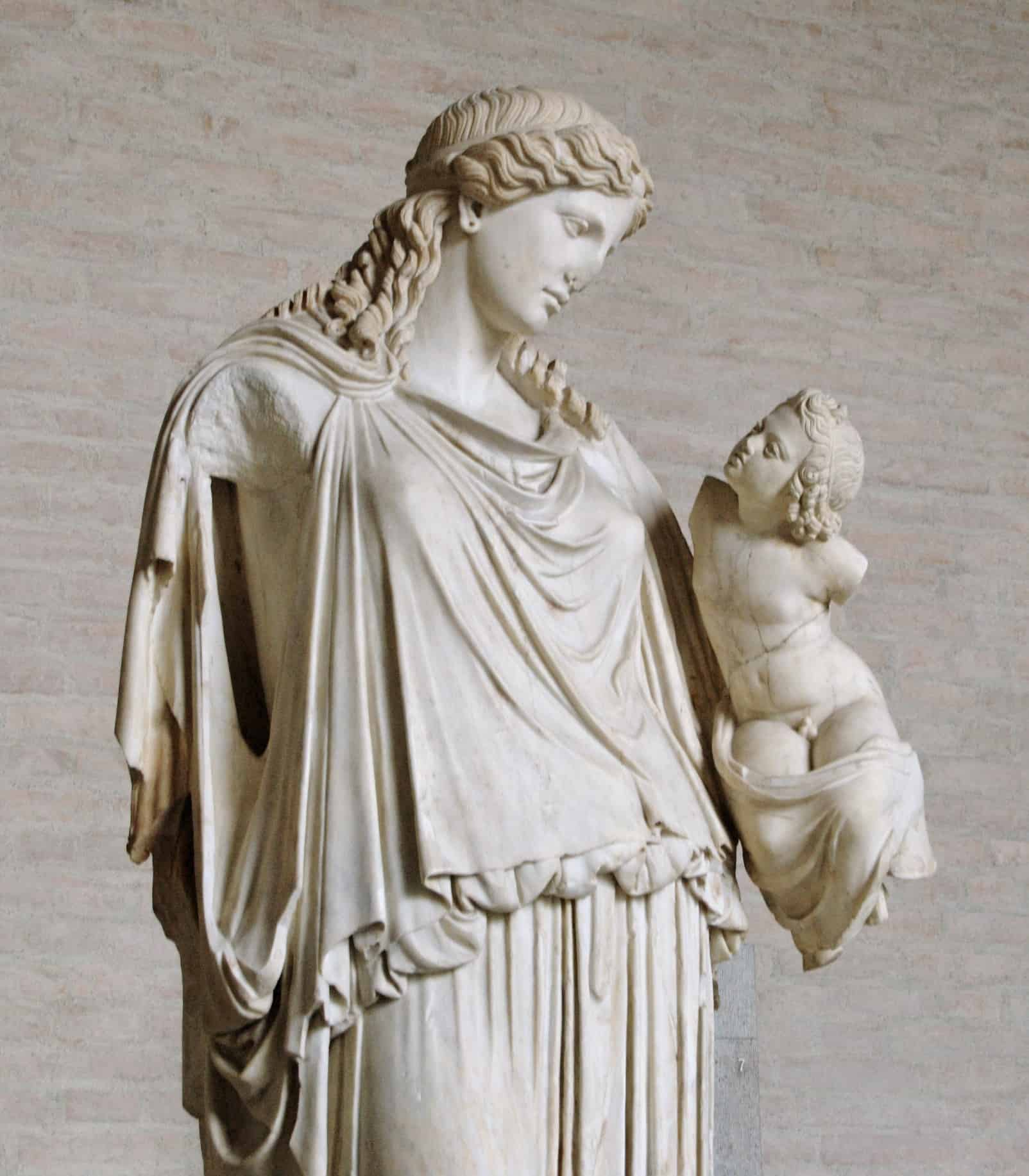
In Norse mythology, Fólkvangr (in Old Norse, meaning “field of the army” or “field of the host” or “people-field”) is a meadow or field ruled by the goddess Freyja. It is the place where half of those who die in battle go after their deaths, while the other half goes to the god Odin in Valhalla.
Both the Prose Edda by Snorri Sturluson and the Poetic Edda, which were both compiled in the 13th century from earlier traditional sources, mention Fólkvangr.
According to the “Poetic Edda” saga “Grímnismál,” Allfather takes the other half of the warriors who die in battle to Valhalla, while the other half goes to Fólkvangr. Consequently, in the traditional interpretation, Fólkvangr represents a realm that, in several aspects, contrasts with the world of Valhalla. In Odin’s halls, warriors engage in perpetual feasting and battle in the endless battlefield of Hjaðningavíg, while in Freyja’s halls, eternal peace reigns, and warriors relish their immortality in the company of the alluring goddess.
According to the text of the saga “Grímnismál,” Fólkvangr is referred to as a “court,” akin to Trondheim (ruled by Thor), Iðavöllr (ruled by Ullr), Breidablik or Breiðablik (ruled by Baldr), and other places defined as “sacred land lying near the Aesir and Alfar.” In this context, if Fólkvangr is designated as a complete location, its counterpart, Valhalla, is part of Odin’s “court,” known as Gladsheim.
The ninth is Folkvang,
where Freyja decrees
Who shall have seats in the hall;
The half of the dead each day does she choose,
And half does Othin have.
Fólkvangr: Mentions, Etymology and Possible Interpretations
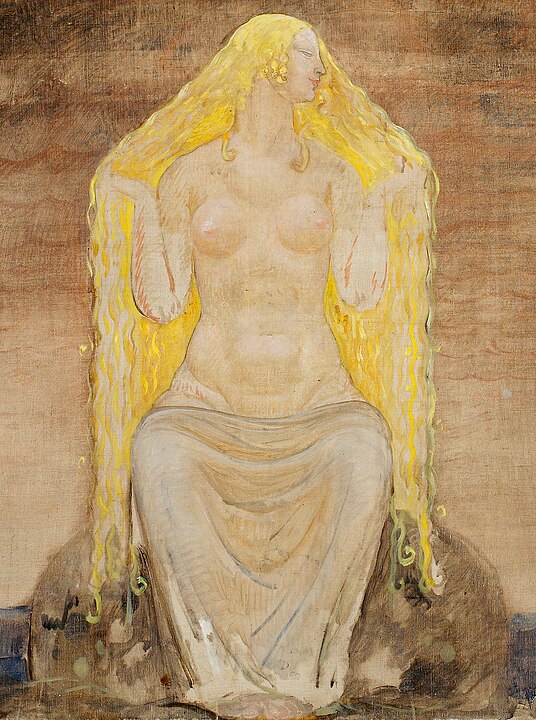
In Fólkvangr, the chosen warriors who died in battle enjoy an afterlife filled with honor and feasting. They are under the care and patronage of Freyja.
In addition to “Grimnir’s Sayings” from the “Elder Edda,” the abode of Freyja, Fólkvangr, is also mentioned in the “Gylfaginning” from the “Younger Edda,” (Prose Edda) where the information is reiterated that half of the fallen warriors end up there. However, in the “Egil’s Saga,” Thorgerd, the daughter of Egil Skallagrimsson, upon learning of the deaths of her father and brother, expresses that she does not want to live and will not eat until she reaches the goddess Freyja.
Based on this story, historians conclude that the doors of Folkvangr were also open to women who “voluntarily accepted a noble death”. On the other hand, there is a similar episode in the “Hervarar saga ok Heiðreks” (The Saga of Hervör and Heidrek), where the queen hangs herself in the “the Hall of the Dís” (“dísarsalr”) after learning that her father and brother had been betrayed by her husband. It describes the “the Hall of the Dís” as a sacred place associated with Freyr and the practice of seiðr, and interprets the queen’s suicide with a ritualistic undertone.
Etymologically, the Old Norse word Fólkvangr (originally “Fólkvangr,” later “Fólkvang,” with the original spelling with “r” at the end preserved only in the German language) can be translated in two ways: “field of the host” or “field of the army.” The more commonly used variant is “field of the host,” considered widely accepted.
The name “Fólkvangr” can likely be interpreted as “field of the warriors,” and the name of the goddess Freyja’s hall – Sessrúmnir – translates from Old Norse as “filled with many seats.” There is an apparent analogy with Valhalla. For instance, in the “Gylfaginning,” Freyja literally “‘the one who chooses the slain,” similar to the valkyries sent by Odin to transport warriors to Valhalla.
This suggests the idea that, initially, Freyja may have been a goddess associated with warfare, potentially linked to the character of Gullveig. A logical inquiry emerges: what accounts for the presence of two “heroic paradises” in Norse mythology? The proposition is made that this is connected to the presence of two warrior cults (akin to berserkers and ulfhednar), with one devoted to Odin and the other to Freyja.
Joseph S. Hopkins and Haukur Þorgeirsson, in their study “The Ship in the Field,” make a striking suggestion that ties together Folkvang, Freyja, the Vanir cult, and even the goddess Isidia Svebi. According to their research, Folkvang embodies the image of a field, while Sessrúmnir within it is the image of a ship.
Freyja, the ruler of Folkvang, belongs to the Vanir, not the Aesir. The Vanir were gods of fertility or “elemental” gods, in contrast to the Aesir, who were “celestial” gods. Warriors devoted to the Aesir were cremated on ships, while those devoted to the Vanir were buried in so-called “stone ships,” which have been found throughout Scandinavia. Thus, according to D. Hopkins and P. Haukur, Folkvang and Sessrúmnir may metaphorically denote a postmortem ocean, traversed by a ship that only the most worthy gain access to.
This interpretation of the Folkvang image resonates throughout ancient Scandinavian culture, rooted in maritime motifs and associated images. Researchers argue that Freyja was likely the goddess Isidia worshiped by the Suebi tribes, as mentioned in Tacitus’s “Germania” (referred to in scholarly literature as “Isis of the Suebi” to avoid confusion with the ancient Egyptian Isis).
References
- Hopkins, Joseph S. and Haukur Þorgeirsson (2012). “The Ship in the Field“. RMN Newsletter 3, 2011:14-18. University of Helsinki.
- Lindow, John (2001). Norse Mythology: A Guide to the Gods, Heroes, Rituals, and Beliefs. Oxford University Press. ISBN 0-19-515382-0