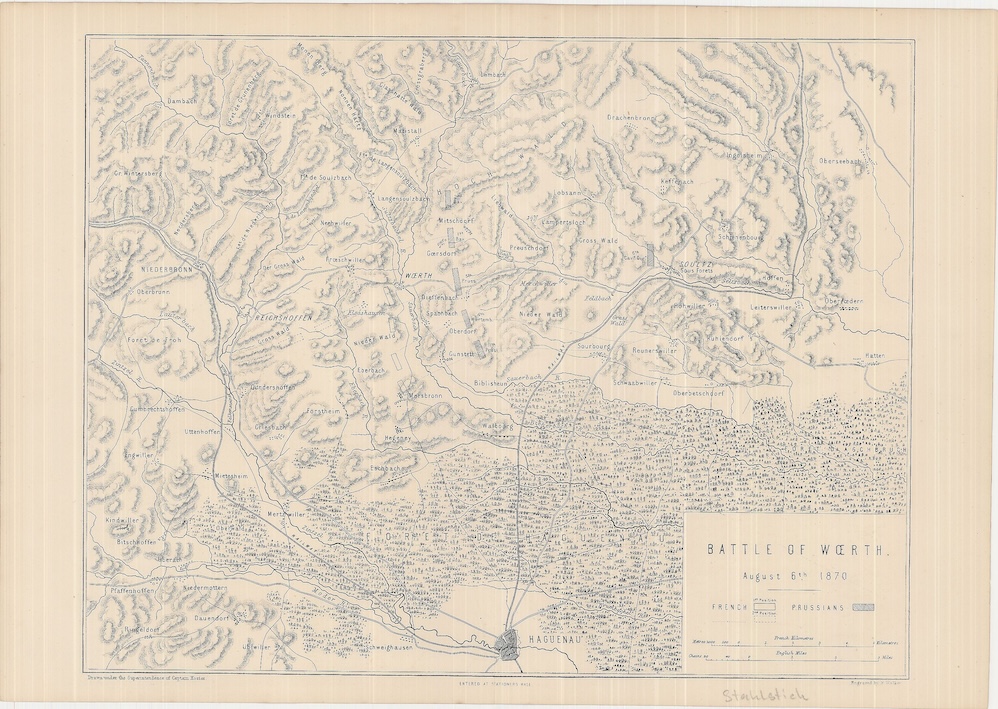
In the context of the Franco-Prussian War of 1870, the Battle of Wörth, also known as the Battle of Froeschwiller, took place on August 6, 1870, in Alsace. The confrontation is remembered for the intense charges of the French cuirassiers against a numerically superior Prussian army. The cavalry was crushed, albeit putting up strong resistance. Their heroism proved futile.
France lost the war to Prussia on January 28, 1871, after a few months. This defeat had significant consequences for the country, including the deposition of Emperor Napoleon III and the establishment of the Third Republic. Resentment over this military failure would eventually lead to the next conflict: World War I.
—> The Battle of Wörth saw the use of key military tactics, including the Prussian use of combined arms, efficient use of artillery, and flexible maneuvering to outflank and defeat the French forces.
Why Did the Battle of Wörth Take Place?
The Franco-Prussian War was instigated by the Prussian Otto von Bismarck, who held leadership in the country. He views with disapproval France’s industrial development, which is gaining significance and power. The primary objectives of this war were to unify Germany against a common enemy and to reclaim territories such as Alsace. Bismarck initiated hostilities by opposing Napoleon III and supporting the candidacy of his cousin for the leadership of Spain.
The conflict escalated, leading to the expulsion of the French ambassador by Bismarck. Despite the cancellation of William I’s candidacy, Bismarck spread rumors that the ambassador was removed in a very discourteous manner. This narrative is encapsulated in the Ems Dispatch and disseminated to European chancelleries.
Napoleon III aligned himself with the strongly opposed French public opinion and declared war on Prussia on July 19, 1870. However, the French army was ill-prepared for this conflict, revealing weaknesses from a military operation in Mexico. The initial battle of the Franco-Prussian War, the defeat at Wissembourg on August 4, 1870, saw Prussian forces significantly outnumbering the French. Subsequently, the Germans advanced into Alsace.
How Did the Battle of Wörth Unfold?
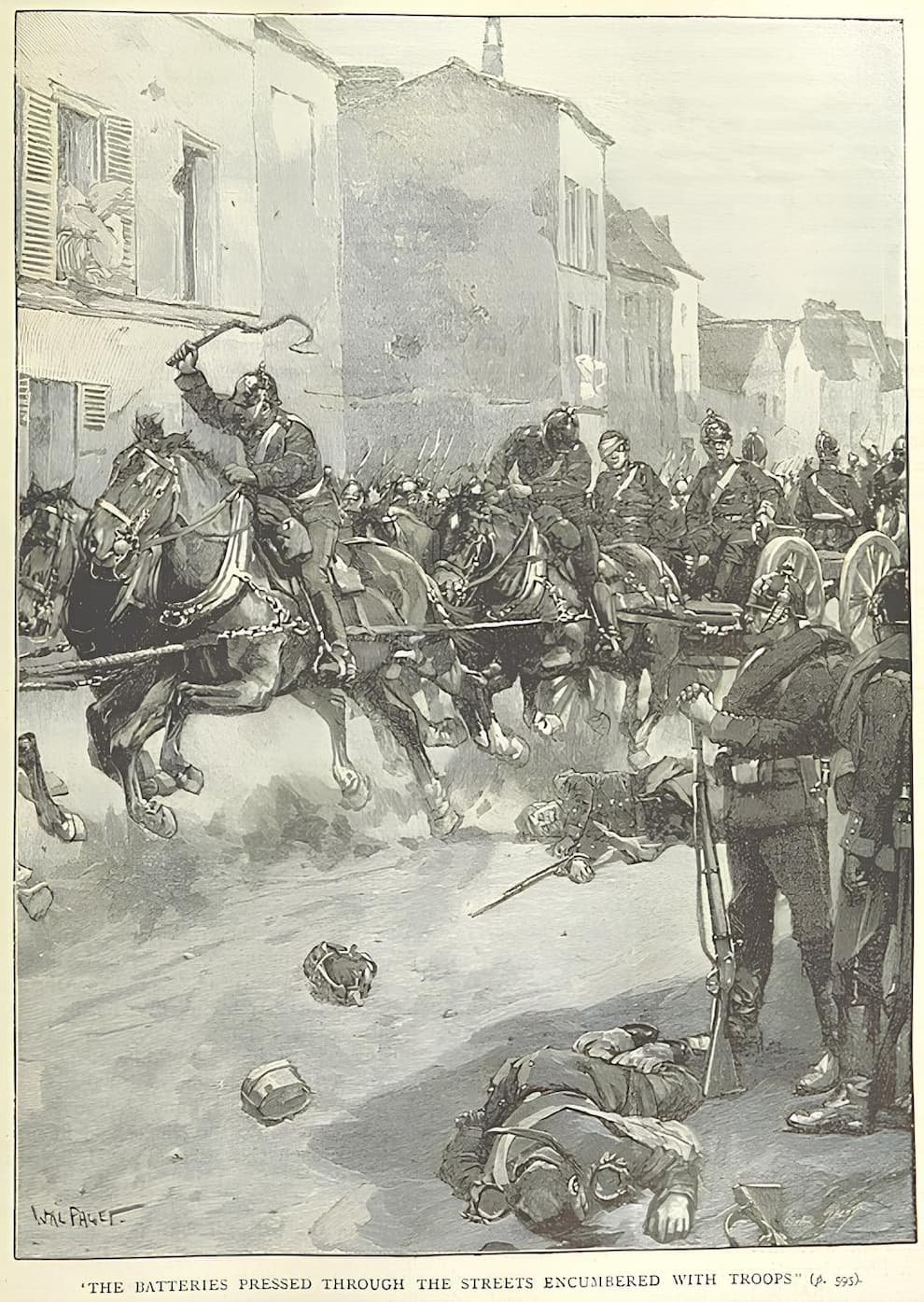
After the victory of Wissembourg, the Germans move towards the town of Woerth and encounter the French vanguard. Sporadic fights ensue. At Morsbronn, General Michel led the first cavalry charge on August 6, 1870. The situation becomes critical for the French cuirassiers, and Marshal MacMahon, leading the troops, decides to launch a second charge in the neighboring town of Elsasshausen.
The cuirassiers of General de Bonnemains advance on impassable terrain, strewn with vineyards and other obstacles. The offensive is cut short after very fierce fighting and the dispatch of several consecutive regiments.
The Prussians gained the advantage thanks to their artillery and numerical superiority (three Prussian soldiers to one French soldier). The charges of the French cavalry will always be remembered for the fierceness of the fighting, but the sacrifice of the men proved to be in vain and demonstrated the weaknesses and lack of information of the command. This battle, known as the Battle of Reichshoffen in military history, is also called Frœschwiller (on the French side) or Wörth (on the German side).
Who Won the Battle of Wörth?

The Prussians prevailed in the Battle of Wörth. Despite the heroic charge of the French cuirassiers, the Prussians demonstrated their military superiority. The French were equipped with Chassepot rifles, known for their precision. However, the lack of coordination within the French army, coupled with command weaknesses, led to significant confusion. The Prussian army countered the French with direct attacks combined with flanking maneuvers, resulting in the massacre of the French cuirassiers.
Following the French strategy, the cavalry charge aimed to divert the Prussians’ attention from the 4th division, which was in grave danger in the commune of Morsbronn.
Marshal Patrice de MacMahon misjudged the situation and ordered the cuirassier troops under General Michel. The battle lasted for about ten hours, showcasing the resilience of the French cavalry. However, surrounded, they eventually succumbed to the enemy. Their resistance, nevertheless, allowed the French infantry to retreat.
This advantage was short-lived, as the French would lose the Franco-Prussian War a few months later.
How Many People Died in the Battle of Wörth?
The French cavalry’s charge in this battle, while courageous, was futile and desperate. The French made sacrifices, displaying fervent combat, explaining the comparable human losses on both sides. On the Prussian side, there were 10,153 soldiers killed and 487 officers wounded. For the French, the figure stands at approximately between 10,000 and 11,000 dead or severely wounded, with 9,000 French soldiers captured by the Prussians.
What Were the Consequences of the Battle of Wörth?
The sacrifice of the French cuirassiers will be extensively utilized in propaganda to glorify the courage of the French army. It will be highlighted to exalt French patriotism, even after the defeat against Germany, with the aim of reclaiming Alsace-Lorraine. The consequences of the Battle of Reichshoffen were severe for the French army, which conceded defeat to the Prussians due to their military superiority. Although they possessed a smaller cavalry force, the French could rely on quality weapons, including more effective rifles.
On a broader scale, the Battle of Wörth signifies the loss of Alsace-Lorraine to France. The desire for vengeance subsequently led to World War I. The conflict of 1914–1918 is, in fact, a result of the Franco-Prussian War, etched in memory. Politically, Prussia gained ascendancy in Europe. In France, the Franco-Prussian War triggered institutional upheavals. Emperor Napoleon III was deposed, marking the end of the Second Empire and the advent of the Third Republic.
Meanwhile, the Commune uprising unfolds in Paris.
Featured Image: The charge of the 9th cuirassiers regiment of General Michel’s 3rd brigade at Mosbronn.