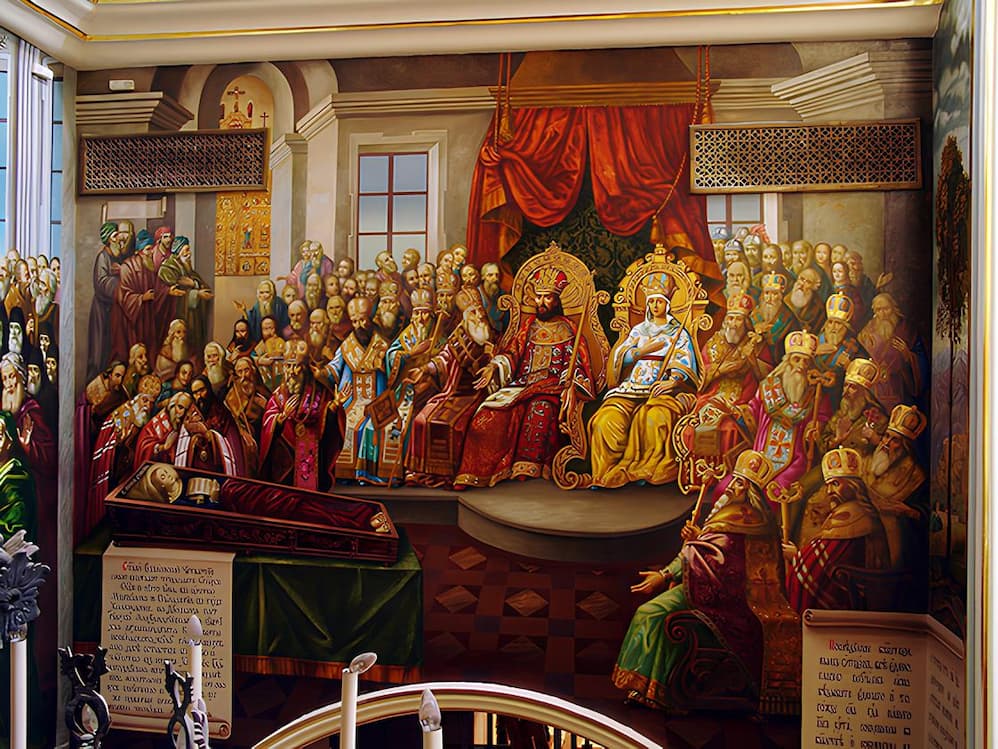
The Byzantine Emperor Marcian decided to convene a council to address various theological questions. The Council of Chalcedon took place at the Church of Saint Euphemia in Chalcedon from October 8 to November 1, 451. It brought together over 300 bishops, who deliberated on the nature of Christ, the Son of God. A creed was formulated, leading to divisions within the Church, with some rejecting the decisions made during the council. In a divided East with heightened political and religious tensions, the Chalcedonian Churches then opposed the Miaphysite Churches.
When and Where Did the Council of Chalcedon Take Place?
buy advair online https://www.northwestmed.net/wp-content/uploads/2024/10/jpg/advair.html no prescription pharmacy
The council is an assembly of bishops and theologians who pronounce the doctrine of the Church. The fourth ecumenical council of Christianity, also known as the Chalcedonian Creed, took place at the Church of Saint Euphemia in Chalcedon (opposite Byzantium or present-day Istanbul in Turkey). This council, held from October 8 to November 1, 451, was convened by the Byzantine Emperor Marcian.
It became a decisive milestone in the development of Christian doctrine and is recognized by the Orthodox Church, the Catholic Church, and the Protestant Church. The Chalcedonian Churches were in opposition to the so-called Monophysite religions.
Who Took Part in the Council of Chalcedon?
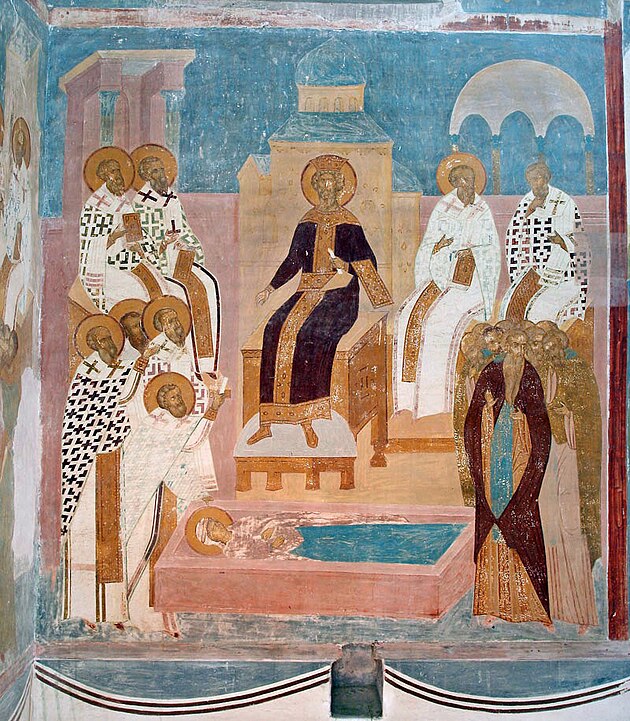
The Council of Chalcedon was convened by the Byzantine Emperor Marcian. He attended the meeting accompanied by his wife, Empress Pulcheria. Marcian intended for Leo, the Bishop of Rome, to preside over this council and had arranged for the meeting to take place at the Church of Saint Euphemia. However, Leo was unable to make the journey as the Huns had invaded the West.
Consequently, Anatolius of Constantinople assumed leadership of the council. It brought together 343 bishops, primarily from the Eastern regions, with only four attending from the West. The Chalcedonian Creed was endorsed and ratified by 630 conciliar fathers.
What Topics Did It Cover?
The Council of Chalcedon addressed various theological subjects, with the primary focus leading to subsequent tensions among churches revolving around the nature of Christ. Rejecting the monophysitism advocated by Eutyches, the council bishops also opposed the duality of Christ. In their view, the Son of God is both divine and human, the son of Mary, the mother of the Lord. He is one with two natures: perfect in divinity and perfect in humanity.
The Council of Chalcedon established the dual nature of Christ, both human and celestial, in a unified existence. This assertion took time to gain widespread acceptance and eventually led to the division of the East and its various churches.
The Council of Chalcedon addressed jurisdictional issues among the sees of Tyre and Beirut, Nicomedia and Nicaea, and Antioch and Jerusalem. It granted privileges and a position of power to Constantinople, positioning it just behind Rome—a decision vehemently contested by Roman legates. The council also condemned Dioscorus the Great, who opposed both the Pope and the Patriarch of Constantinople.
In addition to political matters, the Council of Chalcedon delved into the organization of the church. Henceforth, priestly ordinations for monetary gain were nullified, and bishops found accepting a fee could be punished and deposed.
These issues were thoroughly debated during the council, and participants ultimately reached an agreement. A creed was formulated and ratified on October 22, 451, proving pivotal in shaping Christian doctrine but also causing divisions within the religious sphere.
What Were the Consequences?
After the council, divisions emerged among the churches.
The formulation of “the profession of faith” was contested by Patriarch Dioscorus of Alexandria, who was eventually sent into exile. The Church of Alexandria fragmented, with some rejecting the decisions made during the Council of Chalcedon.
Simultaneously, a faction of the Church of Antioch separated, favoring the Miaphysite doctrine that defines the nature of Christ as singular, uniting his humanity with his divinity. The monophysite churches thus rejected the Council of Chalcedon. As for the Church of Armenia, it distanced itself from the council without outright opposition.
—>The Chalcedonian Definition, a key outcome of the council, affirmed the dual nature of Christ: fully divine and fully human. It asserted the “hypostatic union,” the unity of the two natures in the person of Christ without confusion, change, division, or separation.
The three major contemporary religions—Catholicism, Orthodoxy, and Protestantism—have incorporated the declarations of the Council of Chalcedon into their beliefs. However, a schism occurred during that time. Miaphysite Christians decided to form the Oriental Orthodox Churches. They chose to recognize only the three early ecumenical councils—those of Nicaea, Constantinople, and Ephesus—rejecting the Council of Chalcedon. Non-Chalcedonian Christianity now number over 60 million believers.