In the history of maritime mysteries and cryptozoology, the vast majority of sea monster reports are easily dismissed as drunken sailors’ yarns or exaggerated fishermen’s tales. Yet on the late afternoon of August sixth, 1848, an encounter occurred in the South Atlantic Ocean that defied simple mockery. Observed in broad daylight for twenty minutes at close range by the captain, officers, and crew of a British Royal Navy warship—and documented in an official military report submitted straight to the Lords of the Admiralty—the HMS Daedalus sighting remains the most credible and fiercely debated sea serpent encounter of the nineteenth century.
The Voyage and the Sighting of August 6, 1848
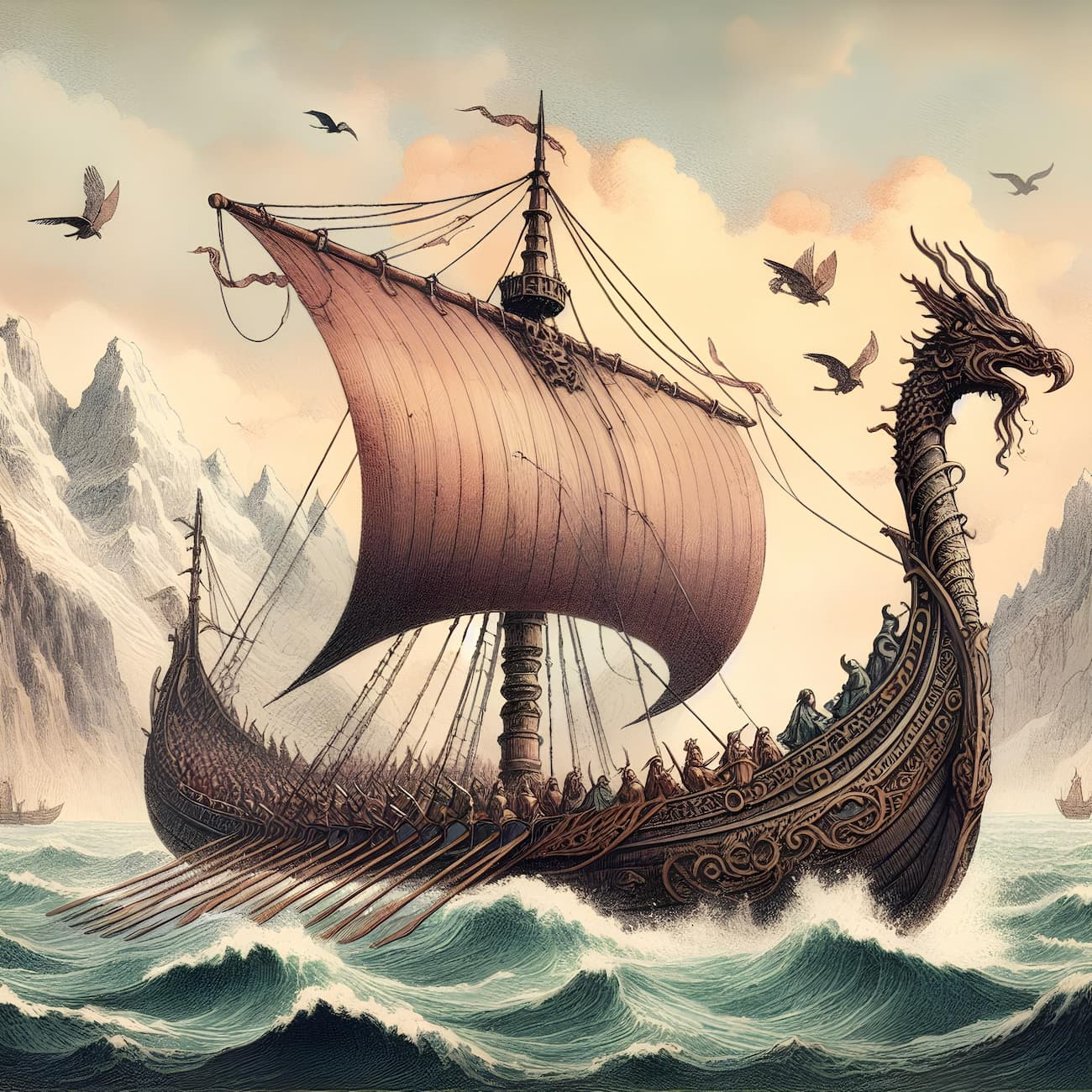
In the summer of 1848, the HMS Daedalus, a nineteen-gun fifth-rate frigate of the Royal Navy commanded by Captain Peter M’Quhae, was returning home to Plymouth, England, from a deployment in the East Indies. By five o’clock in the afternoon on August sixth, the vessel was sailing under cloudy, squally skies across heavy ocean swells in the South Atlantic, roughly three hundred miles off the coast of present-day Namibia between the Cape of Good Hope and the island of Saint Helena.
Walking the quarterdeck were Captain M’Quhae, Lieutenant Edgar Drummond, and the ship’s Sailing Master, William Barrett, when a young midshipman named Sartoris suddenly rushed up to the officers and pointed toward the leeward bow, reporting that something extraordinary was rapidly approaching the ship through the dark waves. Turning their spyglasses toward the water, the seasoned officers froze in astonishment as a colossal, elongated creature surfaced and held a steady course headed southwest at a brisk pace of twelve to fifteen knots.
Captain M’Quhae’s Official Description to the Admiralty
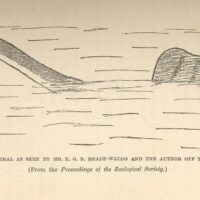
When the Daedalus docked at Plymouth on October fourth, 1848, rumors of the sighting immediately leaked to the London Times, prompting Admiral Sir William Gage to demand a formal written account from Captain M’Quhae. In his official letter to the Admiralty dated October eleventh—accompanied by detailed lithographic sketches prepared under his personal supervision—M’Quhae described an animal that matched no known species in marine science.
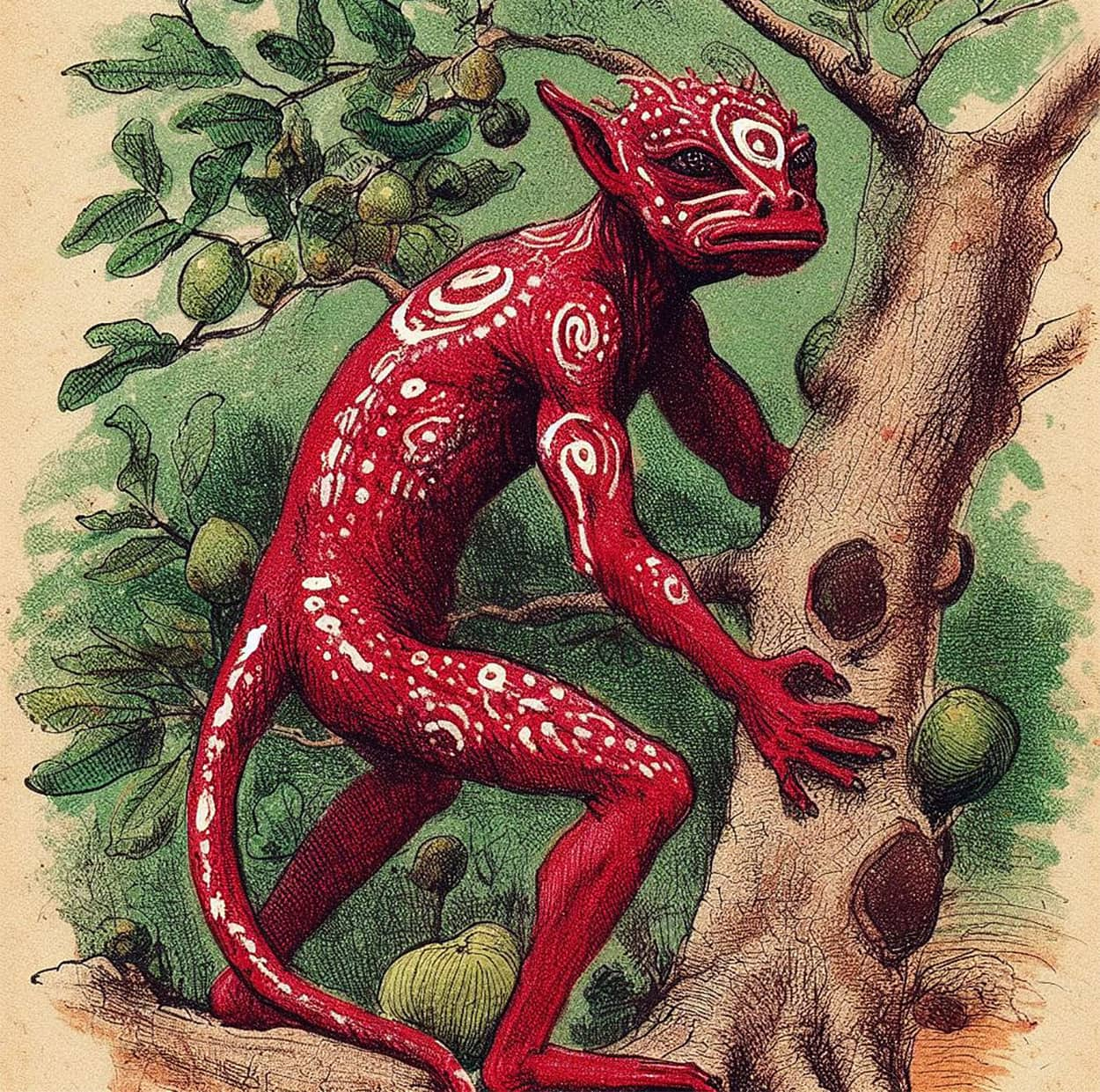
According to M’Quhae, the creature was an enormous serpent with its head and shoulders held persistently four feet clear above the surface of the sea, never wavering from its straight horizontal path even as it passed within less than a hundred yards of the frigate’s stern quarters. The captain estimated that at least sixty feet of the animal’s body was visible undulating just flush with the surface of the water, though no crew member saw it use its tail to propel itself. Its body diameter measured fifteen to sixteen inches right behind the head, which M’Quhae stated was shaped indisputably like that of a snake rather than a mammal. The creature was dark brown along its back and yellowish-white underneath its throat, completely devoid of horizontal or vertical fins, but featuring something resembling the mane of a horse—or a bunch of washed-about seaweed—draped along its spine.
Lieutenant Drummond’s Independent Logbook Entry
Corroborating the captain’s report was the private journal written at the time by Lieutenant Edgar Drummond, who watched the animal from the quarterdeck alongside the quartermaster, the boatswain’s mate, and the helmsman. Drummond noted that the animal was so close that if it had been a human acquaintance, he could have easily recognized their facial features with the naked eye without even using a telescope.
In his log, Drummond added small details that differed slightly in perspective from the captain’s memory: to the lieutenant, the head appeared somewhat longer and narrower, slightly resembling that of a bullock or a large eel, with the mouth held partially open as it cut through the swell, revealing a row of jagged teeth when its jaws gaped. Furthermore, toward the end of the twenty-minute observation as the creature glided into the distance, Drummond noted seeing the back fin of the animal rise briefly some twenty feet behind the head.
The Scientific Feud With Sir Richard Owen and Modern Theories
The publication of Captain M’Quhae’s official Admiralty report accompanied by dramatic illustrations in The Illustrated London News sparked a sensation across Victorian Britain. Stepping forward to defend conventional zoology was Sir Richard Owen, the most famous anatomist of the era and the scientist who coined the word “dinosaur.” Writing a blistering critique in the Times in November 1848, Owen argued that because no vertebrate skeleton of a sixty-foot marine reptile had ever washed ashore on any beach in the world, the crew of the Daedalus must have suffered an optical illusion caused by a giant southern elephant seal swimming home after being carried north on an Antarctic iceberg.
Captain M’Quhae, a veteran of decades at sea who knew the exact silhouette of a seal, wrote a sharp public rebuttal in the Times, stating flatly that his officers were in full possession of their senses, that the animal never once dived to breathe like a seal, and that sixty feet of continuous body could not be explained away by a wake. In the century and a half since, marine biologists and cryptozoologists have proposed dozens of theories to explain what the Daedalus crew saw. Suggestions include a giant oarfish (Regalecus glesne), which possesses a long serpentine body and a horse-like red dorsal crest; a giant baleen whale—specifically a sei whale—skimming the surface with its upper jaw raised out of the water to filter plankton while its dorsal fin trailed forty feet behind; or a closely spaced line of dolphins swimming in tandem. Whatever passed the stern of the HMS Daedalus on that overcast August afternoon, the unwavering testimony of a Royal Navy captain ensured its permanent place in maritime history.