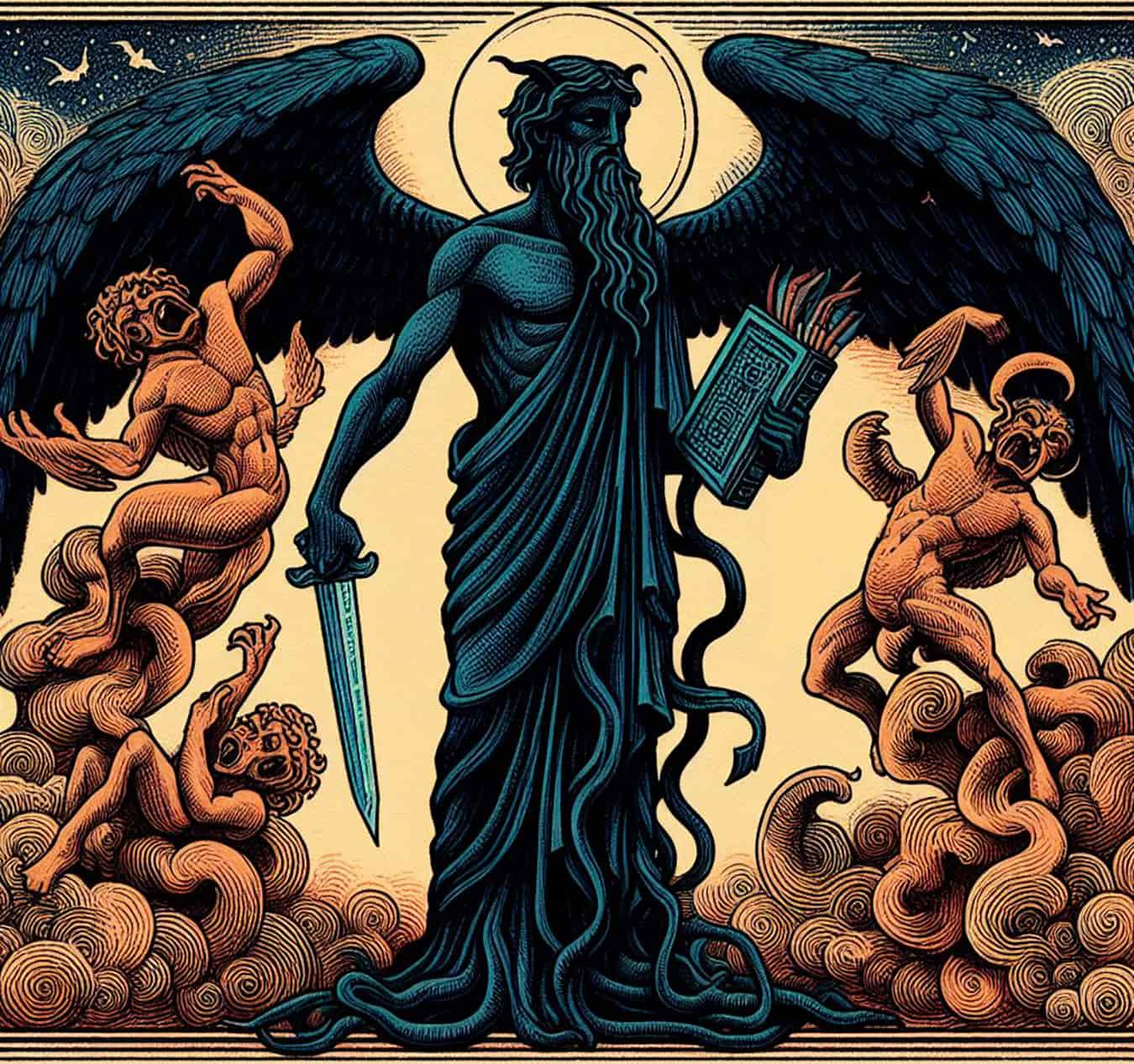
At the base of one of the three mighty roots of Yggdrasil, the cosmic ash tree that holds together the Nine Worlds of Norse mythology, bubbles a tranquil, bottomless spring known as Mimisbrunnr. Guarding these subterranean waters is Mimir, the ancient, enigmatic being whose name translates from Old Norse as the Rememberer or the Wise One. In a mythological universe where even the gods of Asgard were destined to fall at Ragnarok, Mimir possessed the deepest ancestral knowledge of the cosmos—wisdom so priceless that the Allfather Odin willingly gouged out his own eye to taste a single sip of Mimir’s water, and later used dark magic to keep Mimir’s severed head speaking forever after a treacherous diplomatic murder.
The Guardian of Mimisbrunnr and Odin’s Sacrificed Eye
In the cosmology preserved in the Poetic Edda poem Voluspa and Snorri Sturluson’s Gylfaginning, Mimir was an ancient figure of Jotun (giant) or primordial divine ancestry—often identified in old traditions as the maternal uncle of Odin through Odin’s mother, Bestla. Every single morning, Mimir dipped a gleaming horn called the Gjallarhorn into the waters of his sacred well beneath the root of Yggdrasil that stretched into Jotunheim and drank deeply, absorbing the collective memory and future destiny of the world that flowed into the spring through the roots of the World Tree.
When the young king of the gods, Odin, realized that raw martial strength alone could not hold back the gathering shadows of Ragnarok, he traveled down in disguise to the Well of Mimir and asked his uncle for a single draught from the horn. Knowing that true wisdom never comes without an irreversible personal sacrifice, Mimir named his price: Odin must pluck out one of his own eyes and drop it into the depths of the well as a permanent pledge. Without hesitation, Odin reached up, tore out his eye, and cast it into Mimisbrunnr—sacrificing half of his outer physical sight in exchange for inner, spiritual omniscience—where his sunken eye continued to shine like a reflection of the moon at the bottom of the water.
The Aesir-Vanir Hostage Exchange and the Beheading of Mimir
One of the most dramatic episodes in Norse myth, recorded in the opening chapters of Snorri Sturluson’s Heimskringla (the Ynglinga Saga), explains how Mimir lost his physical body and became a disembodied oracle. At the conclusion of the ancient war between the two tribes of gods, the Aesir and the Vanir, both sides agreed to seal their peace treaty by exchanging two high-ranking hostages to live among their former enemies.
The Vanir honorably sent their three finest deities to Asgard: the wealthy sea-god Njord and his twin children, Freyr and Freyja. The Aesir, in return, sent two gods to Vanaheim: a tall, handsome, warrior-like Aesir god named Hoenir,whom they promised would make a brilliant chieftain and judge, accompanied by the wise counselor Mimir. At first, the Vanir were delighted and immediately appointed Hoenir as their chief magistrate. However, the Vanir soon noticed a suspicious pattern: whenever Hoenir sat in the assembly with Mimir standing right beside him whispering every single legal verdict and military strategy into his ear, Hoenir sounded like the wisest ruler in the universe. Yet on any day when Mimir was absent from the meeting and the Vanir asked Hoenir to decide a difficult question on his own, the tall god stared blankly and mumbled the exact same useless evasion: “Let others decide!” (Ráði aðrir!).
Odin’s Runic Preservation and Whispered Counsel at Ragnarok
Realizing that the Aesir had cheated them in the hostage trade by sending a handsome, empty-headed puppet who couldn’t think without his advisor, the furious Vanir took their revenge—not on the useless Hoenir, astonishingly, but on poor Mimir. Seizing the wise counselor, the Vanir chopped off Mimir’s head and mailed the severed head straight back to Odin in Asgard as a bloody diplomatic insult.
Rather than burying his beloved advisor’s head or declaring immediate war, Odin demonstrated his mastery over necromancy and runic magic (seidr). Taking Mimir’s severed head in his hands, Odin smeared it meticulously with sacred healing herbs to prevent the flesh from ever decaying or rotting, and then chanted powerful runic incantations over the skull until Mimir’s eyes opened and his tongue regained the power of speech. Keeping the living, preserved head of Mimir beside his throne or at the edge of the well, Odin consulted the head whenever grave crises threatened the gods, learning hidden secrets from other worlds. Finally, as foretold in the Voluspa, when the horn blows to announce the arrival of Ragnarok and the World Tree shudders in flames, Odin’s very last act before riding out to face the monstrous wolf Fenrir is to ride swiftly to the spring and whisper one final time with the head of Mimir.