In Greek mythology, Europe is a Phoenician princess, the daughter of King Agenor of Tyre, and the lover of the king of the gods, Jupiter (Greek: Zeus). This classical figure, celebrated in Ovid’s Metamorphoses, is relatively unknown to the general public and often mistakenly labeled as a “goddess” by the media, reflecting a tendency toward materialism rather than adherence to mythological tradition.
In the early Roman era, the poet Ovid, approaching his forties, shifted from erotic poetry to compose his renowned Metamorphoses—fifteen chapters in verse exploring Greek and Roman mythologies. The second book delves into the myth of Europe, drawing from an even older legend.
Europe: A Mythical Princess
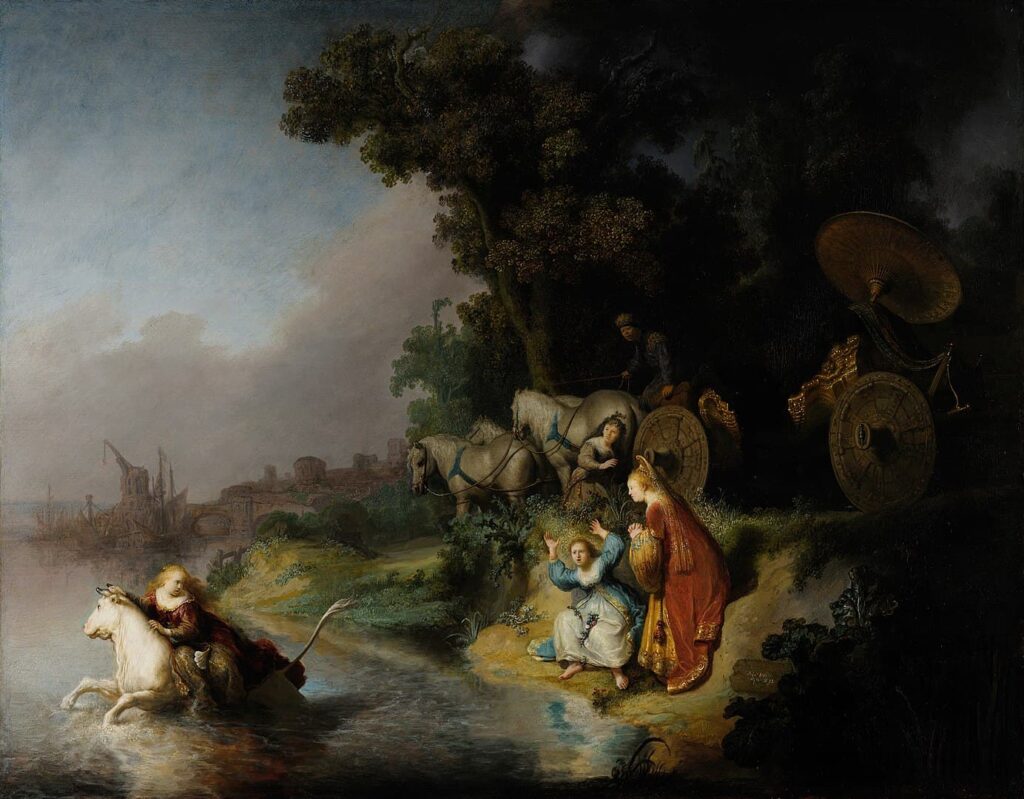
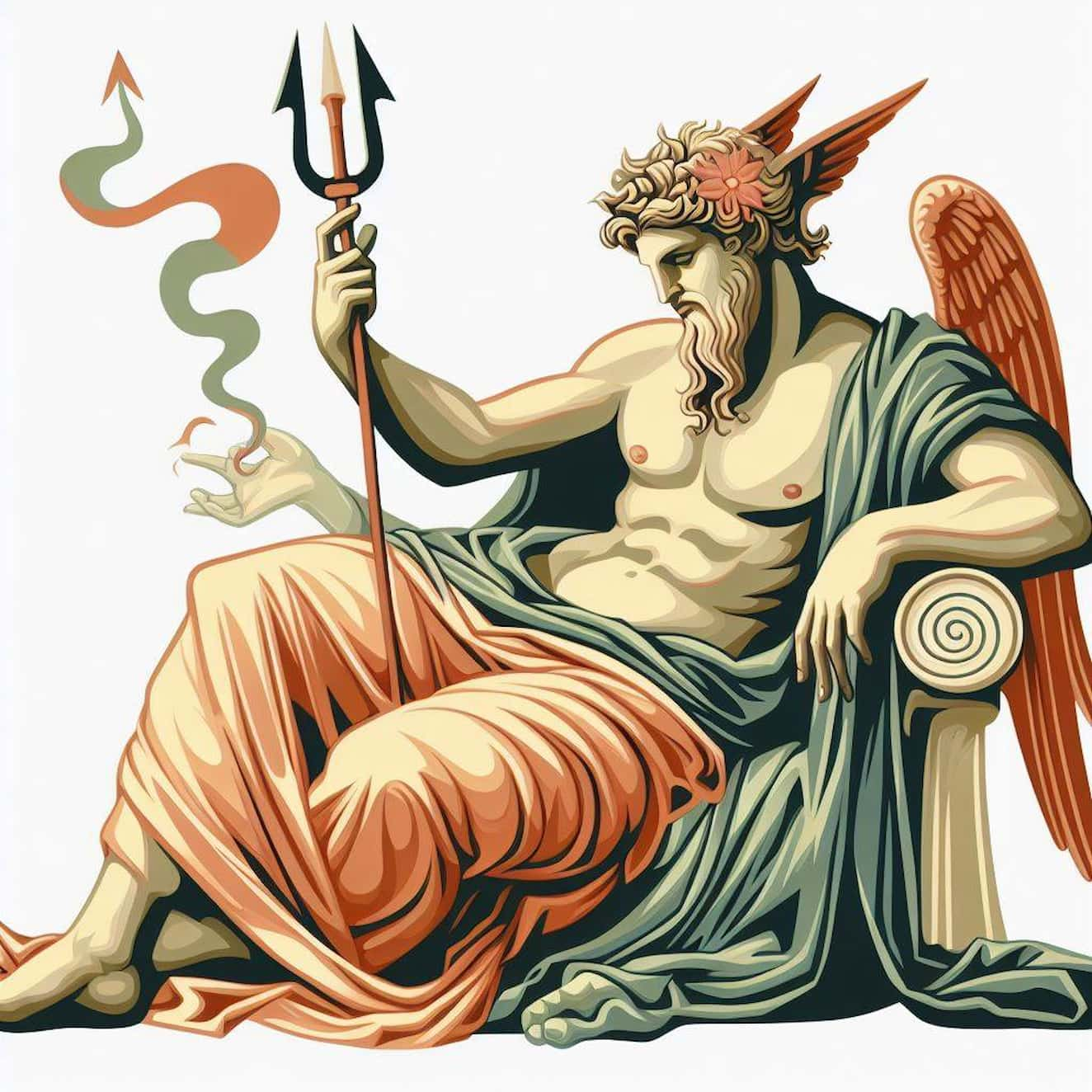
In Ovid’s poem, Europe is the daughter of Agenor, the king of Tyre, a Phoenician city in present-day Lebanon, situated 70 km south of Beirut. Intrigued by the young princess, Jupiter (Greek: Zeus), the king of gods, commands his son Mercury (Greek: Hermes, born of Jupiter’s affair with the nymph Maia) to graze his herds in the land of Sidon, the capital of Phoenicia, near the shore where the princess habitually plays with her friends. Transforming into a white bull, Jupiter blends into the herd to approach incognito the object of his desire.
With grandeur, showcasing his immaculate whiteness and robust animal musculature, the bull captivates the astonished young girls.

Princess Europe approaches, offering flowers; the bull displays affection, allowing her to caress and even climb onto its back. Subsequently, the bull charges into the sea, distancing itself from the shore with its captive.
Becoming the Cretan Queen
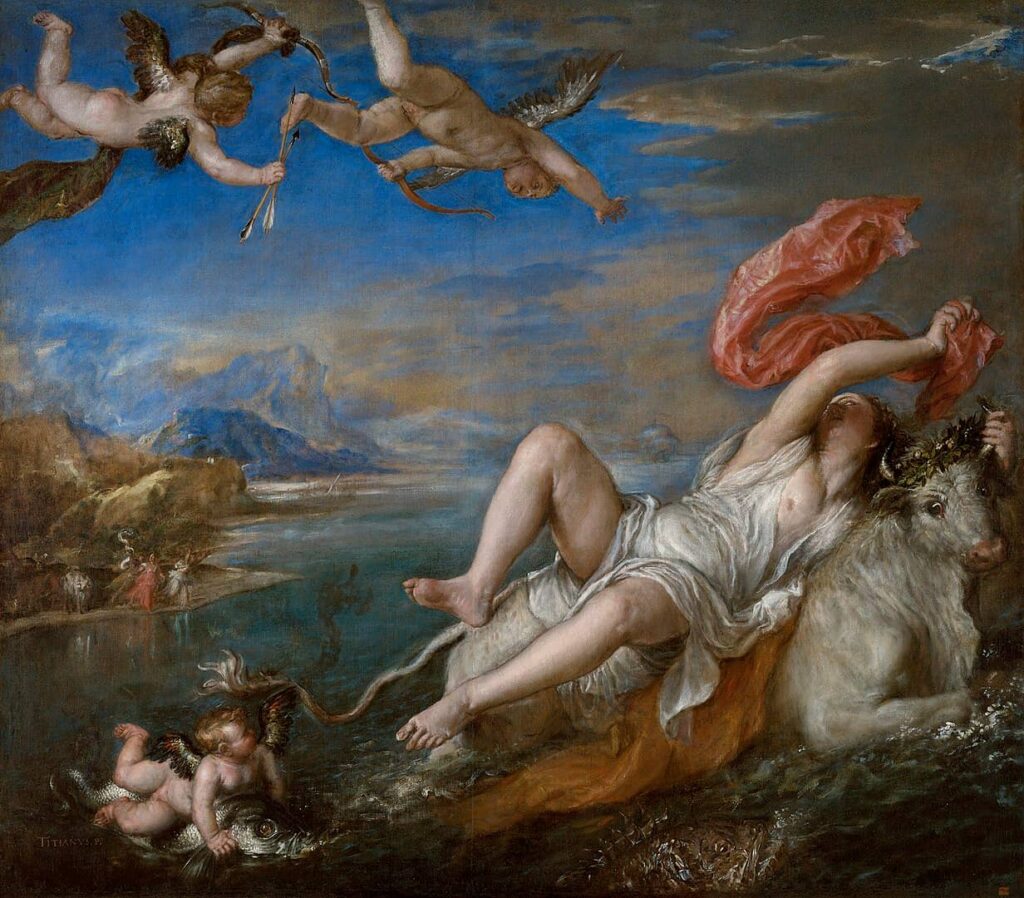
Ovid doesn’t narrate the subsequent events, but in Greco-Roman tradition, it’s generally recounted that Europe was deposited on the island of Crete. There, Jupiter reassumes a human form and unites intimately with the young princess. Europe becomes pregnant with triplets: Minos, the future king of Crete, Rhadamanthus, and Sarpedon. As one of Jupiter’s many conquests, Europe doesn’t hold his attention for long. However, he arranges for her to marry King Asterion of Crete.
Months later, Minos, the legendary king of Crete (whose wife, Pasiphae, later mates with another white bull to give birth to the Minotaur), and Rhadamanthus, who both become judges of the Underworld, are born. The third triplet, Sarpedon, fights in the Trojan War and meets Patroclus’ death.
Devastated by their daughter’s disappearance, King Agenor commands his sons to find her and not return without her.
Cadmus, accompanied by his brothers Thasos and Cilix and his mother Telephassa, embarks on a long, fruitless search. Eventually, on the advice of the Oracle of Delphi, Cadmus found the city of Thebes. Thasos settles in the Thracian Islands, and Cilix establishes himself in Cilicia.
Queen Telephassa, consumed by grief, succumbs to death.
From Mythology to the European Legacy
The abduction of Europe has enjoyed significant success, manifesting in literature, the arts, and even astronomy (as the Taurus constellation). It holds a prominent place in the art of the European continent and plays a crucial role in the symbolism of the European Union, which consciously avoids references to Judeo-Christian culture in favor of Greco-Roman traditions.

Surprisingly, Europe, a princess from the Near East forcibly relocated to Crete, lies on the periphery of what is typically considered the European continent. So, why is the continent named after her?
- Also Read: Where Does the Name Europe Come From?
The origin of the word “Europe” used to designate our continent is believed to be Semitic, originating from “ereb,” referring to the setting sun. While the etymology remains debated, this explanation suggests that the term “Europe” primarily denoted a geographical designation from a world centered around the East Mediterranean. The association of the continent’s name with the princess might be a later attempt to link it to Greek culture.
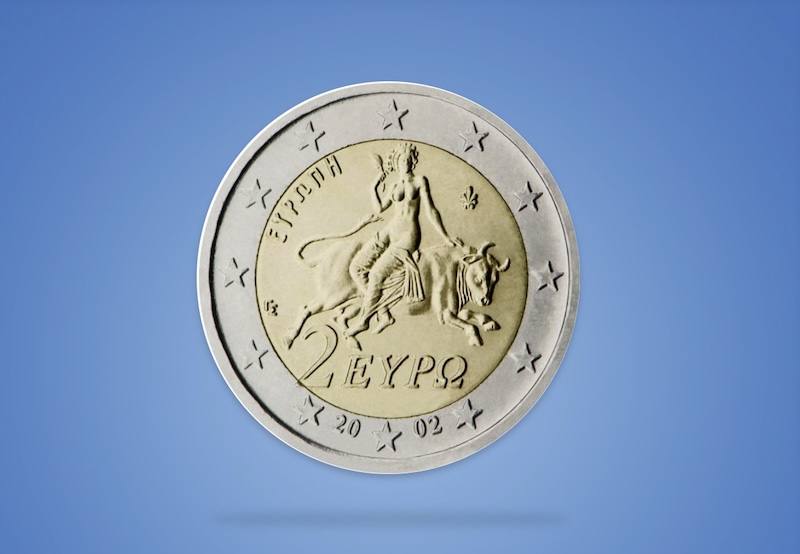
The mythical Phoenician princess and her white bull had already made their mark on the euro coins, featuring on the Greek 2€ coins. Now, the iconic portrait of the princess graces the new 5€ banknotes, even though she is less recognizable without the bull and crown, elements present on the 2€ coin. Gradually, the entire “architecture” series of banknotes will be replaced by the “Europe” series, featuring the effigy of the princess.