Before the sun god Ra ever rose into the sky, before the earth was separated from the heavens, and before time, light, or dry land existed at all, the ancient Egyptian priests of the Middle Egyptian city of Hermopolis Magna (known in ancient Egyptian as Khemenu, meaning literally “The Eight-Town”) envisioned the pre-creation universe as an infinite, stagnant, pitch-black watery abyss. Floating inside that primordial soup were eight mysterious, paired deities—four frog-headed male gods and four snake-headed female goddesses—known to Egyptologists by their Greek collective name, the Ogdoad (“The Group of Eight”). Unlike the creator gods of Memphis or Heliopolis who represented light and order, the Ogdoad personified the four turbulent, raw chaotic forces of the universe before creation, whose sudden collision ignited the ancient Egyptian equivalent of the Big Bang.
Frogs and Snakes of the Primordial Slime
Why did the theologians of Hermopolis depict the four male gods of the Ogdoad as human figures with the heads of frogs (or complete frogs) and the four female goddesses with the heads of cobras/snakes (or complete serpents)? Look at the natural ecology of the annual Nile River flood that sustained all life in Egypt:
- Every late summer, as the muddy floodwaters of the Nile began receding to expose glistening, fertile black mudbanks warmed by the sun, thousands of tiny frogs and water snakes suddenly emerged out of the wet silt as if by spontaneous generation (parthenogenesis or abiogenesis) before a single blade of wheat sprouted.
- To the ancient Egyptian mind, frogs and snakes were the oldest self-generating creatures of the watery depths—living bridges between the dark underworld waters and the first island of dry land.
The Four Balanced Pairs of Cosmic Chaos
In the rigorous symmetry of Egyptian thought, every fundamental force of the pre-creation void had to be expressed as a balanced male and female pair (where the female name is simply the male name with the feminine -t ending attached). Together, the four pairs of the Ogdoad mapped the exact physical conditions of the universe before the First Day (Zep Tepi):
- Nu (Nun) and Naunet (The Primordial Waters): Personified the boundless, inert, deep cosmic ocean of liquid matter that filled all space before land or sky existed (with Nu representing the deep waters below and Naunet the counter-sky waters above).
- Hehet (Huh) and Hauhet (Infinity and Boundlessness): Personified endlessness, eternity, and spatial infinity—the fact that the pre-creation abyss had no borders, edges, or walls.
- Kek (Kuk) and Kauket (Darkness and Obscurity): Personified absolute, impenetrable primordial darkness before the first photon of sunlight existed (later associated with the liminal twilight hours just before dawn and just after dusk).
- Amun and Amaunet (Hiddenness, Invisibility, and Breath): Personified that which is unseen, mysterious, and intangible—the invisible stirring of wind or dynamic potential energy moving across the dark waters. (During the New Kingdom, this fourth male member of the Ogdoad—Amun, “The Hidden One”—rose from his origins in the Eight-Town to merge with the sun god as Amun-Ra, the supreme King of the Gods at Karnak in Thebes!).
The Cosmic Egg, the Lotus Blossom, and Their Tombs at Medinet Habu
How did eight gods of dark, stagnant water give birth to the sunlit universe? According to the Hermopolitan creation myths, after floating in static equilibrium for eons, the four pairs of the Ogdoad suddenly converged and interacted in a violent surge of creative energy, pushing up the very first mound of dry earth out of the abyss—the Isle of Flame—and bringing forth the infant Sun God, Ra, through one of three famous poetic images:
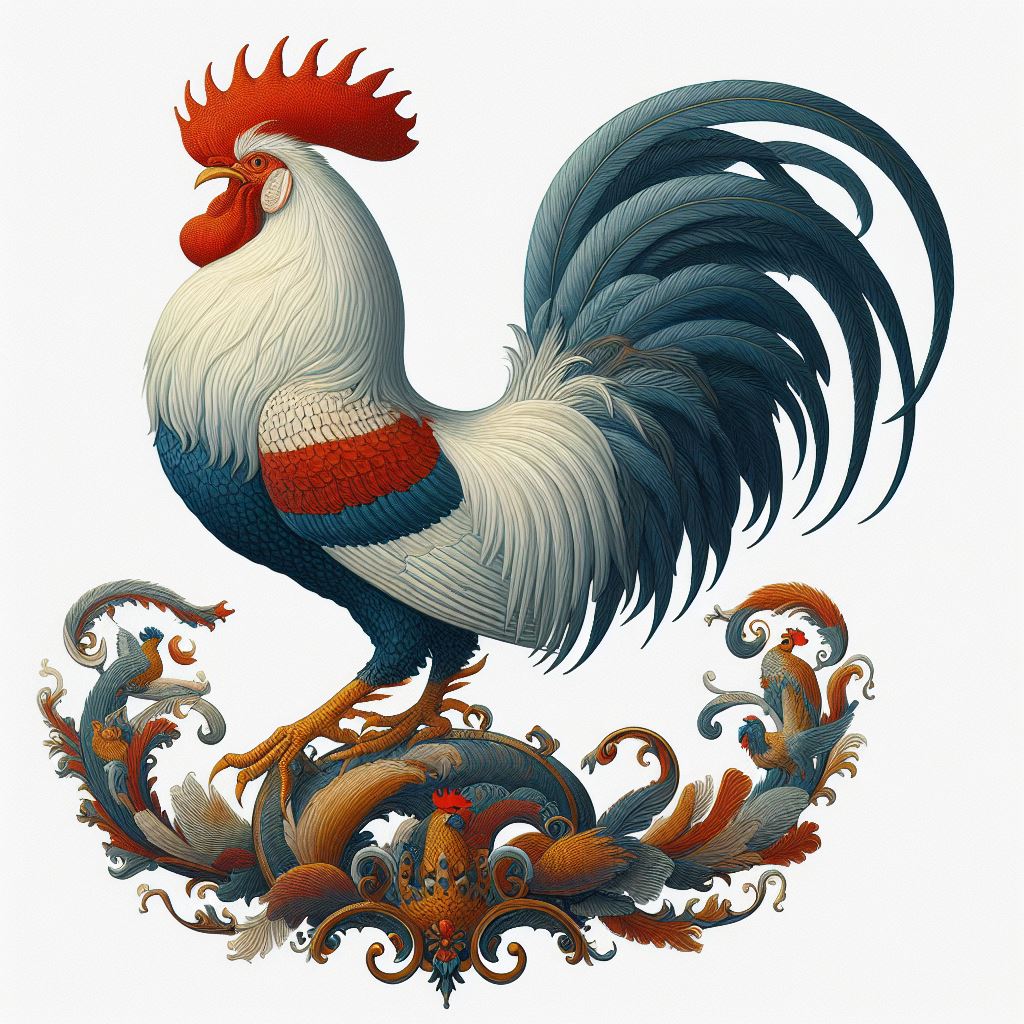
- 1. The Cosmic Egg: Laid upon the primeval mound by a celestial ibis (sacred to Thoth, the patron god of Hermopolis) or a cosmic goose (the “Great Cackler,” Gengen Wer), the shell cracked open to release the blazing sun bird.
- 2. The Blue Lotus Flower (Nefertem): Floating on the dark waters of Nun, a giant blue water-lily bud slowly opened its petals for the first time, revealing the golden child Ra sitting inside its heart, whose first tears of joy fell upon the mud to create humankind (remetj, a wordplay on the Egyptian word for tears, remyt!).
Remarkably, unlike the immortal Olympian gods of Greece, once the eight deities of the Ogdoad had completed their work of jump-starting creation, creating the Sun, and setting the Nile flowing and the winds blowing, ancient Egyptian tradition held that the aged Ogdoad retired and died—passing into the underworld to live beneath the sacred mound of Djeme (Medinet Habu) on the West Bank of Luxor, where priests sailed across the Nile every ten days for centuries to pour libations at the tombs of the eight primeval architects who had sparked the universe out of nothingness.