By using this site, you agree to the Privacy Policy.
Accept
MalevuzMalevuz
  • HISTORY
  • SCIENCE
  • BIOGRAPHY
MalevuzMalevuz
Search
  • HISTORY
  • SCIENCE
  • BIOGRAPHY
Follow US
Malevuz > History > Menat: A Necklace Associated with the Goddess Hathor
History

Menat: A Necklace Associated with the Goddess Hathor

Hrothsige Frithowulf
ByHrothsige Frithowulf
History Editor
Hrothsige is a history writer at Malevus. He has a bachelor's in history from the University of Exeter. Hrothsige's areas of historical interest encompass the ancient...
- History Editor
6 June 2025
Share
4 Min Read
SHARE

In ancient Egyptian religion, Menat (Ancient Egyptian: mnj.t, modern Arabic: منات) is the name of a goddess associated closely with Hathor, and it’s also closely connected to an artifact sometimes used as a musical instrument (similar to the sistrum). Starting with the reign of Amenhotep III, Menat became associated with the cult of the goddess Mut.

Contents
  • Description
  • Application
  • Usage
  • In popular culture

Description

The Menat consists of several parts. One of them is a flat tablet called the Egida (from Greek “shield”), which was worn on the chest. Strings of beads were attached to it at one end, forming a bundle or loop. The other ends of the Egida were tied to a plate that rested on the owner’s back, acting as a counterbalance. The Egida was often made of faience (ceramic), but sometimes other materials such as leather, bronze, etc., were used. This artifact was frequently depicted in painted and carved images of events and deities associated with Hathor.
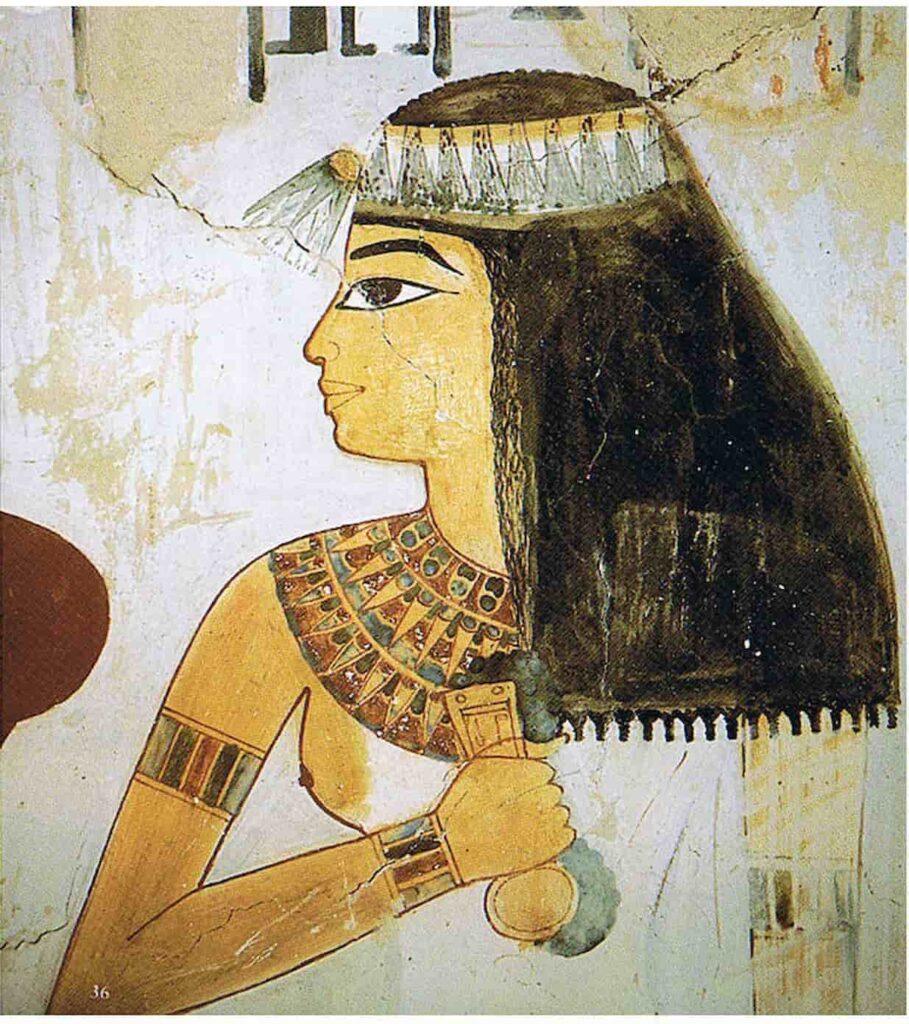
Menat

Application

The artifact, whose hieroglyphic spelling slightly differed from the name of the goddess Hathor, was used in two main ways:

  1. Often worn as a protective amulet (it was even boasted by the sons of Hathor and sometimes by the sacred bull Apis).
  2. Held in hand by the handle-plate and used by Hathor’s priestesses as a percussion instrument.
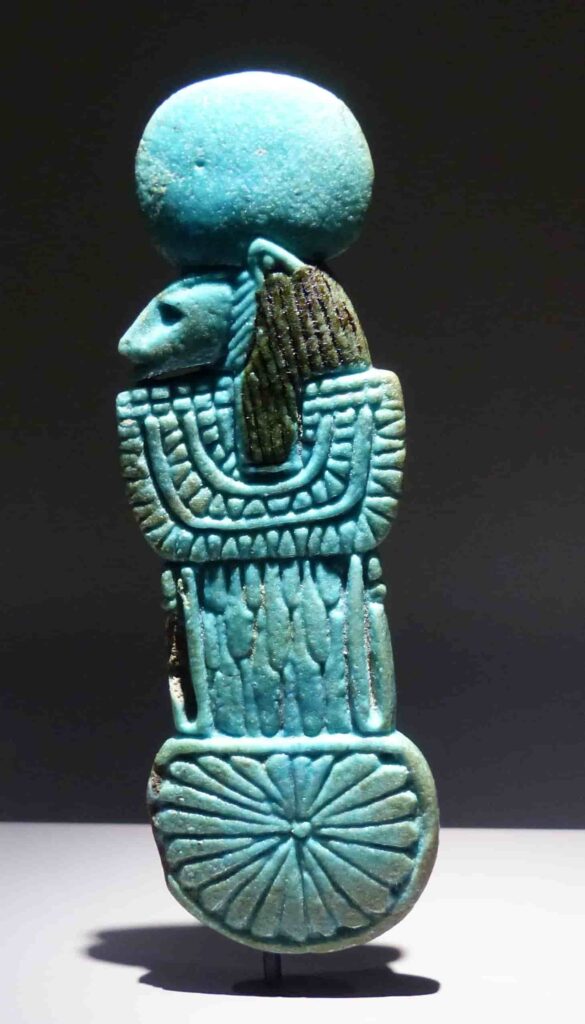
LSR Pharao Menit 1
Rosenheim (Upper Bavaria). Lokschuppen exhibition centre – “Pharao” exhibition (2017): Faience menit with lion head, Late Period (6th-3rd century BC). (Wolfgang Sauber, cc by sa 4.0)

According to legends, the necklace was supposed to bring luck and protect the owner from evil spirits. During the reign of the Ramessides (XIX and XX dynasties of pharaohs, constituting the last two-thirds of the period known as the New Kingdom), it was believed that the Menat also safeguarded in the afterlife, so it was often placed in the tomb with the deceased as a burial offering. In daily life, women wore this necklace hoping for successful pregnancies and robust health, while men typically wore it as a symbol of masculinity.

More Read

The First Black Supremacist Country in History
How Did King Solomon Die? Sources and Theories
Christmas Peace: The Finnish Tradition of Christmas Announcement
The History Behind the Middle Finger Gesture
buy fluoxetine online https://yourcialisrx.com/buy-fluoxetine.html no prescription pharmacy

Hathor’s priestesses used the Menat as a noisy percussion instrument.

buy wegovy online https://yourcialisrx.com/buy-wegovy.html no prescription pharmacy

The Menat was considered a feminine instrument. Female musicians and singers shook the Menat and sistrum in front of statues of deities. The combined sound of the sistrum and Menat imitated the rustling of papyrus reeds in the wind.
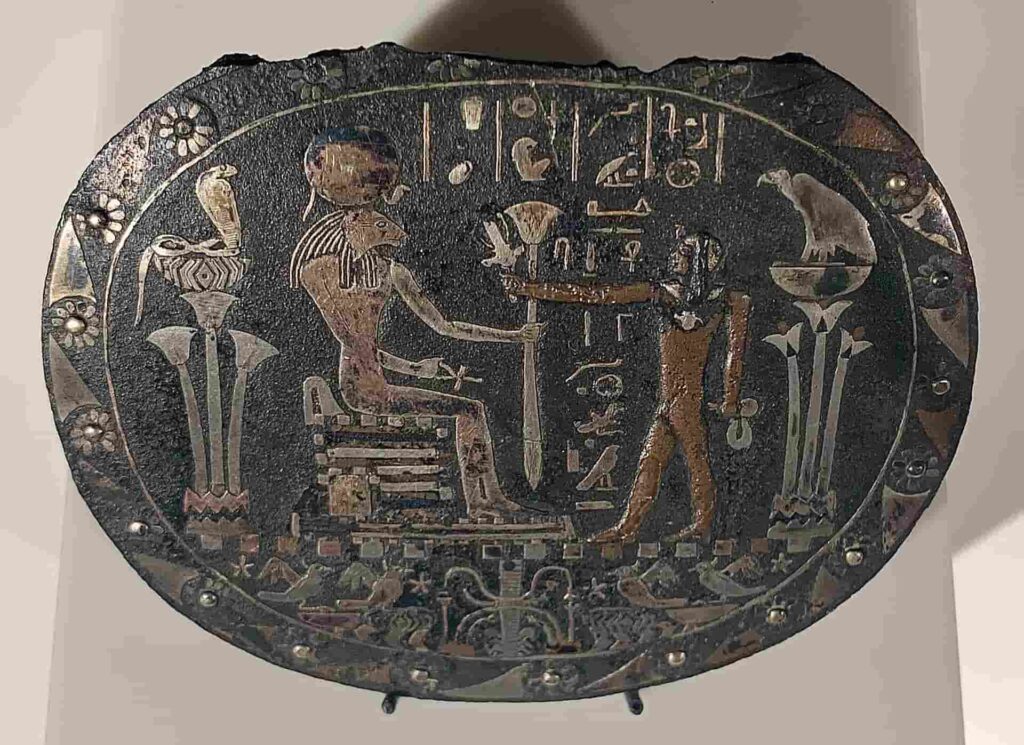
Part of a menat of Harsiesi high priest of Amun of Thebes circa 870 BC 22nd Dynasty gold silver and copper inlays from Thebes Egypt AM 23733 in the Agyptisches Museum Berlin 1
Part of a Menit, ca. 870 BC, Egyptian Museum Berlin.

Usage

The menit was worn as a necklace and functioned as a rattle. It often occurs together with a sistrum. When used as a musical instrument, the counterweight served as a handle. Archaeological finds usually show only the counterweights made of faience or metal, which were usually decorated with motifs.

buy zanaflex online https://yourcialisrx.com/buy-zanaflex.html no prescription pharmacy

The use was based on the nature of the festivals, which were used either to appease the angry aspect or to honor the divine goodness. The menit was therefore often associated with the cults of the goddesses Hathor, Bastet, Sopdet, Tefnut, Sekhmet, and Isis. It is often depicted in ancient Egyptian artworks such as statues or murals.

In popular culture

The character Menat in Street Fighter V is named after this deity, plus he comes from Egypt.

More Read

titanic3
The Tragic History of The Titanic: From Construction to Final Voyage
48 Countries That Celebrate Christmas Widely
Sinterklaas: The Real Santa Claus in the Netherlands
Christmas in Madrid: Traditions and Celebrations
Share This Article
Email Copy Link Print
ByHrothsige Frithowulf
History Editor
Hrothsige is a history writer at Malevus. He has a bachelor's in history from the University of Exeter. Hrothsige's areas of historical interest encompass the ancient world and early Europe, along with the history of modern culture.
Previous Article Sandal Maker Tomb of Rekhmire MET DP346330 1 Ancient Egyptian Clothing: History and Origin
Next Article Medicine in Ancient Egypt Medicine in Ancient Egypt: Practices, Diseases, and Remedies

Latest News

985px Landing of Lieutenant James Cook at Botany Bay 29 April 1770 painting by E Phillips Fox

Top 10: The Greatest Knights in History

Knights were the medieval equivalent of elite soldiers, and many…

List
3 November 2026
Charles Rolls driving a Peugeot 1896
List

10 of the Craziest Laws in History

For more than 4,000 years, humans have devised new laws…

18 October 2026
Ikinci Meksika Imparatorlugu
History

Why Did the Second Mexican Empire Collapse?

The Second Mexican Empire did not collapse because of a…

14 April 2026
A painting depicting Aboriginal Tasmanians attacking John Allen’s Milton Farm near Great Swanport in 1833.
History

Colonialism in Tasmania

The colonization of Tasmania was not a simple story of…

14 April 2026

You Might Also Like

Combat Manual of 1467
History

5 Weird Things That Were Considered Normal in the Middle Ages

24 September 2024

Tiberius Claudius Narcissus Rose from Slavery in Ancient Rome

4 November 2026

Yom Kippur War: Historical Background and Causes

11 December 2025

When Was the Potter’s Wheel Invented?

2 November 2026
  • Privacy Policy
  • About us
  • Editorial Standards

© Malevuz. All Rights Reserved.

Welcome Back!

Sign in to your account

Username or Email Address
Password

Lost your password?