While popular movies depict ancient Egyptian healers as mystical priests chanting spells inside dark temples, the archaeological and textual record of the Nile Valley reveals a remarkably empirical, scientific tradition of clinical trauma care. Practicing alongside religious rituals for over two millennia, ancient Egyptian surgeons—known as the swnw (pronounced “sou-nou”)—sutured gaping flesh wounds with linen thread, cauterized bleeding arteries, reduced dislocated shoulders using techniques identical to modern orthopedics, and compiled the oldest rational surgical textbook in human history.
The Edwin Smith Papyrus: The World’s First Trauma Textbook
The single greatest monument to ancient Egyptian surgery is the Edwin Smith Surgical Papyrus, a fifteen-foot-long scroll written around 1600 BC that linguistic analysis indicates was copied from an even older Old Kingdom original dating back to the pyramid-building era of 2600 BC (often attributed by historians to the circle of the polymath architect and physician Imhotep). Unlike other medical papyri that mix herbal remedies with magic spells, the forty-eight trauma cases in the Edwin Smith Papyrus are almost 100% rational, anatomical, and clinical—containing only a single incantation among four dozen surgical injuries.
Organized logically from the top of the skull down through the face, throat, collarbone, chest, and spine, each of the forty-eight cases follows the exact four-step protocol of modern emergency medicine:
- Title and Examination: Direct physical palpation of the wound, checking the patient’s pulse, asking the patient to move their neck or limbs, and observing neurological signs (remarkably providing the first description in human history of the cerebral cortex, the meninges membranes, cerebrospinal fluid, and how a crushed skull on one side paralyzes the opposite side of the body).
- Diagnosis and the Three Verdicts: After examining the injury, the Egyptian surgeon was required to pronounce one of three honest clinical verdicts to the patient:
- “An ailment which I will treat” (a curable injury with a favorable prognosis).
- “An ailment with which I will contend” (an uncertain, serious injury where the surgeon will fight to save the patient).
- “An ailment not to be treated” (a hopeless, fatal injury—such as a crushed cervical vertebra with spinal cord severance—where only palliative comfort could be offered).
- Treatment: Mechanical reduction of fractures, stitching, splinting, and wound dressings.
The Wall Relief of Kom Ombo and Bronze Surgical Instruments
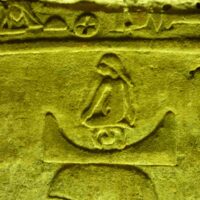
Carved onto an interior stone enclosure wall at the Ptolemaic Temple of Kom Ombo in Upper Egypt—and corroborated by real bronze and copper tool kits unearthed inside the tombs of Sixth Dynasty physicians like Qar at Saqqara—is a detailed visual inventory of approximately forty surgical instruments used in antiquity:
- Scalpels and Knives: Razor-sharp blades crafted first from freshly knapped obsidian and flint (which actually hold a sharper microscopic edge than steel) as well as hardened copper and bronze scalpels.
- Forceps, Tweezers, and Bone Saws: Pincers for extracting arrowheads and bone splinters from deep wounds, hooked retractors to hold open incisions, metallic probes, cupping vessels, dental pliers, and fine-toothed bronze saws.
- Sutures and Adhesive Linen Tape: The Edwin Smith Papyrus contains the earliest reference in world history to closing a gaping wound with surgical stitches (sutures) using bone or bronze needles and linen thread, alongside an ingenious non-invasive alternative for facial cuts so they wouldn’t leave ugly scars: drawing the edges of a split eyebrow or nose together using strips of linen tape coated in sticky acacia gum resin!
- Fire Drills for Cauterization: To stop severe hemorrhaging when excising surface cysts or tumors, surgeons heated bronze blades or rotated wooden fire-drills directly against the bleeding vessels to cauterize the tissue.
Raw Meat, Honey Antiseptics, and Skull Trepanation
Once a surgical wound was stitched or set inside rigid splints made of padded bark, wood, or cartonnage linen stiffened with plaster, Egyptian post-operative care prevented deadly bacterial infection through a two-day dressing regimen that modern microbiologists praise. On the very first day of a fresh wound, the surgeon bound a slice of fresh raw meat over the cut—providing natural clotting enzymes (thromboplastin) that stopped bleeding quickly.
From the second day onward, the wound was dressed daily with a salve of raw honey and animal fat (lint). Because pure honey is hyperosmolar (sucking moisture out of bacterial cells by osmosis), acidic, and naturally generates trace amounts of hydrogen peroxide when diluted with body fluids, no common bacteria could survive inside the bandage. Bioarchaeologists examining thousands of ancient Egyptian mummies and skeletons have confirmed how often patients survived major interventions: showing cleanly healed amputations of forearms and toes fitted with functional wooden prosthetics, skillfully set femur fractures, and even rare cases of trepanation—drilling or scraping a circular hole into the living skull to relieve fatal intracranial pressure after a battlefield mace blow, with smooth bone regrowth around the edges proving the patient lived for years after leaving the surgeon’s table.