There is little evidence to suggest that the ancient people were physically weaker or less resilient than people today. We do not even have records from athletic people like the ancient Greeks, so we have no idea how much slower or faster they were. To get an accurate read on how fast a runner is, you need to know how far they ran and how long it took them to do it. This is especially true for shorter races.
Even if we know the distances ancient athletes ran (there are some differences in the translation of ancient measures of length into modern ones, but these differences are negligible) we know almost nothing about time because it wasn’t until the end of the 16th century that a clock with a second hand was invented, allowing us to time and then calculate running speed.
Method of measuring time: Clepsydra
It was usual to divide the day into eight parts. A clepsydra, a water clock in the shape of a receptacle, was used to keep track of time over shorter intervals. Such a clock may be useful as a timer for an orator’s speech, but because of the lack of standards for the manufacture of vessels, it would be useless as a stopwatch. As a result, no one could ever know how long it took an athlete to run one stage (approximately 192 m) in Olympia. Runners could see the gap in speed between themselves and their competitors, but not the actual time it took them to complete the race.
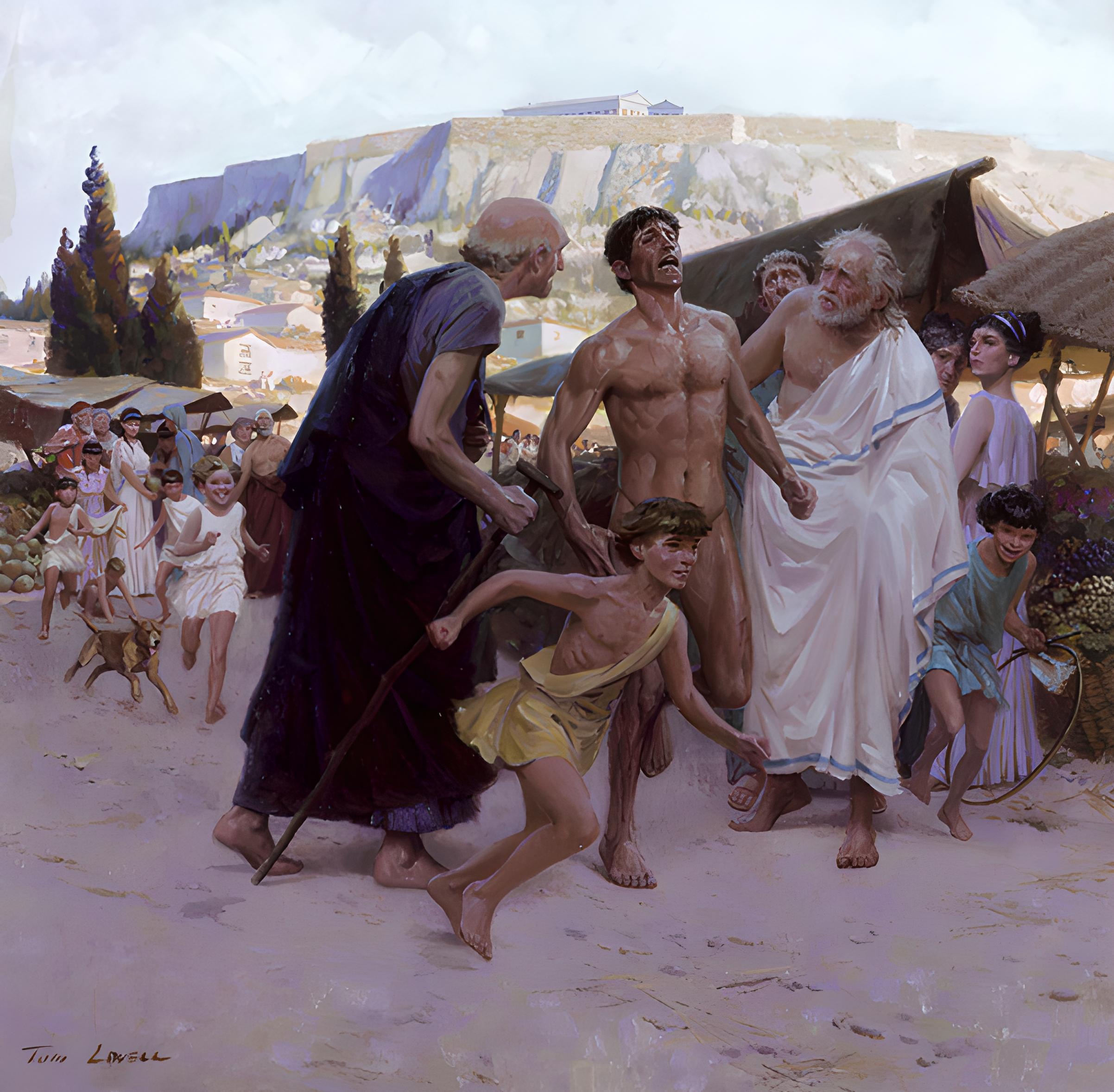
The distances between urban centers were more accurately recorded. Pheidippides, an Athenian runner, was dispatched to Sparta in the days leading up to the Battle of Marathon. He had run more than 230 kilometers at that time. Keep in mind that Pheidippides, the legendary runner, was a professional messenger. He ended up being the protagonist of a well-known tale. Pheidippides was the first to sprint to Athens following the Greek triumph over the Persians at the Battle of Marathon in 490 BC, when he declared, “Rejoice, we conquer!” before collapsing and dying.
Ancient runners sought the approval of the gods
The marathon race was held in honor of the mythology, which likely developed much later than the events it portrays. Pheidippides’ legendary journey from Athens to Sparta inspired a modern distance running competition, the Spartathlon, which has only been held annually since 1982. The winning time on this course is often about one day; however, the record is only 20 hours and 25 minutes. Therefore, current distance runners are roughly twice as quick as their ancient Greek counterparts.
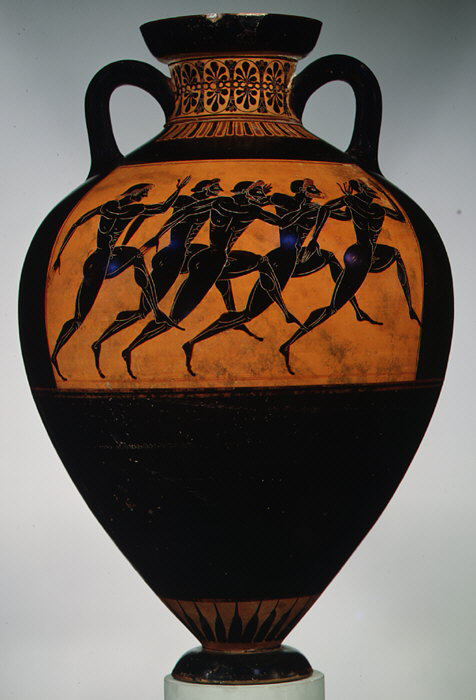
This is because, depending on the activity, ancient athletes were either recreational participants or highly paid professionals. Our typical sports industry was nonexistent. Although ancient runners probably had some concept of a diet, they lacked access to modern-day scientific knowledge on training, food, and the benefits of sporting shoes and other equipment. They raced not on asphalt or the current surfaces of stadiums and roadways, but on broken clay from wagons or the tops of rocks.
Speed walkers needed to fuel up (food and drink) and take breaks along the way. It’s important to keep in mind that the Ancient Greeks’ running was never purely athletic because it always served a specific purpose; for example, during special races, the athletes weren’t trying to improve their running times but rather to win a sporting battle whose victor was chosen by the gods.
Bibliography:
- Miller, Stephen G. Ancient Greek Athletics, 2006.
- Herodotus (1849) [c. 430 BC]. Histories (full text). Translated by Cary, H. New York Harper.