Imagine stepping out of the twenty-first century and arriving in the sun-baked, dust-choked landscape of the Mediterranean world between the autumn of 1095 and the summer of 1099. To travel back to the time of the First Crusade is to witness one of the most improbable, chaotic, and fanatical mass migrations in human history: a three-thousand-mile trek on foot and horseback by nearly one hundred thousand Western Europeans who sold everything they owned, sewed strips of red cloth onto their tunics, and marched into an unfamiliar Eastern world that was far wealthier, cleaner, and more scientifically advanced than the feudal villages they had left behind.
November 27, 1095: The Field Outside Clermont
Your journey begins on a chilly Tuesday afternoon in November 1095 in an open pasture outside the eastern gate of Clermont in central France, because the cathedral inside the walls is too small to hold the crowd of three hundred bishops, abbots, and French noblemen. Standing on a raised wooden platform in his papal tiara is Pope Urban II, who has received an urgent letter from the Byzantine Emperor Alexios I Komnenos in Constantinople asking for a few hundred Western mercenary knights to help push the Seljuk Turks back from Anatolia.
Instead of asking for a small mercenary detachment, Urban II preaches an electrifying sermon that changes world history. Calling upon the violent feudal knights of France and Normandy to stop slaughtering their Christian neighbors in private castle feuds, the Pope urges them to march two thousand miles east to liberate the Holy Sepulchre in Jerusalem—promising a revolutionary spiritual reward: anyone who dies on the march or in battle will receive immediate remission of all confessed sins. As the crowd roars back in unison in Latin and Old French, “Deus le volt!” (“God wills it!”), men rip strips of red wool and linen to sew cross badges onto their right shoulders, taking the pilgrim’s vow that will soon give birth to the word Crusader.
Two Worlds Collide at the Walls of Constantinople (1096–1097)
Fast-forward a year to the spring of 1097 outside the colossal triple Theodosian Walls of Constantinople. Having survived the disastrous prelude of the “People’s Crusade”—where a ragged mob of forty thousand peasants led by the barefoot monk Peter the Hermit marched ahead without supplies and was annihilated by Seljuk archers in Asia Minor—the four main baronial armies of the Princes’ Crusade have finally converged on the Bosporus, led by rivals who barely trust one another: Godfrey of Bouillon, his brother Baldwin of Boulogne, Count Raymond IV of Toulouse, and the towering six-foot-plus Norman warlord Bohemond of Taranto.
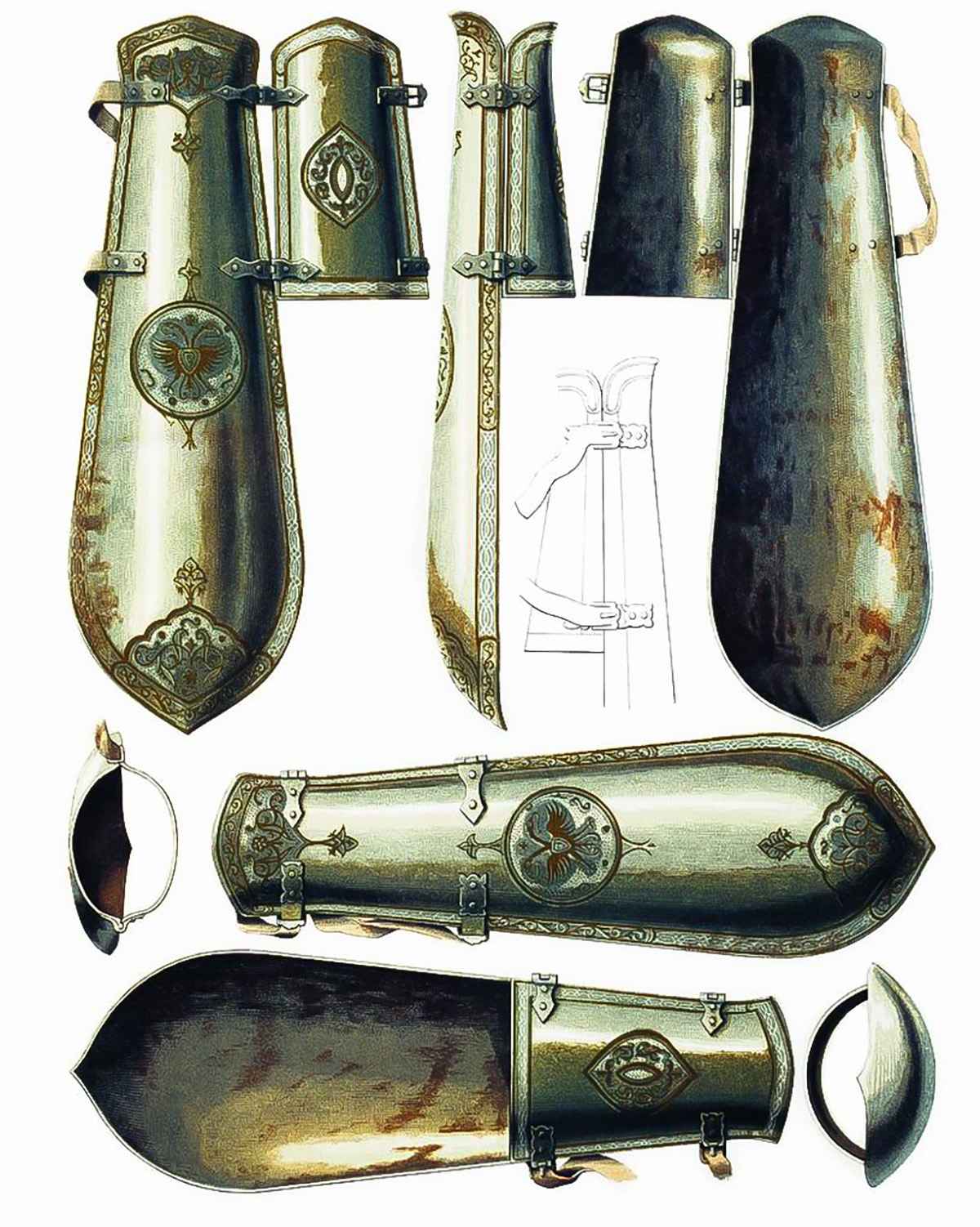
To a Western knight arriving from a dark, smoky, mud-floored stone keep in Picardy or Flanders—where few nobles can read their own name and towns rarely exceed five thousand people—Constantinople looks like another planet. Housing half a million citizens, paved avenues, running water aqueducts, public hospitals with trained physicians, silk workshops, and the soaring dome of the Hagia Sophia glittering with gold mosaics, the Byzantine Greeks look down from their battlements at the unwashed, mail-clad “Franks” with a mixture of awe at their ferocious height and horror at their lack of manners—prompting Emperor Alexios’s brilliant historian daughter, Princess Anna Komnene, to write down her impressions of the boastful Western barbarians before her father hurriedly ferries them across the water into Asia Minor.
Starvation at Antioch and the Scorching March Across Anatolia
Once your boots hit the dry central plateau of Anatolia in the summer of 1097, the romantic dream of a swift pilgrimage turns into a two-year nightmare of thirst, heatstroke, and starvation. Wearing forty pounds of iron chainmail hauberks over padded wool gambesons under a forty-degree-Celsius July sun, knights watch their prized warhorses die by the thousands from lack of water after routing the Seljuk Sultan Kilij Arslan I at Dorylaeum—forcing proud French barons to ride into Syria sitting on the backs of pack oxen, mules, and goats while their hunting dogs pull baggage carts.
By the winter of 1097–1098, you are trapped in the mud outside the four-hundred-tower walls of Antioch during a grueling eight-month siege. Food runs out so completely that a single dried bean sells for a silver penny, knights boil the leather soles of their own boots and the thongs of their shields to eat, and one in every five people in the camp starves to death. Only after Bohemond bribes an Armenian tower guard named Firouz to let fifty knights climb a rope ladder over the wall on the night of June second, 1098—hours before a massive Muslim relief army under Kerbogha of Mosul arrives to besiege the starving Crusaders inside the city—does the discovery of a rusty iron spearhead buried beneath the floor of Saint Peter’s Cathedral (proclaimed by a visionary peasant to be the Holy Lance that pierced Christ’s side) whip the skeletal Crusaders into a fanatical frenzy, charging out of the city gates on June twenty-eighth to rout Kerbogha’s superior army.
July 15, 1099: The Final Assault on Jerusalem
Of the sixty thousand to one hundred thousand men, women, and children who left Europe three years earlier, barely twelve thousand fighting men and fifteen hundred knights survive to stagger up the rocky Judean hills and behold the golden Dome of the Rock and the walls of Fatimid-held Jerusalem on June seventh, 1099, falling to their knees and weeping in the dust.
After a desperate barefoot penitential procession around the city walls while defenders mock them from the ramparts, and after dismantling Genoese ships at Jaffa to haul heavy timber across the hills to build three fifty-foot rolling wooden siege towers wheeled right up against the stone walls, the climax arrives at noon on Friday, July fifteenth, 1099. As Godfrey of Bouillon’s wooden tower drops its drawbridge onto the northern wall and knights pour into the city, the triumph descends into an infamous three-day massacre of Jerusalem’s Muslim and Jewish defenders and inhabitants inside the Al-Aqsa compound and synagogues, before the blood-soaked Crusaders wash their hands and walk weeping in joy to pray at the tomb of the Holy Sepulchre—establishing four fragile Crusader states that will lock East and West in two hundred years of conflict and cultural exchange.