Blanche of Castile (1188-1252) was Queen of France through her marriage to Louis VIII and regent of the kingdom during the minority of her son, Louis IX (1226-1244). Of Spanish and English origin, Blanche of Castile married Prince Louis, son of King Philip II of France, as part of a peace treaty between France and England. She became widowed when the heir to the throne, the future Saint Louis, was only twelve years old. For nearly ten years, the queen would serve as regent and spare no effort to preserve the integrity and stability of the kingdom, governing with authority and suppressing several revolts. The regency of Blanche of Castile saved the Capetian legacy in many areas.
Blanche: Princess of Castile and England
Born in Palencia, Spain, Blanche was the third daughter of King Alfonso VIII of Castile and, through her mother, granddaughter of Henry II of England and Eleanor of Aquitaine. She was married to the future Louis VIII of France following the Treaty of Le Goulet signed between her maternal uncle John Lackland and King Philip II (May 22, 1200).
Blanche of Castile brought as dowry a large part of Berry, mainly the lordships of Issoudun, Graçay, and Châteauroux.
The marriage was celebrated in Normandy on May 23, 1200.
Blanche of Castile quickly proved to be a courageous wife and actively supported her husband when he attempted, albeit in vain, to establish himself in England (1216). She would be crowned Queen of France in Reims at the same time as her husband on August 6, 1223.

Regent of France
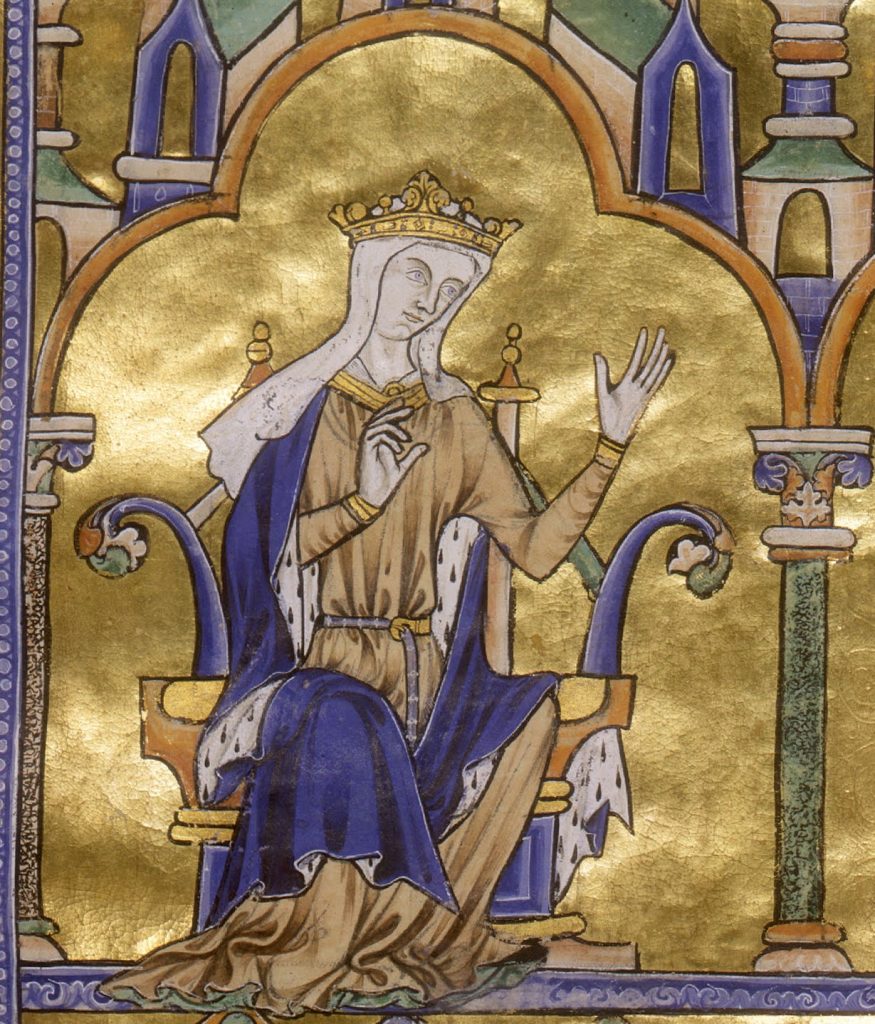
At the death of her husband in November 1226, her son, Louis IX, was only twelve years old. She became regent of the kingdom (1226/34). The Queen of France, complying with the last wishes of the deceased, who had appreciated her energy and dedication, thus resumed the government of the kingdom until the king’s majority. She acted immediately with great skill by having her son crowned without delay in Reims (the cathedral was then under construction). Most of the great vassals of the crown attended the ceremony. On this occasion, the Count of Flanders, Ferrand, one of the defeated at Bouvines, was even released from the royal prisons on January 6, 1227.
Shortly after, Blanche of Castile concluded with the Count of Toulouse the Treaty of Meaux (1229), very advantageous for the Capetian dynasty. The Count ceded to the crown the eastern part of Languedoc (Beaucaire, Nîmes, Béziers, Carcassonne) and married his daughter and sole heiress to Saint Louis’s younger brother, Alphonse of Poitiers, stipulating that if the latter had no children (which happened), the rest of Languedoc would revert to the king. These acquisitions already allowed, for the first time, the Capetian dynasty to establish itself on the Mediterranean.
The Guardian of the Kingdom
Blanche then quelled a revolt of lords possessing lands around the royal domain, who were seeking in the sovereign’s minority an opportunity for disorder to regain some of their lost independence. At the head of the rebellion was Count Thibaut IV of Champagne, an agitated and inconsistent character, a talented poet but poor politician, and, moreover, more or less in love with the queen. Blanche had little trouble defeating him and making him an ally rather than an enemy. To the west, the task was more difficult against Pierre of Dreux, called Mauclerc, widower of Countess Alix of Brittany, a feudal constantly in a state of revolt, and against the Count of La Marche, Hugh of Lusignan. Both benefited from the diplomatic support of King Henry III of England.
The latter even landed at Saint-Malo on May 3, 1230, to reconquer his heritage. Pierre Mauclerc did not hesitate to transfer his homage to him. Here again, Blanche overcame several uprisings. As early as October 1230, Henry III had to return to England, and his new vassal had to negotiate in Paris in November 1234 with the queen mother, who allowed him to keep the government of Brittany until the majority of his son, Count John the Red, in 1237. Thus the regency, contrary to those France experienced in later centuries, contributed to strengthening the crown instead of weakening it.
Blanche of Castile: Mother of the Future Saint Louis
Very pious, Blanche of Castile watched over the education of her children, particularly that of the future Louis IX of France; she is even attributed excessive educational statements: indeed, she allegedly told her son that she would prefer to see him dead rather than sullied by a mortal sin. In 1234, she negotiated the marriage of the young king to Margaret of Provence, daughter of Raymond Berengar V of Provence, to extend French influence in the Rhône Valley.
This alliance was reinforced in 1246 by the union of her youngest son, Charles I of Anjou, with Beatrice of Provence, heiress to the county.
Very authoritarian, the queen mother gave Saint Louis a strict Christian education and always maintained a political influence and great ascendancy over the king. The latter would not govern alone until 1244. When he left for the 7th Crusade, she resumed the regency again (1249-1252) and had to face the revolt of the Pastoureaux, bands of young people who had taken the cross only to eventually engage in pillaging along their way. She passed away on November 27, 1252, and was buried in Maubuisson Abbey, leaving her son a pacified kingdom.