When the aristocratic Roman senator Tacitus put down his stylus around 117 AD at the end of his Histories and Annals, the great classical tradition of Latin historical writing seemed to fall into a two-hundred-and-fifty-year slumber. Then, around the year 390 AD in the twilight of the fourth century—just decades before the Western Roman Empire collapsed—a retired Greek-speaking Roman army staff officer stepped forward in Rome to write a monumental thirty-one-book sequel to Tacitus in Latin: Ammianus Marcellinus. Widely hailed by Edward Gibbon and modern scholars alike as the last great historian of the ancient Roman world, Ammianus gave posterity a vivid, boots-on-the-ground eyewitness account of an empire fighting for its life from the deserts of Persia to the catastrophic battlefield of Adrianople.
A Greek Soldier Writing in Latin: The “Protector Domesticus”
Born around 330 AD into a prosperous, educated Greek family in the Syrian metropolis of Antioch, Ammianus Marcellinus proudly described himself in the closing line of his work as “miles quondam et Graecus”—”a former soldier and a Greek.” Around the age of twenty in the early 350s AD, under the reign of Emperor Constantius II (the son of Constantine the Great), Ammianus enlisted in the elite corps of the Protectores Domestici: an imperial officer-cadet guard unit made up of gentleman soldiers who served as confidential staff officers, couriers, and intelligence aides to the empire’s top generals.
Attached to the personal staff of Ursicinus, the Master of Cavalry in the East, Ammianus did not read about Roman warfare in a scroll; he lived it firsthand for over a decade:
- Secret Missions and Narrow Escapes: In 355 AD, he accompanied Ursicinus across the Alps to Cologne in Gaul on a delicate clandestine mission to eliminate the rebellious Frankish general Silvanus, who had proclaimed himself emperor.
- The Siege of Amida (359 AD): Sent back to the Mesopotamian frontier when the Sassanid Persian King Shapur II invaded with an army of a hundred thousand men and war elephants, Ammianus was scouting on horseback when Persian cavalry nearly captured him; riding for his life, he slipped inside the fortress city of Amida (modern Diyarbakır, Türkiye) minutes before the gates slammed shut. For seventy-three terrifying days, Ammianus fought on the walls under clouds of Persian arrows and plague until the city fell at night—escaping in the dark with two companions, stealing a stray horse on the road, and surviving debilitating thirst across the desert to reach Antioch alive.
Campaigning With Julian the Apostate in Persia (363 AD)
The towering tragic hero of Ammianus’s history was Emperor Julian (known to Christian writers as “Julian the Apostate”), the brilliant, ascetic philosopher-nephew of Constantine who ascended the throne in 361 AD and attempted to restore traditional Greco-Roman paganism across the empire.
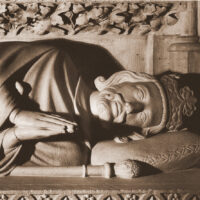
Although Ammianus was himself a tolerant pagan who admired Julian’s courage, incorruptibility, and intellect—and personally marched alongside Julian during the Emperor’s massive 363 AD invasion of the Persian Empire all the way to the gates of Ctesiphon—Ammianus demonstrated why he was a master historian: he refused to write blind propaganda for his hero. When Julian enacted a petty law forbidding Christian professors from teaching classical Greek literature, Ammianus sharply condemned the decree as harsh and worthy of being buried in eternal silence. And when Julian burned his own river supply fleet on the Tigris and was fatally struck in the liver by a cavalry spear during a skirmish without wearing his breastplate, Ammianus chronicled the Emperor’s calm, philosophical deathbed speech in his tent alongside the humiliating territorial peace treaty signed by Julian’s successor, Jovian.
The Res Gestae and the Catastrophe of Adrianople (378 AD)
After retiring from the army and traveling through Egypt and Greece—where he personally witnessed the massive Mediterranean tsunami of July twenty-first, 365 AD, leaving behind a scientific description of the sea receding and returning that modern seismologists still use as a textbook model—Ammianus settled in the city of Rome in the 380s AD. Choosing to write in Latin rather than his native Greek so he could continue the narrative of Tacitus starting at the reign of Nerva in 96 AD, he composed the thirty-one books of his Res Gestae.
While the first thirteen books have been lost to time, the surviving eighteen books (Books 14 to 31, covering the critical twenty-five years from 353 to 378 AD) culminate in a breathtaking, unforgettable finale: Book 31, which provides our primary historical account of the arrival of the Huns from the Asian steppes, the desperate crossing of the Danube by the Visigothic refugees, the corrupt abuse of the starving Goths by greedy Roman officials who traded dog meat for Gothic children, and the apocalyptic Battle of Adrianople on August ninth, 378 AD—where Gothic cavalry annihilated two-thirds of the Eastern Roman field army and killed Emperor Valens on the field in the worst Roman military disaster since Cannae.
Combining a soldier’s eye for siege engines and logistics with biting satirical sketches of decadent fourth-century Roman senators who rode through the streets in silk robes surrounded by armies of kitchen slaves, Ammianus Marcellinus left humanity a priceless, fair-minded window into the final grand act of classical antiquity.