A Lifetime of Self-Portraits
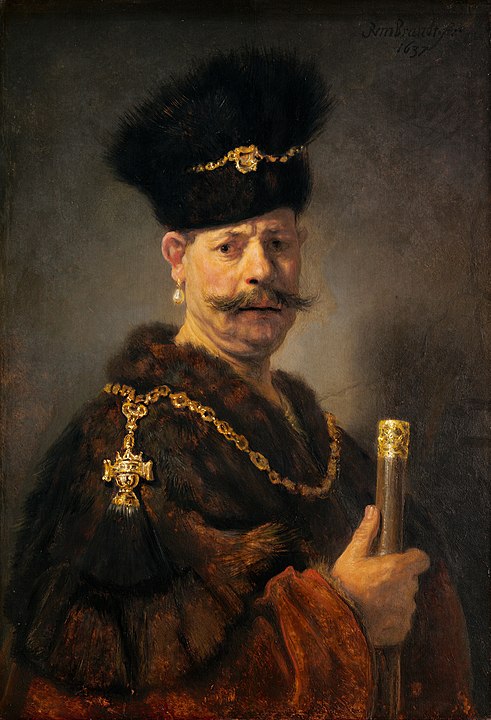
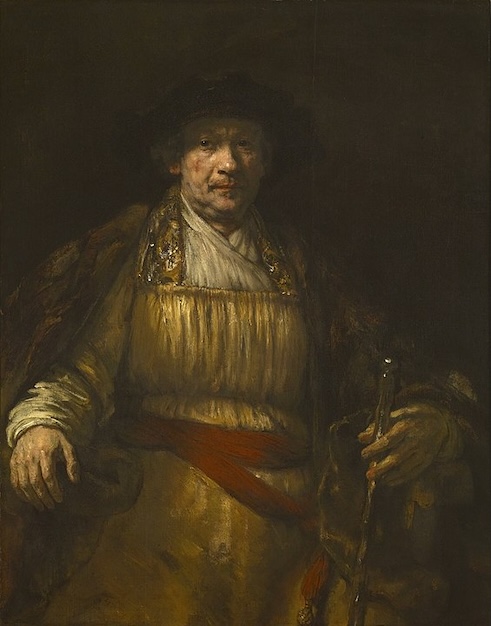
Rembrandt painted himself throughout his entire career, leaving behind a vast collection of around 50 self-portraits, along with numerous etchings and drawings. These works document his aging process and evolving technique. He often used costumes and exaggerated expressions—depicting himself as a nobleman, a monk, a soldier, or a beggar—making himself his own model for artistic study.
- A Lifetime of Self-Portraits
- A Home Filled with Clutter and Curiosities
- The Rembrandt House Museum in Amsterdam
- Rembrandt Was Never Truly Alone
- He Also Painted Landscapes
- The Constant Reauthentication of His Paintings
- Rembrandt Depicted Himself in His Paintings
- A Painter with a Philosophical Mind
- The Evolution of His Signature
- The Scandal of His Relationship with Geertje Dircx
A Home Filled with Clutter and Curiosities
Rembrandt lived in a chaotic yet artistically rich environment, collecting paintings, oriental rugs, sculptures, and rare objects. This passion for collecting reflected his artistic sensibility rather than a display of wealth. However, when he faced financial ruin, his treasures were sold at auction for a fraction of their value to pay off debts.
The Rembrandt House Museum in Amsterdam
During his most prosperous years, Rembrandt lived for two decades in a grand house in Amsterdam’s Jewish Quarter (now Waterlooplein). It was a prime location for securing commissions from wealthy patrons. However, the 13,000-florin mortgage he took out for the property burdened him financially and contributed to his bankruptcy in 1656.
Rembrandt Was Never Truly Alone
Although often portrayed as gruff or melancholic, Rembrandt disliked solitude. His marriage to Saskia van Uylenburgh, the daughter of a wealthy art dealer, brought joy to his life. After her death from tuberculosis at age 30, he was left to care for their son, Titus.
He Also Painted Landscapes
Though Rembrandt is primarily known for his portraits and historical scenes, he occasionally painted landscapes. While relatively rare, these works, such as The Mill, had a lasting impact on later artists like John Constable. His landscapes, often infused with dramatic chiaroscuro, were less focused on realism and more on mood and atmosphere.
The Constant Reauthentication of His Paintings
Rembrandt’s prolific output and the presence of numerous students in his workshop have led to ongoing debates over the authenticity of his paintings. Some works once attributed to him have been reclassified as student or follower copies, while others have been reinstated as authentic Rembrandt masterpieces. Today, around 400 paintings are believed to be his.
Rembrandt Depicted Himself in His Paintings
Beyond his well-known self-portraits, Rembrandt frequently included himself in historical and mythological compositions. He appears in The Raising of the Cross, Joseph Telling His Dreams, and The Stoning of Saint Stephen, often blending into the crowd. The reason for this remains unclear—perhaps he saw personal parallels in biblical stories or simply enjoyed inserting himself into his own narratives.
A Painter with a Philosophical Mind
Rembrandt’s art is deeply intertwined with philosophical reflection on human destiny. His works often show empathy toward the poor and marginalized, leading some critics of his time to claim he focused too much on commoners. A profound scholar of the Bible and Jewish culture in Amsterdam, he infused spiritual depth even into seemingly ordinary scenes, making his work uniquely introspective.

The Evolution of His Signature
Rembrandt’s signature changed throughout his career. Early on, he used “R” or “RH” (for Rembrandt Harmenszoon, meaning “son of Harmen” in Dutch). Later, he added van Rijn, his family name, before settling on just “Rembrant.” Eventually, he modified it to “Rembrandt” with an added “d”—a change with no phonetic impact but possibly significant to him.
The Scandal of His Relationship with Geertje Dircx
After the death of his wife, Rembrandt began a relationship with Geertje Dircx, the caretaker of his son, Titus. Though they lived together, he refused to marry her, leading to scandal. When their relationship soured, Geertje sued him and won financial compensation under a marriage promise. Rather than fulfill it, Rembrandt had her committed to an asylum in 1650, tarnishing his reputation further.