How was Babylon destroyed? All spring and summer the Persian army led by Cyrus the Great (Cyrus II or Kurash II) waited outside Babylon’s magnificent walls in the hope that the city would succumb to famine. The Persians had conquered their arch-rivals the Medes and the rich and legendary Lydia in a series of victorious campaigns. Once Cyrus had conquered Babylon, he would rule not only Mesopotamia but also Syria and Palestine, which had been under Babylonian rule. But how did the fall of Babylon come about?
The Unexpected End of Glorious Babylon
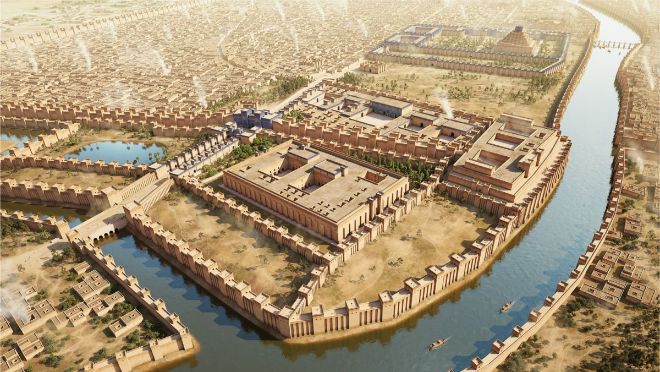
The Babylonians, well aware of Cyrus’ ambition, had taken a wise precaution and stored enough food to last them for years. However, they did not take into account one of their greatest defensive weaknesses, the Euphrates River, which runs right through the middle of the city. Cyrus was quick to realize that the river was the route that would lead his troops right into the heart of Babylon.
Cyrus ordered a canal to be dug from the banks of the river a little above the city of Babylon and connected to the nearby marshes. So the waters of the Euphrates flowing through the canal into the marshes receded, and when they were knee-deep, the Persians jumped in and marched along the riverbed to the city. The Babylonians were celebrating a feast that day and before they even realized the Persians were approaching, the city fell to the enemy. The fall of Babylon was happening.
Cyrus II, unlike his contemporaries, was a merciful commander. He was warmly welcomed by the Babylonians and green branches were spread before him as he entered the city. He was also kind to the Babylonians and showed his goodwill by participating in the worship of their greatest god, Marduk.

According to the Greek historians Herodotus and Xenophon, this is how the legendary city of Babylon fell. But the prophet Daniel, who lived there, preferred to see the fall of the city to the enemy as an expression of divine vengeance. In the Book of Daniel chapter of the Torah, the Prophet Daniel is acting as regent in the absence of his father Nabonidus. Belshazzar, who is recognized as king in the chapter, is reported to be giving a feast for thousand nobles.
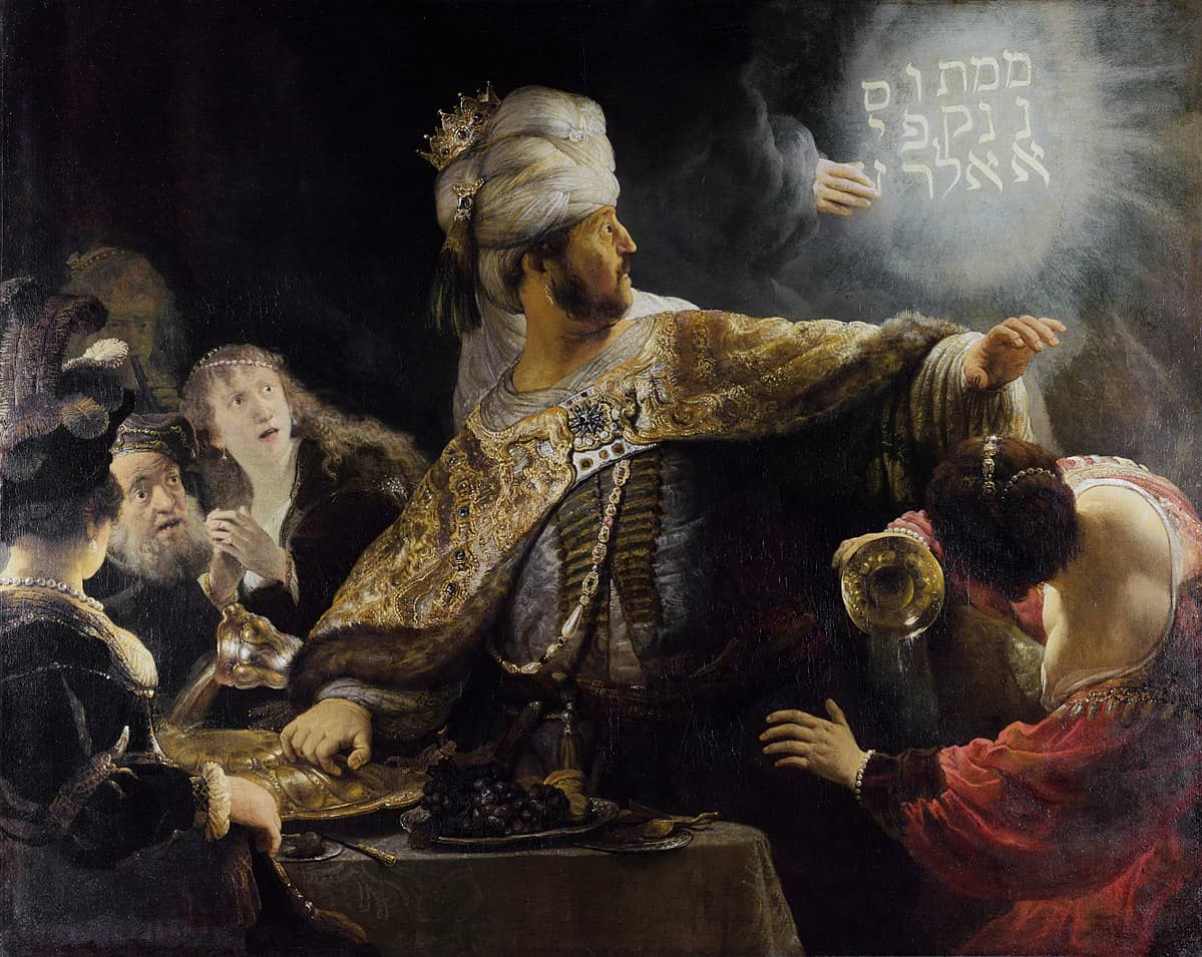
The guests were drinking wine from the holy vessels of the Jews, which 47 years before tonight the Babylonians under Nebuchadnezzar II had plundered from Jerusalem. As the feast continued, a hand appeared and wrote these words on the wall: “Mene, mene, tekel, upharsin.” Babylon had been prophesied to be lost and destroyed.
Return to Jerusalem From Exile
The prophet Daniel interpreted these words as follows: “God has numbered the days of your kingdom and put an end to it; it has been divided in two and given to the Medes and Persians.” The prophecy of Daniel was fulfilled, the Persian army marched into the city and Belshazzar was killed before dawn, probably not by Cyrus’ soldiers, but by his own men who had rebelled.
One of the first things Cyrus did was to end the Jews’ long exile in Babylon and send them back to Judah to rebuild Jerusalem and Solomon’s Temple. The Jews saw Jehovah’s hand in all this. Ezra, the leader of the Jews, tells how Cyrus, inspired by the God of the Israelites, sent the Jews home and allowed them to take with them “five thousand four hundred” special cups that had been used in Belshazzar’s feast, looted from the temple.
Greek historians and Jewish prophets agree on the power and greatness of Babylon. The name Babylon means “gate of God”. Spread over 4000 hectares of land, Babylon was the largest city in the world at the time and still retains the splendor that King Nebuchadnezzar brought to it. The outer ring of the city’s double walls was 17 kilometers (10mi) long and protected by regularly spaced bastions. At the top of the busy quay along the river rose the Ziggurat, or “tower of Babel” mentioned in Genesis. The tower was a man-made hill of mud bricks rising to 90 meters (295ft) high and could be seen for miles across the flat Euphrates plain. At the top of the tower, which consisted of many platforms connected by stairs, was a temple. The Babylonians called it Etemenanki. Next to it was a temple complex called Esagila. It was here that the Persian king Cyrus won the Babylonians’ trust by worshipping Marduk.
Gardens and a Glittering Palace
On that fateful night, Belshazzar must have feasted in the glittering palace on the north side of the old city, overlooking the Euphrates. The famous “Hanging Gardens of Babylon” were not far away. The city was entered through eight gates, the most magnificent of which was the Ishtar Gate. From here, a ceremonial road more than 20 meters (65ft) wide led south through the city to the temple area.
The surrender of Babylon to Cyrus II marked the end of Babylon’s legendary splendor, even though the city had been the capital of the richest provinces of the Persian Empire under his successors. The fall of Babylon had begun. In 482 BC, when the people of Babylon revolted against Xerxes, he had the walls and temples destroyed and the statue of Marduk melted into gold. In 331 BC the city of Babylon surrendered to Alexander the Great and in 275 BC most of its population moved across the Tigris to the new capital Seleucia. The wind-swept ruins of Babylon would stand for more than 2,000 years until Iraqi leader Saddam Hussein bulldozed much of it in 1990 to make way for “New Babylon”.