During Christmas in Switzerland, the air is filled with a fairytale-like ambiance due to the lights, tempting scents, and music. The festive decorations and aroma of fondue and mulled wine fill the air in Swiss towns like Zürich and Geneva. Christmas markets are everywhere in Switzerland, selling regional delicacies and handcrafted goods. Those in search of a white Christmas will find the Swiss Alps to be the ideal location, since the winter season brings snow-covered vistas. The guests of all ages will savor this day, whether they are taking a horse-drawn sleigh ride, going to service at St. Peter’s Church in Zermatt, or seeing Santa Claus (Samichlaus) in Gstaad.
-> See also: 48 Countries That Celebrate Christmas Widely
Main Christmas Traditions in Switzerland
Around 60% of Switzerland is Christian (34% Roman Catholics, 22% Swiss Protestants, and 5.5% others). Despite the decline in Christianity, the number of Swiss citizens who celebrate Christmas has increased. It is clear that the Swiss Christmas celebration has changed over the years, even if nobody knows for sure when it all began. Crowns and advent calendars are traditional Swiss customs that signal the beginning of Christmas, including the Advent windows:
1. Advent Calendars
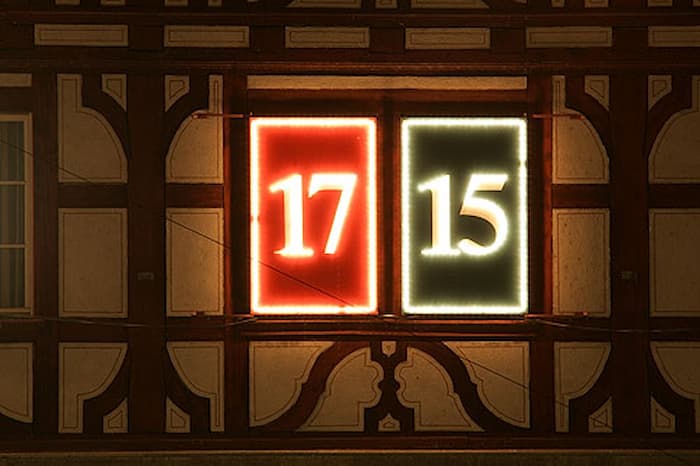
There are versions of the Advent calendar in Switzerland, which is quite popular in the country. Starting in late November, you can find them on sale at retailers. A little chocolate treat is hidden behind each of the 24 doors in the most popular version of the calendar. On the banks of the River Reuss in Lucerne stands the lighted Advent calendar, the largest in Switzerland. Some Swiss houses also decorate an “Advent Window” to serve as an actual calendar. They open a window or a gift daily from December 1st through the 24th, up to Christmas Eve.
2. Advent Crowns
The Christian practice of wearing an Advent wreath (called an Advent crown) marks the beginning of the four weeks of Advent in the Western church’s liturgical calendar. Originally practiced by Lutherans, it has extended to other Christian faiths. There are four candles on an evergreen wreath, but a fifth, white candle might be added to the middle. One Swiss tradition that began on the first Sunday of Advent is to burn a candle while reading Scripture, reflecting on God’s word, and praying. On succeeding Sundays during Advent, one more candle is lit until all four are lit on the final Sunday. A fifth candle, representing Jesus, is lit on Christmas Eve or Day in certain Advent wreaths.
3. Advent Windows
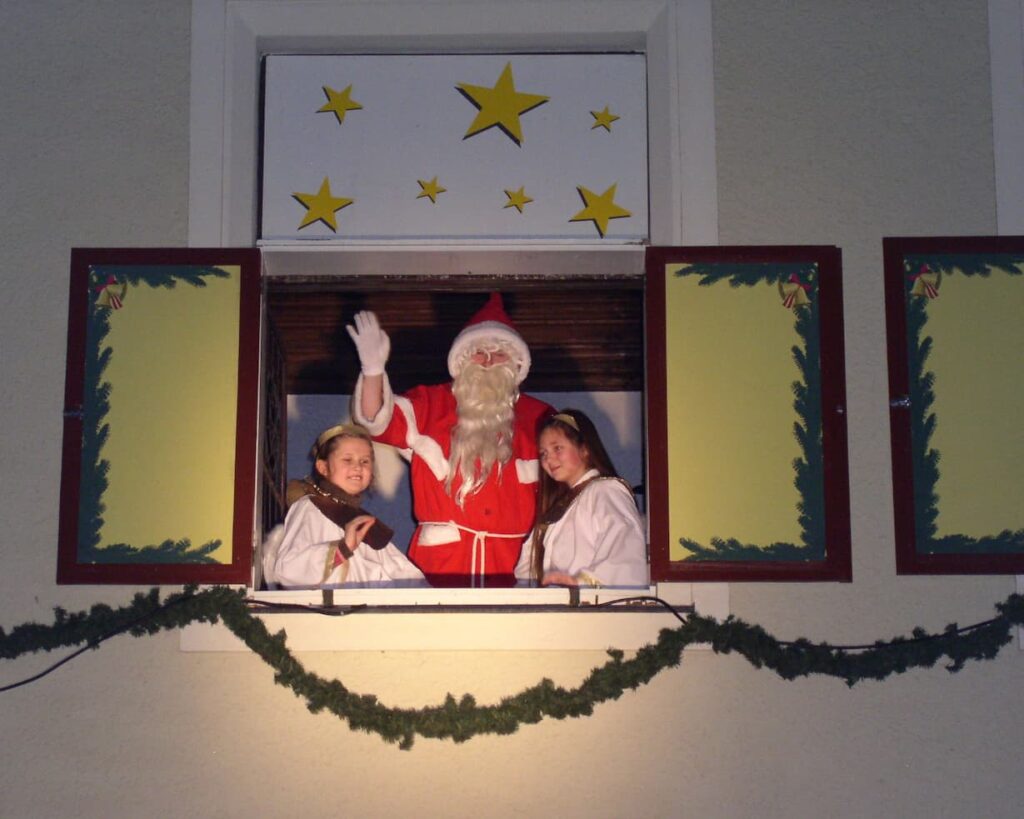
Originating in Aargau, the practice of advent windows did not become widely used in Switzerland until the 1980s. Throughout Switzerland, people often decorate their windows in December, a practice known as Adventsfenster. The designated houses and businesses open their windows nightly during Advent to reveal a festive sight, ranging from nativity scenes to stars. There is usually a feast to mark the opening of an Advent window, when the whole community eats local sausages and drinks mulled wine. As Christmas draws near, this Swiss Christmas custom always brings people together.
-> See also: All 15 Countries That Don’t Celebrate Christmas
Samichlaus: The Swiss Santa Claus
One main aspect of Swiss Christmas customs is the Swiss Santa Claus, or Samichlaus:

- Roots: The Swiss Santa Claus figure, Samichlaus, takes his cues from Saint Nicholas, the Greek bishop and gift-giver of Myra in what is now Turkey, who lived in the fourth century. Saint Nicholas, who was noted for his generosity toward children, gave rise to the December 6th celebration of Saint Nicholas Day, when presents were exchanged.
- Companion: Unlike the conventional Santa Claus, Samichlaus is shown with his elf companion Schmutzli and dressed in robes reminiscent of a Catholic saint. Schmutzli, meaning “dirt” in Swiss German, is a creature with a charred face who is seen punishing misbehaving children with a broom made of twigs.
- Role: Samichlaus makes two appearances to provide snacks and presents to children: on December 6th and, in certain places, on December 11th. This is all part of the Swiss Christmas tradition. His contributions to the practice of trading praise for treats and getting kids to recite poetry or sing songs have made him famous in the first place.
- Christkind: Unlike in other nations, where Santa Claus is revered, Swiss Christmas traditions actually ascribe the delivery of gifts on Christmas Eve to the Christkind instead of Samichlaus.
- Importance: Samichlaus and Schmutzli have long been part of Swiss folklore, and their practice has developed over the years with elements of Christian and non-Christian traditions.
Christmas Tree Tradition in Switzerland
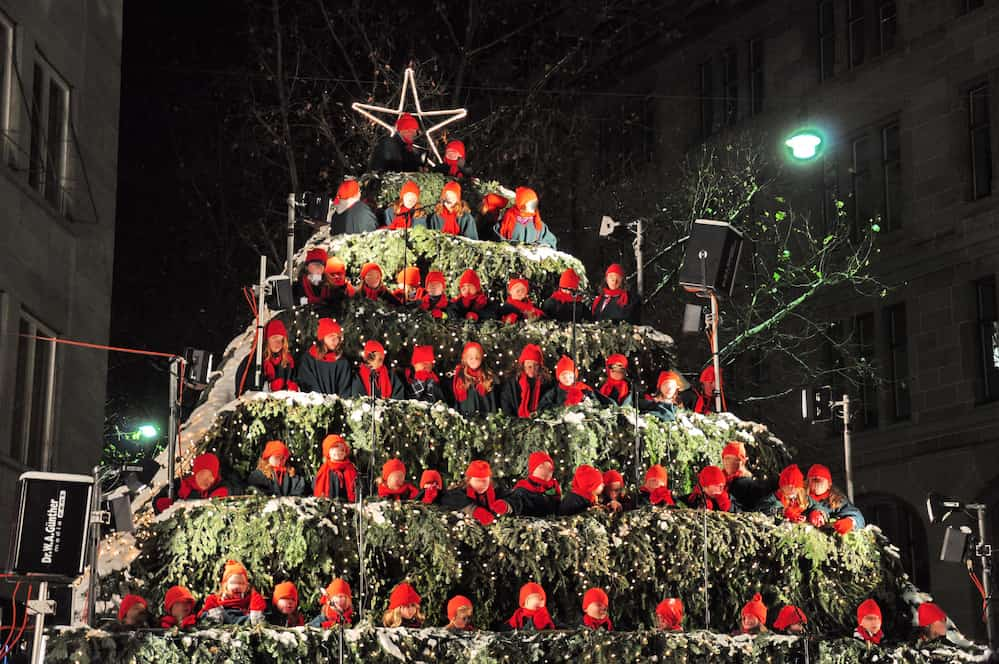
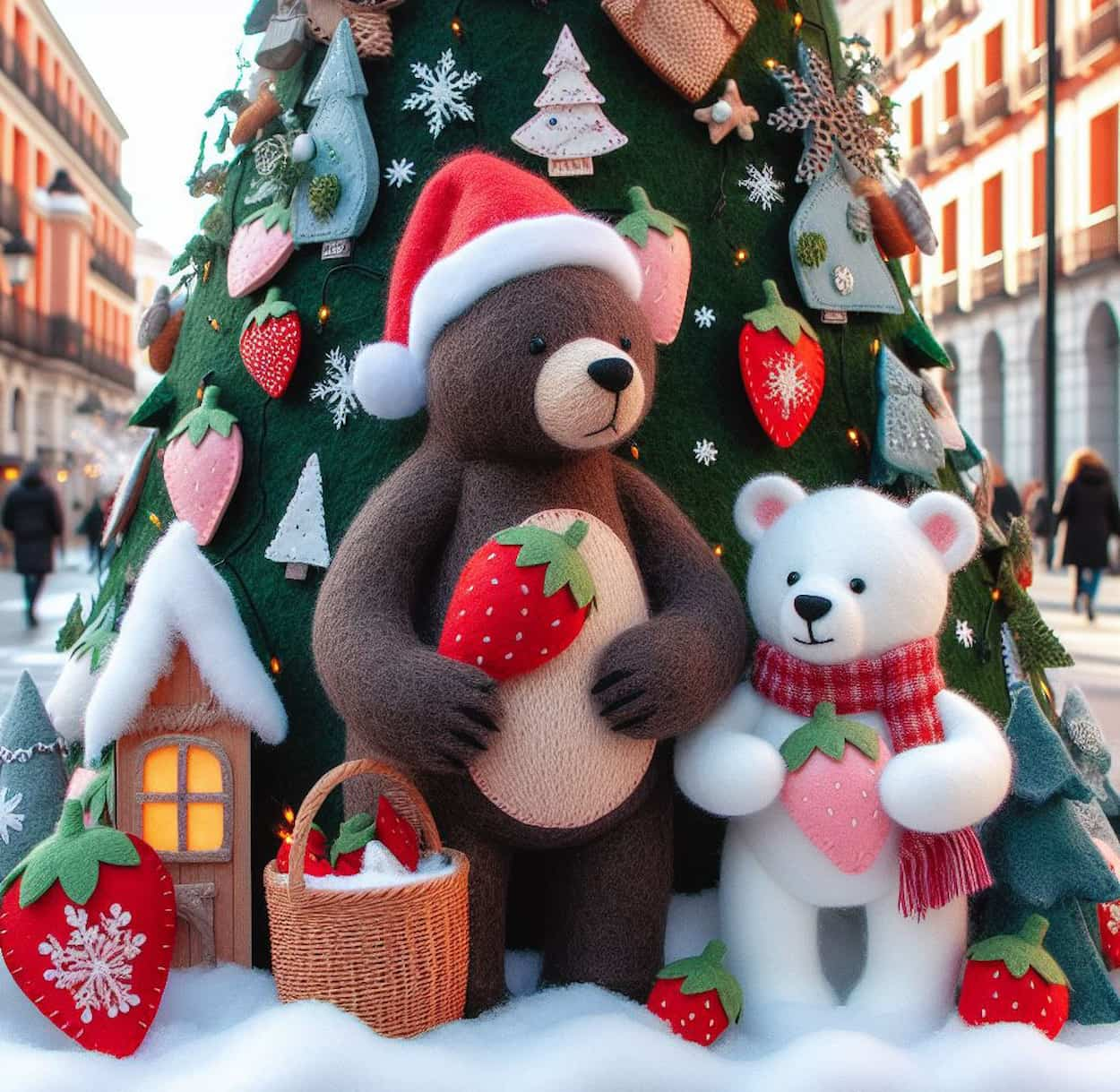
Only about 200 years ago did Christmas trees become a part of the Swiss tradition. The Yuletide centerpiece, the Christmas tree, made its gradual way into Swiss homes in the 1800s. Almost every Swiss household with kids these days has a Christmas tree. It is customary to purchase Christmas trees on Christmas Eve. Freshly chopped trees are also done by hand by certain households. The tree is traditionally unveiled after dinner, and it is decorated with apples, bells, snowflakes, and sugar cookies shaped like festive figures.
Lightning Actual Candles
The custom of lighting actual candles atop a Christmas tree is exclusive to Switzerland. On Christmas Eve (when gifts are unwrapped) and New Year’s Eve (for good luck), some Swiss people light actual candles that they place on their Christmas trees.
Parades and Carol Singing in Switzerland
Trychle Processions
During the Christmas season, Swiss communities have parades and sing carols. One unique Christmas tradition in Switzerland is the Trychle processions in the Bern region of Bernese Oberland, which begin on Christmas Day and end on New Year’s Eve. It’s a special way to spend Christmas.
The members of this group are well known as the “Trychle” because, during their parades, they display traditional attire and either wear large trychlers or trychels, which are similar to cowbells. Cowbells, played throughout the parade, are said to ring out bad spirits and bring good fortune for the new year.
Cantando il Natale
On the other hand, other Swiss people in several regions choose to carry paper or cardboard lanterns at Christmas. “Cantando il Natale” refers to the practice of going about town singing Christmas songs while costumed as various characters such as shepherds, angels, or Wise Men. In the month of December, this is a common pastime for many citizens.
Danzando il Natale
Locarno, Switzerland, is the site of the annual “Danzando il Natale” event. It is a Christmas-themed dance or performance and performers at the event showcase Christmas-themed dance routines and other forms of creative expression. Tickets to this event can be bought online.
Christmas Meal in Switzerland
- Christmas ham and scalloped potatoes cooked with melted cheese and milk make up the main course of the Swiss Christmas Eve supper.
- Many people love this dish. Aside from scalloped potatoes and Christmas ham, there are other meals depending on location and taste.
- The most common Christmas desserts are walnut cake and Christmas cookies.
- Mulled wine, or “Glühwein,” is the drink that accompanies this dinner and sets the mood for the evening.
Popular Christmas Foods in Switzerland
- Filet im Teig: This is a traditional Swiss Christmas dinner meal consisting of sausage meat wrapped in pastry, is a crowd-pleaser.
- Fondue Chinoise: The beef fondue known as Fondue Chinoise is a traditional holiday appetizer or New Year’s Eve dinner.
- Chestnuts: Roasted over an open flame or doused in syrup, chestnuts are a traditional Swiss snack no matter the time.
- Basler Brunsli: These almond biscuits, which resemble macaroons, are made in Italy but are beloved in the Italian-speaking canton of Ticino in Switzerland.
- Amaretti: Seasonal favorite cookies with a soft, chewy texture and an almond taste.
- Rösti: Typically served as a side dish with pork fondue, Rösti is a Swiss potato dish.
- Zürcher Geschnetzeltes: It’s a sautéed beef dish prepared in the Swiss way.
- Grittibänz: The Grittibänz, sometimes called Hanselmanne or Bonhomme, are luscious, sugary cookies prepared with egg and milk dough, raisins, and an egg wash to give them a golden sheen.
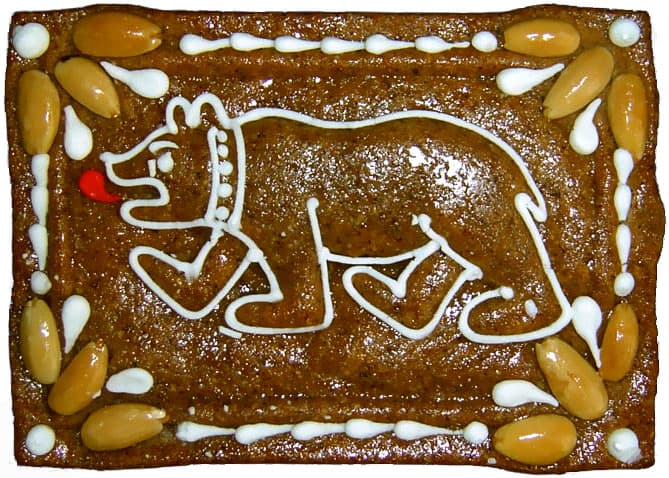
- Lebkuchen: The German-speaking Swiss love their lebkuchen, a kind of Christmas cookie that is prepared with honey and spices (allspice and aniseed).
- Pain D’epice: This is a French bread cake whose recipe is made with rye flour, honey, cinnamon, cloves, anise, and nutmeg.