Check out all the discoveries that have taken place in the 2500-year history of genetics and the details about the story and historical development of the field. For thousands of years, people have wondered how inherited traits are passed on, but it wasn’t until the 19th century that scientists began to understand the basic mechanisms. Today, the discovery that DNA contains hereditary information allows us to understand the basis of life.
How did the science of genetics emerge?
Hippocrates, an ancient Greek philosopher, came up with one of the earliest ideas about inheritance. He said that all the basic parts of the body are concentrated in the sperm, which then combines the traits of the mother and father in the womb to make a person. Charles Darwin later called this mechanism of inheritance “pangenesis”.
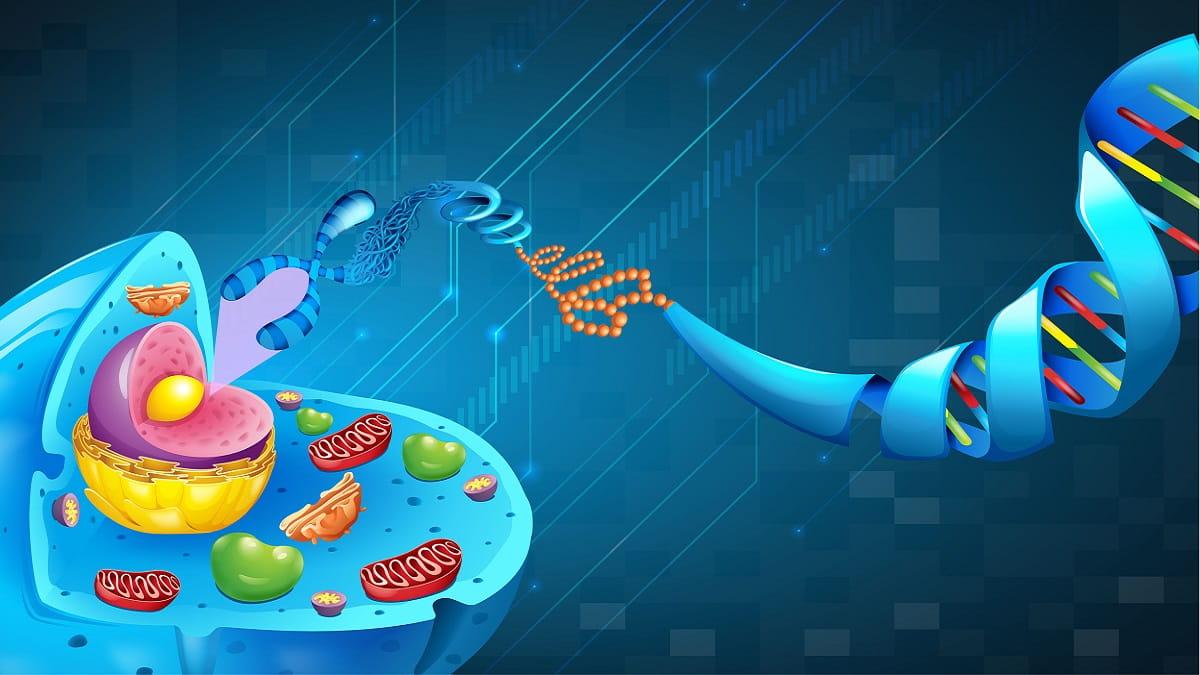
It was only in the 19th century that the Austrian rival Gregor Mendel discovered the basic rules of heredity. Around this time, a Swiss scientist named Friedrich Miescher gave the name “nuclein” to a substance found in the basic cell. This substance is now called DNA. American biologist Thomas Hunt Morgan’s experiments with fruit flies in the early 20th century confirmed that genes were found in chromosomes. But he still believed that it was proteins, not DNA, that passed on inherited traits.
Oswald Avery, Colin MacLeod, and Maclyn McCarty found that DNA is the hereditary molecule in many organisms and is the chemical basis of genetic information. In early 1950, Maurice Wilkins and Rosalind Franklin discovered that DNA has a helical form, and in 1953, this information was put together by Francis Crick and James Watson into double-helix models of DNA. The DNA genome project went further and resulted in the mapping of all human genes.
The timeline of the history of genetics
Decoding humanity step by step:
- 460-375 BC – Pangenesis idea by Hippocrates. Hippocrates develops a theory suggesting that hereditary material is collected from the whole body and that human life is shaped in the female vagina.
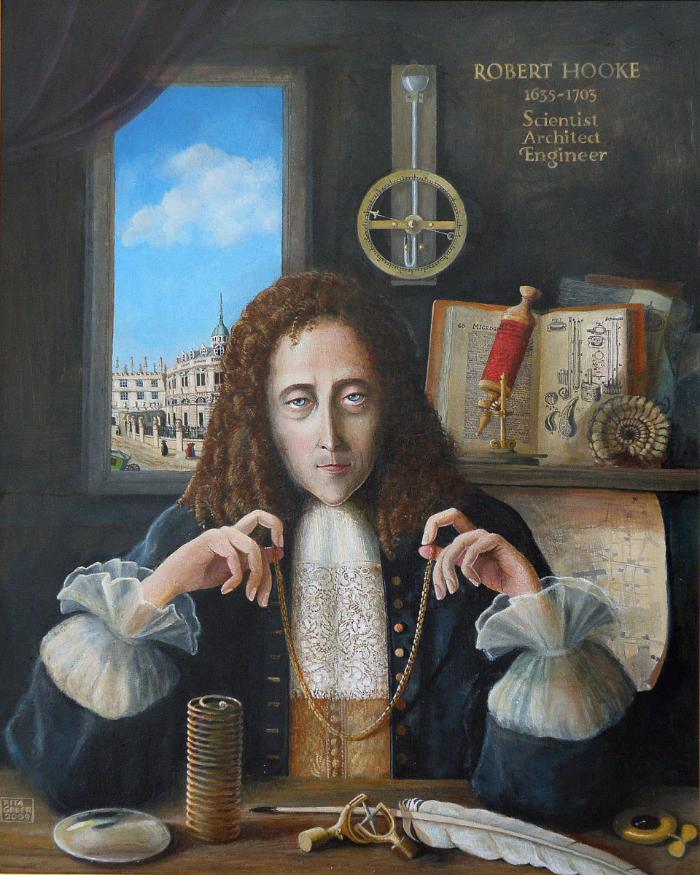
- 1663-65 – The first description of the cells. English scientist Robert Hooke uses the term “cell” to describe the microscopic units he observes while examining a piece of a fungus with one of the first microscopes.
- 1859 – Theory of natural selection. Charles Darwin publishes On the Origin of Species in which he argues that suitable organisms survive and pass on their characteristics to future generations.
- 1863 – Gregor Mendel. Experimenting with peas, Austrian monk Gregor Mendel discovers that traits such as the roundness or wrinkling of peas are transmitted by independent units that will be called genes.
- 1868-69 – Discovery of nuclein – the nucleus. Swiss scientist Friedrich Miescher finds a substance he calls “nuclein” in the nucleus of white blood cells. Nuclein is later called nucleic acid and today DNA.
- The 1880s – Meiosis is discovered. The process of cell division that produces gametes (sex cells) is described in the early 1880s. Its importance for heredity is explained in more detail by the German biologist August Wiesman in the 1890s.
- 1888 – Discovery of chromosomes. German anatomist Heinrich Waldeyer realizes that the cell nucleus sometimes contains chain-shaped structures and coins the term “chromosome”.
- 1905 – Detection of XY chromosomes. Unbeknownst to each other, American geneticists Nettie Stevens and E. B. Wilson describe the XY chromosome sex-determination system: Males have XY chromosomes, females XX.
- Early 20th century – The role of chromosomes in heredity. Working with fruit flies, American geneticist Thomas Hunt Morgan identifies that the genes controlling inheritance are arranged along chromosomes and link a particular trait to a specific chromosome.
- 1940-44 – DNA is identified as a genetic carrier. Using the bacterium Streptococcus pneumoniae, American scientists Oswald Avery, Colin MacLeod, and Maclyn McCarty discover that DNA is the hereditary material of most living organisms.
- 1953 – Discovery of the structure of DNA. American biologist James Watson and British biologist Francis Crick find that the DNA molecule consists of two strands of nucleotide chains loosely wrapped around each other.
- 1972 – Recombinant DNA. American biochemists Paul Berg and Herb Boyer produce the first recombinant DNA molecules (recombinant DNA is artificially produced DNA). This achievement is considered the beginning of modern biotechnology.
- 1989-present – Human Genome Project. The Human Genome Organization maps the human DNA sequence and finds that it contains only 20,000-25,000 genes.