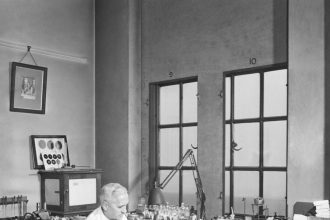
In the first quarter of the 20th century, Niels Bohr made important contributions to the development of quantum theory. However, his influence on younger physicists around the world is probably even more important. Since 1921, when the Institute for Theoretical Physics was established in Copenhagen, the Institute had been the center of theoretical physics research in the world, except during the war years. Almost all of the people who made groundbreaking contributions to the theory had spent a lot of time in Copenhagen working and talking with Bohr, explaining their ideas to him, and taking his approach to physics.
Who was Niels Bohr?
After Werner Heisenberg and Erwin Schrödinger carried out the rigorous synthesis of quantum theory in 1925–26, Bohr demonstrated how to make a rational description of the seemingly paradoxical properties of quantum theory and developed the integrative framework that allegedly “translates” the mathematical results. Bohr also made important contributions to nuclear physics, but in the last part of his life, he became the most famous physicist in the country and an advocate for world peace.
Niels Bohr was born on October 7, 1885, in Copenhagen. His father, Christian, who was a professor of physiology at the University of Copenhagen in 1890, was an exceptional scientist. His most influential work was on the effects of carbon dioxide on the release of oxygen by hemoglobin, for which he was nominated for the Nobel Prize in 1907 and 1908. Niels grew up in a relaxed but also learning-oriented environment. His brother Harald (1887–1951) was a respected mathematician and was the director of the Institute of Mathematical Sciences next to Niels’ institute. Being a Dane, he was a citizen of a small country that has recently emerged from a shameful war with Prussia and other catastrophes of the 20th century. This reality played a central role in Bohr’s life. Also, being half-Jewish had significant effects on his life, at least later.
Following his education in Denmark in 1912, Bohr’s international scientific career began with work with Ernest Rutherford at the University of Manchester. The previous year, Rutherford discovered the nuclear atom, in which all the mass is contained in the extremely small central core. Bohr’s success was that he took Rutherford’s work and linked it to Max Planck’s previous quantum results. Since the establishment of quantum theory in 1900, all analyses had dealt with radiation; the famous Bohr atom, on the other hand, applied the theory to atoms for the first time. The model of the atom’s structure that he published in 1913 is still used today. It shows that the atom has a small, positively charged nucleus surrounded by electrons.

The correspondence principle
His work was on quantized electron orbits around the nucleus. The angular momentum was equal to the formula nh/2π, and the values of various orbits were n1,2,3,… Finally, the Planck constant was the most fundamental quantity in quantum theory. Bohr manifested that certain orbits or “energy levels” exist in the atom and that the transition is possible. In other words, electrons could jump from one orbit to another by absorbing or emitting radiation at a frequency determined by the energy difference between the two levels. The required energy was supplied by a photon-light particle of the appropriate wavelength.
That was excellent work by Niels Bohr, which suitably brought him the Nobel Prize in 1922. But he was the first to realize that this was just one stop on the road to the entire quantum theory. According to the physics of his day, the atom Bohr suggested was unstable because the electron that changed its orbit had to lose energy and be embedded in the nucleus. Thus, the correspondence principle in Bohr’s new quantum theory was extensively used in the following decade, which can be summarized as reproducing the rules of classical or pre-quantum physics in sufficiently large systems. Max Jammer, an Israeli physicist and philosopher of physics, said, “In the history of physics, there was rarely a complete theory that owed so much to one principle as quantum mechanics owed to Bohr’s correspondence principle.”
Niels Bohr-Einstein debates
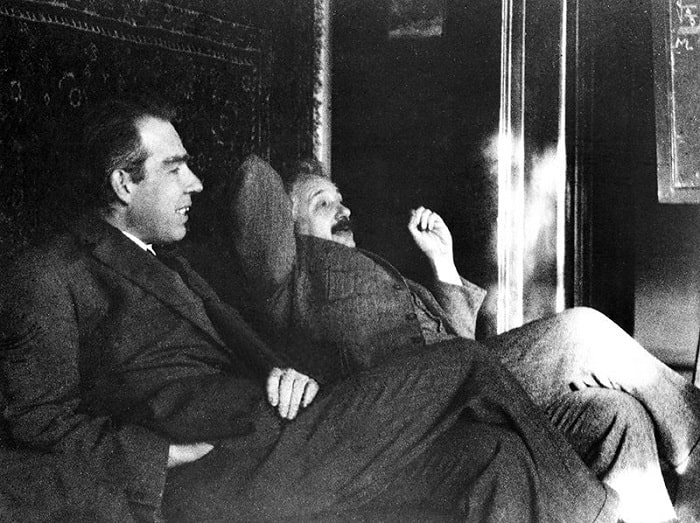
One of Bohr’s followers, Heisenberg, stated the first clear and precise expression of quantum theory in 1925, as he was under the wing of Bohr. It was Heisenberg who inferred the famous uncertainty principle that limits the simultaneous knowledge of position and momentum, but it was Bohr who attempted to explain the apparent contradictions of quantum theory and generalized his whole argument to the philosophical approach known as holism. The principle of complementarity states that some objects have two properties that seem contradictory. We can sometimes look at one side of an object at a time to see these different qualities, but not both at the same time.
This was why Bohr said that we should focus on measurement results rather than asking why we can’t handle momentum and position simultaneously or why light sometimes behaves as particles and sometimes as waves. Bohr wrote in 1936: “The renunciation of the ideal of causality in atomic physics, which has been forced on us, is founded logically only on our not being any longer in a position to speak of the autonomous behavior of a physical object, due to the unavoidable interaction between the object and the measuring instrument …”

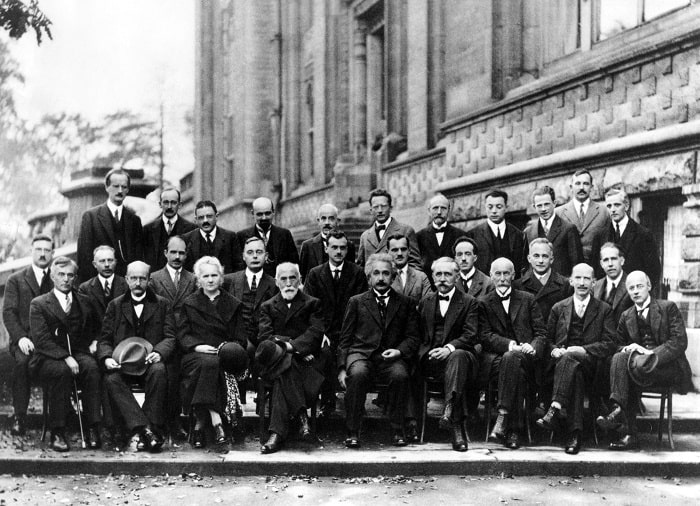
For many years, hardly anyone opposed Bohr’s approach to conceptual issues except Einstein, who demanded a deeper understanding of atomic systems because of its connection with measurements, and Schrödinger, who brought his synthesis to quantum theory. In the 1920s and 1930s, Bohr was thought to have prevailed in the famous Bohr-Einstein debates that took place publicly at events such as the famous Fifth Solvay Conference on quantum theory in October 1927. But more recently, as theoretical physicists have opposed many of the provisions of the principle of complementarity, this conclusion has come to be questioned.
In the 1920s, Bohr was one of the first people to figure out how to make electrons in different states. This helped him understand the periodic table of atoms, and in the 1930s, he became interested in nuclear physics again. He created the liquid drop model of the nucleus, which explained many experimental results and played an important role in Lise Meitner and Otto Robert’s explanation of nuclear fission in late 1938. Like a drop of liquid, the nucleus could split into two. Later, while visiting the United States in 1939, Bohr worked with John Wheeler on the detailed theory of nuclear fission. They together showed that the common isotope of uranium, U-238, was not involved in fission; the fission contained U-235, which makes up only 0.7 percent of natural uranium, so it could be broken down.
In Denmark, Niels Bohr was clearly the country’s most distinguished person. In 1931, Bohr and his family were entitled to live in the Residence of Honor, which was handed on by the Carlsberg Foundation to the most influential Danish citizen in the field of science or art. (His family consisted of his wife, Margrethe, whom he married in 1912, and their five sons, among whom Aage won a physics Nobel in 1975. They continued to stay in Copenhagen after the German occupation in April 1940. The next October, Heisenberg made a much-discussed visit to Denmark while working on the nuclear program of the Nazis. During the visit, he predicted that the Germans would triumph, which infuriated Bohr.
In a private conversation with Bohr, Heisenberg shared his apparent desire to discuss the possibility of making nuclear weapons, which disturbed Bohr greatly. Nearly 60 years later, this visit formed the basis of Michael Frayn’s play, Copenhagen.
In September 1943, it became known that Danish Jews would be sent to Germany. Niels Bohr and his wife first fled to Sweden and then London. In November, Bohr and Aage reached the USA, where they participated in the atomic bomb project. But Bohr was more concerned with the possible political consequences of this new weapon. In May 1944, he met with Winston Churchill, hoping he could persuade him to support the plans for the future international control of nuclear weapons. However, Churchill was unfortunately not interested in this offer. In fact, Churchill almost accused Bohr of treason since Bohr corresponded with the Russian physicist Pyotr Kapitza. (Despite this, Bohr’s letter was approved by the British Secret Service).
Bohr continued his search for peace after the war. However, he did not have much success in this regard. For his efforts, he received the first “Atoms for Peace” Award in 1957 at a ceremony attended by President Eisenhower. Bohr was also instrumental in planning the Nordita, the Scandinavian Institute for Theoretical Atomic Physics, the CERN, the European Council for Nuclear Research, and the nuclear power industrial application center in Riso, Denmark. He died suddenly in November 1962.
Bibliography:
- Kennedy, P. J. (1985). “A Short Biography”. In French, A. P.; Kennedy, P. J. (eds.). Niels Bohr: A Centenary Volume. Cambridge, Massachusetts: Harvard University Press. pp. 3–15. ISBN 978-0-674-62415-3.
- Kieler, Jørgen (2007). Resistance Fighter: A Personal History of the Danish Resistance. Translated from the Danish by Eric Dickens. Jerusalem: Gefen Publishing House. ISBN 978-965-229-397-8.
- Kragh, Helge (1985). “The Theory of the Periodic System”. In French, A. P.; Kennedy, P. J. (eds.). Niels Bohr: A Centenary Volume. Cambridge, Massachusetts: Harvard University Press. pp. 50–67. ISBN 978-0-674-62415-3.
- Kragh, Helge (2012). Niels Bohr and the quantum atom: the Bohr model of atomic structure, 1913–1925. Oxford: Oxford University Press. ISBN 978-0-19-965498-7. OCLC 769989390.
- MacKinnon, Edward (1985). “Bohr on the Foundations of Quantum Theory”. In French, A. P.; Kennedy, P. J. (eds.). Niels Bohr: A Centenary Volume. Cambridge, Massachusetts: Harvard University Press. pp. 101–120. ISBN 978-0-674-62415-3.
- Bohr, Niels (1985) [1922]. “Nobel Prize Lecture: The Structure of the Atom (excerpts)”. In French, A. P.; Kennedy, P. J. (eds.). Niels Bohr: A Centenary Volume. Cambridge, Massachusetts: Harvard University Press. pp. 91–97. ISBN 978-0-674-62415-3.
- Bohr, Niels (1985) [1949]. “The Bohr-Einstein Dialogue”. In French, A. P.; Kennedy, P. J. (eds.). Niels Bohr: A Centenary Volume. Cambridge, Massachusetts: Harvard University Press. pp. 121–140. ISBN 978-0-674-62415-3.