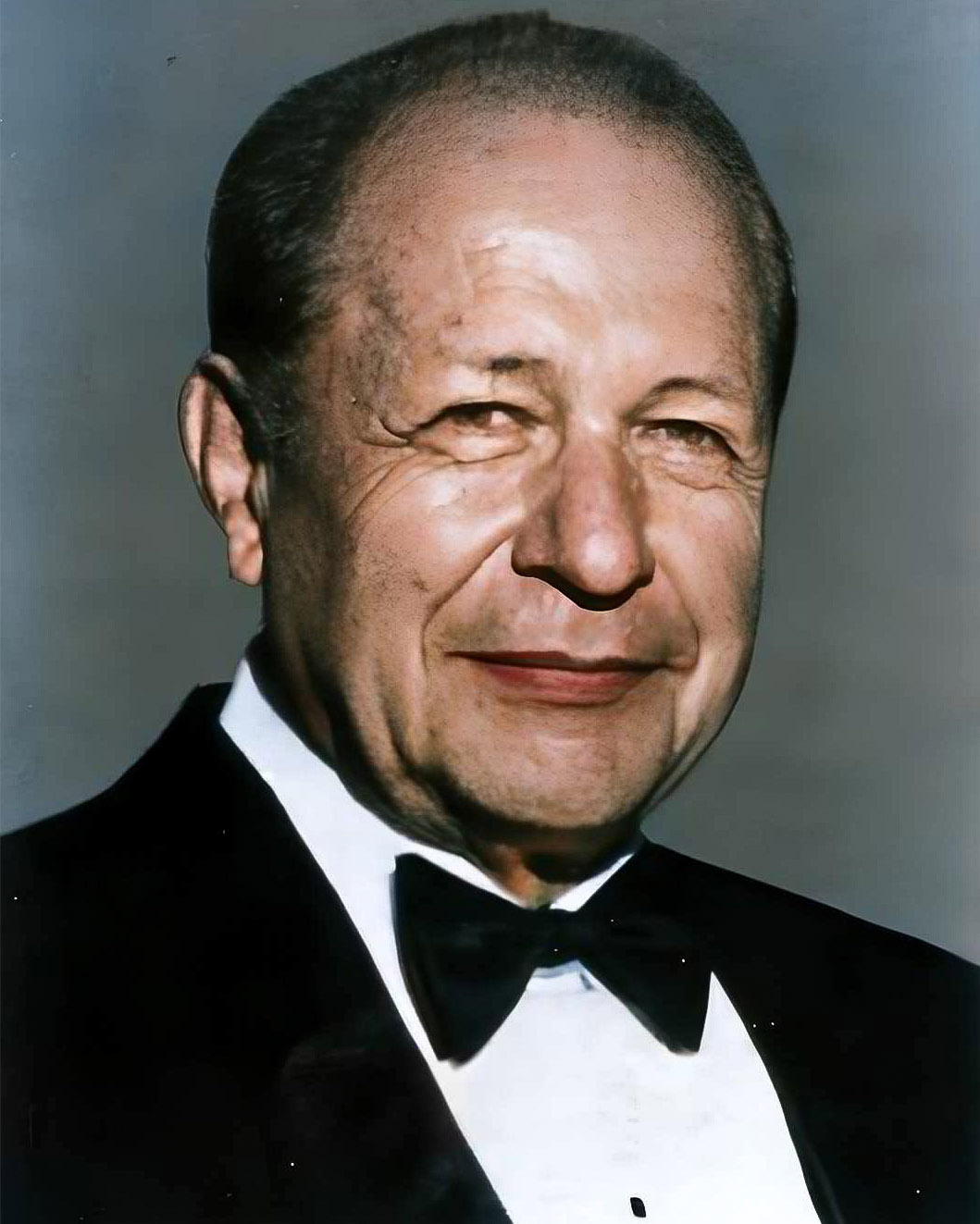
While King Louis XIV shone at the center of the Palace of Versailles as the Sun King, the immense financial, industrial, and naval machinery that paid for those gilded halls and sustained France as the superpower of seventeenth-century Europe was built and operated by a tireless, black-clad workaholic sitting at a desk piled with ledgers: Jean-Baptiste Colbert. Serving as Controller-General of Finances, Secretary of State for the Navy, and Superintendent of Royal Buildings from the 1660s until his death in 1683, Colbert rescued the French monarchy from the brink of bankruptcy, laid the foundations of the modern French luxury economy, and codified the economic doctrine known to history as Colbertism.
Rise Under Mazarin and the Downfall of Nicolas Fouquet
Born in Reims in August 1619 into a family of prosperous wool and cloth merchants rather than the ancient sword nobility, Colbert possessed an unmatched genius for accounting, double-entry bookkeeping, and administrative detail. Entering the service of Cardinal Jules Mazarin—the chief minister who governed France during the minority of Louis XIV—Colbert managed the Cardinal’s vast personal fortune so brilliantly that on his deathbed in March 1661, Mazarin uttered a famous parting line to the twenty-two-year-old King: “Sire, I owe you everything, but I believe I acquit myself of some of that debt by giving you Colbert.”
Colbert’s first major strike on the King’s behalf occurred just five months later in August 1661. For years, the flamboyant Superintendent of Finances, Nicolas Fouquet, had enriched himself by skimming millions of livres from royal tax loans, using the fortune to build the magnificent Chateau de Vaux-le-Vicomte. Working in total secrecy with Louis XIV, Colbert combed through Fouquet’s hidden accounting registers and exposed the massive embezzlement. Weeks after Fouquet made the fatal mistake of hosting a lavish party at Vaux-le-Vicomte that outshone the King’s own palaces, Louis XIV had D’Artagnan, captain of the Musketeers, arrest Fouquet in Nantes, abolishing the corrupt office of Superintendent and placing the entire fiscal state in the incorruptible hands of Colbert, whom Madame de Sevigne nicknamed “Le Nord” (The North) for his icy, unyielding demeanor.
Colbertism: Mercantilism and the Luxury Industry Monopoly
Working sixteen hours a day starting at five-thirty every morning, Colbert operated under a strict mercantilist philosophy that became known across Europe as Colbertism. In Colbert’s worldview, the total amount of gold and silver bullion in the world was fixed; therefore, for France to grow powerful and wealthy, it had to maximize exports of high-value finished goods to foreign buyers while reducing imports of foreign luxury items to near zero, keeping every gold coin inside French borders.
At the time in the 1660s, French aristocrats spent millions of livres buying fine lace and mirrors from Venice, tapestries from Flanders, woolen broadcloth from England, and steel from Germany. Determined to make France completely self-sufficient and turn Paris into the undisputed capital of European taste, Colbert established hundreds of Royal Manufactories (Manufactures Royales), granting state subsidies, tax exemptions, and monopolies to skilled workshops. He consolidated the Gobelins tapestry works in Paris, established silk looms in Lyon, and even sent French industrial spies to the island of Murano in Venice to bribe master Italian glassmakers into sneaking away to France—founding the Royal Mirror Glass Manufactory of Saint-Gobain (which still exists today as a global industrial giant) and producing the three hundred and fifty-seven revolutionary glass mirrors that lined the Hall of Mirrors at Versailles. To guarantee world-class reputation, Colbert issued over one hundred and fifty strict quality-control decrees, ordering that any bolt of French cloth found with a weaving flaw be tied to a public post with the careless merchant’s name attached.
Building the French Navy, Canals, and Global Infrastructure
Recognizing that international trade required maritime power and efficient transport routes inside France, Colbert transformed the country’s physical infrastructure. He abolished dozens of internal medieval river tolls, paved royal highways, planted vast royal oak forests (such as the Tronçais forest, whose trees are still harvested for French cathedrals and wine barrels three centuries later) to guarantee future timber for warship hulls, and enthusiastically backed Pierre-Paul Riquet’s monumental construction of the Canal du Midi—a two-hundred-and-forty-kilometer waterway featuring over sixty locks that connected the Atlantic Ocean directly to the Mediterranean Sea across southern France without ships having to sail around hostile Spain.
When Colbert became Secretary of State for the Navy in 1669, France possessed fewer than twenty rotting, seaworthy warships while the Dutch and English ruled the waves. Within a decade, Colbert constructed modern naval arsenals and drydocks at Brest, Toulon, and Rochefort, founded schools of hydrography and naval gunnery, replaced chaotic impressment with a regulated maritime conscription system (the Inscription Maritime) that provided pensions for wounded sailors, and launched a battle fleet of nearly two hundred warships and galleys that challenged the combined fleets of England and the Netherlands.
Science, Culture, and the Exhausting Shadow of War
Beyond finance and ships, Colbert understood that cultural and scientific prestige was an instrument of state power. He founded the French Academy of Sciences (1666), the Paris Observatory, the Academy of Inscriptions and Belles-Lettres, the Academy of Architecture, and the French Academy in Rome, placing foreign geniuses like the Italian astronomer Giovanni Domenico Cassini and the Dutch physicist Christiaan Huygens on the French royal payroll. Simultaneously, as Minister of the Colonies, he chartered the French East and West India Companies, expanded New France in Canada down the Mississippi River—which explorers initially named the “Colbert River”—and drafted the infamous Code Noir regulating the French Caribbean colonies.
Despite raising royal revenues nearly threefold without raising the crushing peasant land tax (the taille) during his early years, Colbert’s final decade was a tragedy of frustration. Every million livres Colbert painstakingly saved through trade and accounting reform was immediately spent twice over by Louis XIV and Colbert’s bitter rival at court, the War Minister Louvois, on endless European wars and the bottomless construction expenses of Versailles. Worn out by kidney stones, overwork, and royal ingratitude, the sixty-four-year-old Colbert died on September sixth, 1683, reportedly murmuring on his deathbed that if he had done for God what he had done for that man (the King), he would have been saved twice over, whereas now he did not know what would become of him.