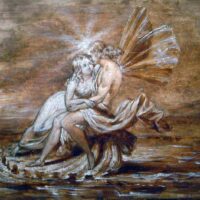
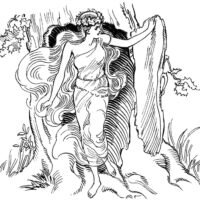
The Alseids (Ancient Greek: Άλσηΐδες) are nymphs in Greek mythology associated with valleys and groves. According to ancient Greek beliefs, Alseids guarded and protected groves.
They have a deep connection with plants, with each nymph intertwining with a specific plant and choosing it as their symbol. Despite their adoration for flowers and plants in general, Alseids can also be linked to water sources that inspire them.
Etymology
Their name comes from the ancient Greek Ἀλσηΐδες / Alsêides which signifies “inhabitant of the woods” i.e. nymphs. This word derives from the form ἄλσος / álsos which first means “sacred wood” and then by extension any sacred or consecrated place. This etymology fully conveys the idea of the sacred and divine dimensions that the Greeks saw in nature.
In Mythology
These nymphs often frighten travelers passing through their territories, but they are also capable of providing a calming and soothing effect on humans, creating conditions for a pleasant rest. Through their touch, Alseids can relieve a traveler from fatigue, invigorate them, and bring clarity to their thoughts. In some cases, they can even cure madness. However, Alseids can also induce a strong, deep sleep upon their adversaries. Resisting drowsiness is challenging, and if an enemy manages to do so, they won’t be able to fight effectively.
A grove can be easily felled or burned, thereby destroying the Alseid inhabiting it.
Hence, as guardians of groves, similar to Dryads, Alseids fear fire, lightning, and tools designed for logging and cutting down forests.
Loud noises are also intolerable to Alseids, so they prefer to keep a distance from humans, dwelling deep within the forests. Groves where Alseids resided were considered sacred by ancient Greeks.
The image of these nymphs is often associated with fairies, but unlike the latter, Alseids can be vengeful towards those who desecrate their natural space. They share similarities with Dryads, being nymphs of the forests and connected to trees. However, it’s essential to remember that Alseids don’t use trees, shrubs, and flowers as their dwelling but associate with them as symbols.
According to legend, Alseida was the adopted daughter of Demeter. She was renowned as the most beautiful nymph, defending the poppy-covered forest from the wrath and lightning of Zeus. In recognition of her bravery and profound connection with nature, the Olympian god repented and rewarded her by granting her eternal ownership of that forest. This nymph plays a role in the Eleusinian Mysteries.
In Poetry
Among ancient writers, Homer was the first and perhaps the only poet to mention Alseids in his works, including “Odyssey” (Book X, 350), “Iliad” (Book XX, 8), and the Homeric Hymn to Aphrodite (V, 98). Instead of using the term Alseids, he employed another term, Alsei:
“All are sprung from fountains, groves, and sacred rivers flowing into the salty sea” (“Odyssey,” 214: Book X, 350–351).
“The nymphs themselves appeared, those who inhabit beautiful groves, bright fountains, and flower-filled valleys” (“Iliad,” 716: Book XX, 8–9).
“Or are you a nymph, one who inhabits the sources of rivers, damp meadows, and beautiful wooded groves?” (Hymns. To Aphrodite, **: V, 97–98).
In Popular Culture
- The Alseids appear in the Magic: The Gathering trading card game, specifically in the Greek-themed world Theros, on the Gift of Life Alseids cards, Observant Alseide, and Harvest Alseids.
- The Force of Will trading card game also features a card called Alseid, with the Grim Reaper inspired by them.