In the athletic, youth-obsessed culture of ancient Greece—where sculptors carved the Olympian gods in eternal twenty-something physical perfection and lyric poets lamented the passing of youth—there was one creeping, relentless force that every mortal warrior dreaded more than the spear: Geras, the divine personification (daimon) of Old Age. Born from primordial darkness and depicted on Athenian pottery as a shriveled, stooped figure leaning on a walking stick, Geras represented the inevitable twilight of mortal strength—yet also stood at the center of one of the most surprising visual myths on Greek vases: his face-to-face confrontation with the invincible hero Heracles.
Son of Nyx and Opposite of Hebe
According to Hesiod’s Theogony, Geras was born without a father from Nyx, the primordial goddess of the Night, making him the brother of other inescapable realities of the human condition: Thanatos (Death), Hypnos (Sleep), Moros (Doom), Nemesis (Retribution), and Momus (Blame). In the later Roman adaptation by Hyginus and Cicero, where he was known in Latin as Senectus, his father was identified as Erebus (Darkness), and Virgil in the Aeneid placed Sad Old Age (Tristis Senectus) sitting right inside the vestibule at the entrance to the Underworld alongside Disease, Fear, and Hunger.
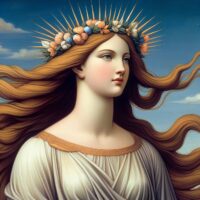
In the Greek worldview, Geras stood as the exact cosmic opposite of Hebe, the radiant daughter of Zeus and Hera who personified eternal youth and poured the nectar of immortality on Mount Olympus. While the gods enjoyed Hebe forever, mortals were handed over to Geras—whose Greek name geras gave the modern medical world the words geriatrics and gerontology. Intriguingly, in ancient Greek, the very same phonetic sound (spelled identically, though sometimes distinguished by vowel length in early dialects) also meant “gift of honor” or “privilege of seniority,” reflecting the dual Greek belief that while physical old age withered the muscles, it also bestowed venerable wisdom and civic authority upon elders.
Tithonus and the Curse of Eternal Geras
The terrifying power of Geras over mortals was illustrated most poignantly in the Homeric Hymn to Aphrodite through the tragic myth of Tithonus, a handsome Trojan prince loved by Eos, the rosy-fingered goddess of the Dawn. Desperate to keep her mortal lover beside her forever, Eos went to Zeus and begged him to grant Tithonus eternal life (immortality), and Zeus nodded his assent.
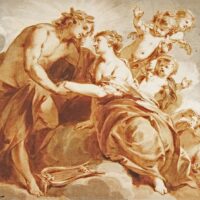
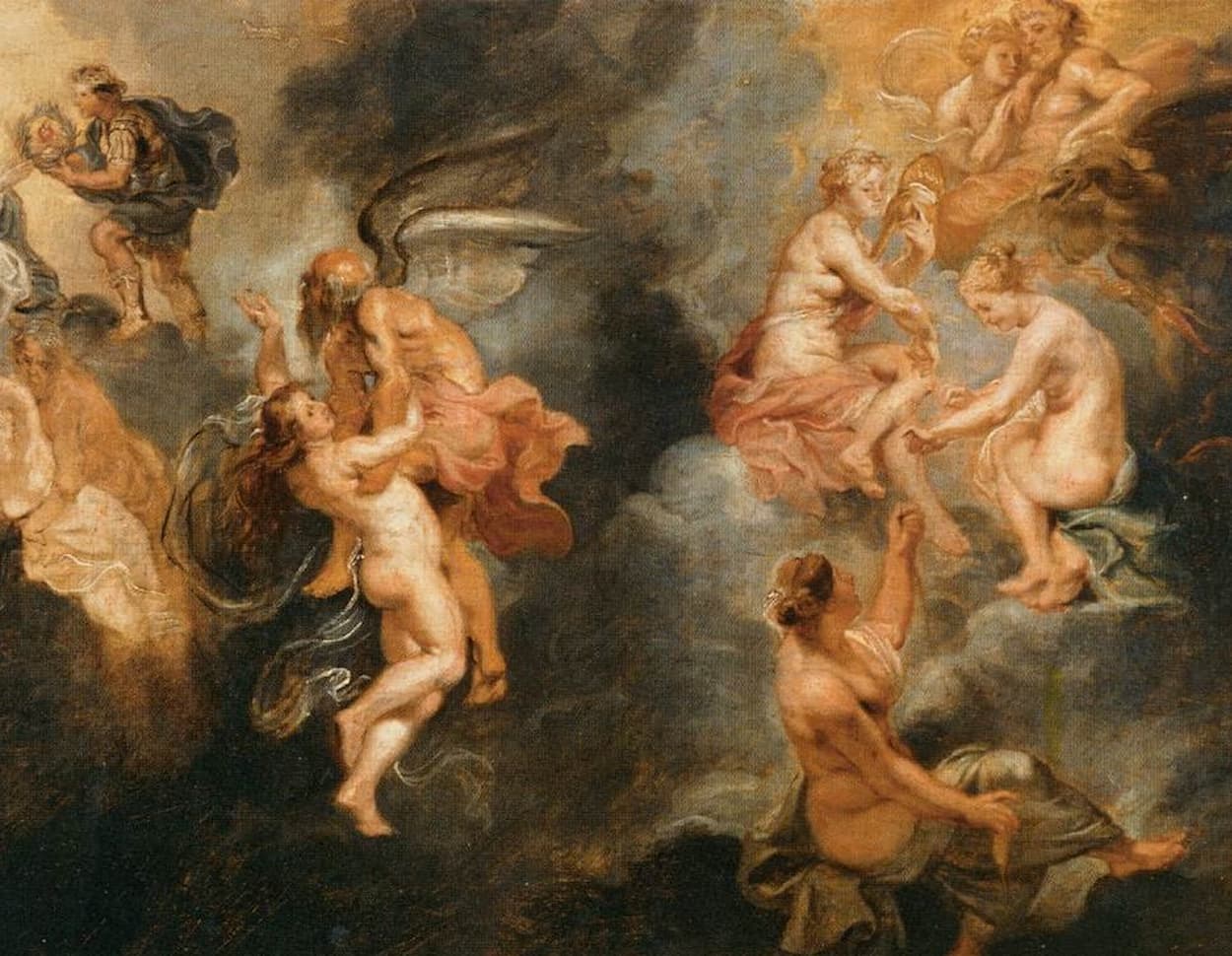
However, in her haste, Eos made a fatal verbal blunder: she asked Zeus for eternal life, but forgot to ask for eternal youth (Hebe). For decades, Tithonus lived happily in Eos’s golden palace at the edge of the Ocean stream until the first grey hairs appeared on his head and beard. Gradually, hateful Geras wrapped his arms completely around Tithonus: because the prince could never die, he simply kept aging and shrinking century after century until he could no longer lift his limbs or stand up. Eventually, Tithonus shrank into a tiny, desiccated figure whose voice babbled endlessly without pause, prompting the heartbroken Eos to lock him safely behind the shining doors of a bedroom—or in later versions, turn him into a chirping cicada that sheds its old skin.
Why Did Heracles Fight Old Age on Athenian Vases?
Although no surviving written poem recounts the story in full detail, archaeologists have unearthed half a dozen fifth-century BC Athenian red-figure amphorae and pelikai (housed today in the Louvre, the British Museum, and the Villa Giulia in Rome) depicting a scene that fascinated ancient Greeks: Heracles wrestling or clubbing Geras.
On these vases, Geras is painted with startling realism as a tiny, emaciated, balding old man with a curved spine, wrinkled skin, and a hooked staff, pleading for mercy or grappling fiercely as the muscular, lion-skinned Heracles grabs him by the hair and raises his wooden club to strike him down. Why was Heracles—and only Heracles among all heroes—able to defeat Old Age in single combat? Because through his twelve labors and heroic suffering on earth, Heracles was the only mortal man who burned away his mortal flesh on Mount Oeta, ascended to Mount Olympus as an immortal god, and literally married Hebe (Eternal Youth)—making him the sole human champion in mythology who conquered Geras forever.