By using this site, you agree to the Privacy Policy.
Accept
MalevuzMalevuz
  • HISTORY
  • SCIENCE
  • BIOGRAPHY
MalevuzMalevuz
Search
  • HISTORY
  • SCIENCE
  • BIOGRAPHY
Follow US
Malevuz > Biography > Callinicus of Heliopolis: The Inventor of the Greek Fire
Biography

Callinicus of Heliopolis: The Inventor of the Greek Fire

Hrothsige Frithowulf
ByHrothsige Frithowulf
History Editor
Hrothsige is a history writer at Malevus. He has a bachelor's in history from the University of Exeter. Hrothsige's areas of historical interest encompass the ancient...
- History Editor
6 June 2025
Share
5 Min Read
SHARE

Kallinikos or Callinicus of Heliopolis (620-678) was a Byzantine architect, inventor, and chemist who lived during the 7th century. According to the Byzantine chronicler Theophanes (760-818), there was intense animosity between Arabs and Byzantines in the region where Callinicus lived. Because of this, he decided to flee to Constantinople (modern-day Istanbul) just before the Battle of the Yarmuk (636).

Contents
  • Biography
  • The Greek Fire: A Strange Weapon That Destroys Fleets

Biography

According to the Byzantine monk and chronicler Theophanes, Callinicus of Heliopolis was the inventor of Greek fire.

Born in the city of Heliopolis (Syria), there is little information regarding Callinicus’ origin and early years. It has been suggested that he hailed from Heliopolis in Egypt.

buy soft cialis online https://www.clerkenwellislingtonclinics.co.uk/wp-content/uploads/2025/03/jpg/soft-cialis.html no prescription pharmacy

This speculation might be linked to the fact that Callinicus likely fled from Syria to Egypt before the Arab invasion, eventually making his way to the capital of the empire. He is first mentioned in the year 673.

Therefore, Callinicus may have been born in the 620s. With the conquest of Syria in the 630s, he relocated to Egypt, where he acquired knowledge, possibly studying in Alexandria, one of the leading centers of learning. In 641, after the city’s capture by the Arabs, he fled to Constantinople, where he presumably continued his practical experiments. Additionally, he is mentioned as an architect and engineer.
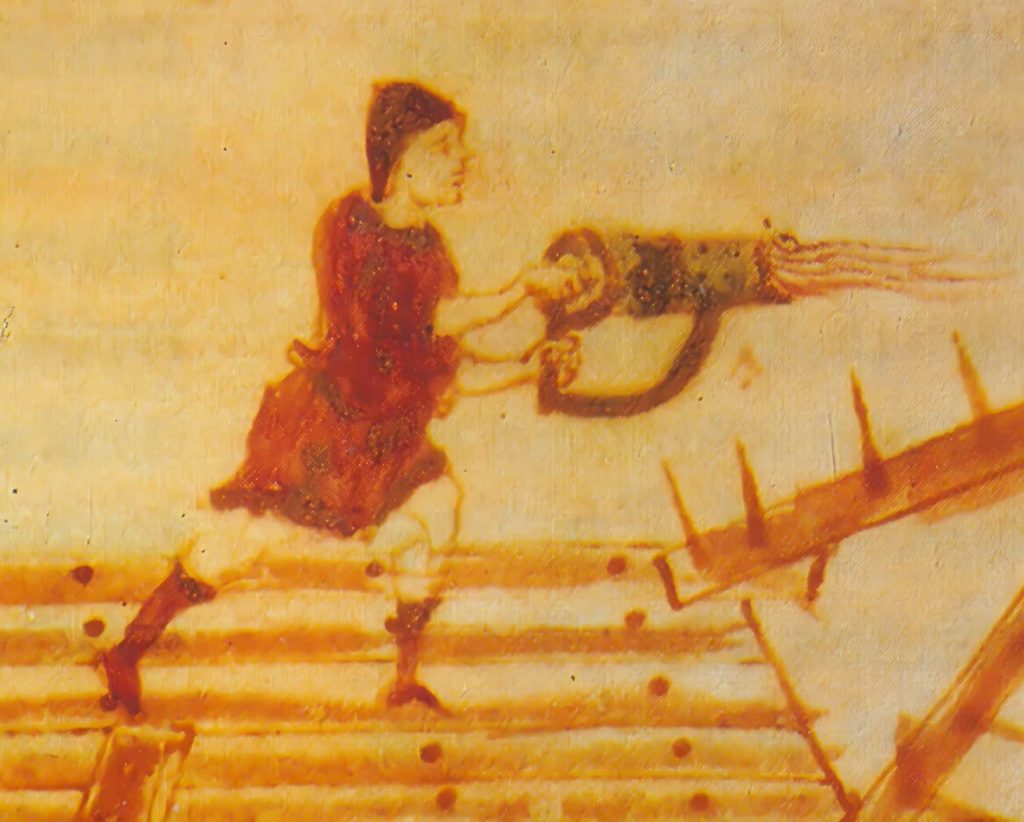
Use of a handsiphon, which shoots Greek fire.
Use of a handsiphon, which shoots Greek Fire.

Consequently, according to researchers, he may have been involved in civil or military projects for some time, including the construction of ports, fortifications, or vessels. It is believed that Callinicus invented Greek fire (known to the Byzantines as maritime or shining fire) in 670, as well as special siphons to project the fire. It is also known that Callinicus had recipes for two other fires, but the specifics have been lost.
More Read

james watt
James Watt: Inventions, steam engine, the industrial revolution
Jan Evangelista Purkinje: Pioneer of Neuroscience, and Research on Vision
Nicolas Fouquet: Lavish Ambition for the Throne Led to a Tragedy
Toussaint Louverture: Biography of the Liberator of Haiti

Callinicus became most famous for his defense of Constantinople against the Arab fleet and army. In 677, his invention, Greek fire, was applied, swiftly destroying the enemy fleet and causing widespread panic among the Arabs. The subsequent fate of Callinicus remains unknown. A hypothesis suggests that his descendants were involved in manufacturing and preserving the secret of Greek fire for several generations.

The Greek Fire: A Strange Weapon That Destroys Fleets
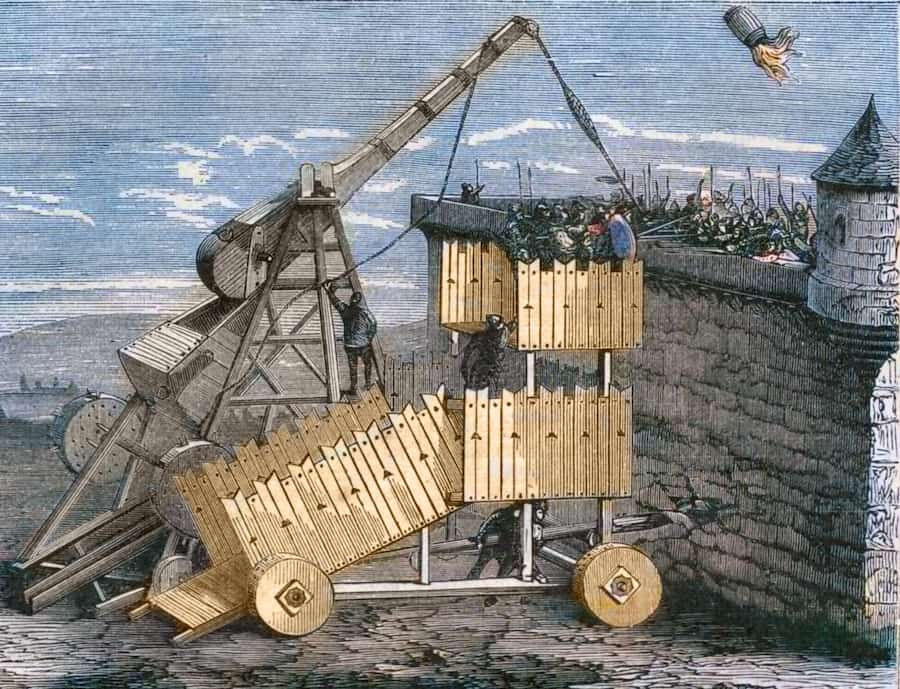
Greek Fire Catapult.

Worried about the Arab invasion, Callinicus of Heliopolis invented a highly flammable liquid substance, which he used as a weapon. Around the year 673, Caliph Mu’awiya I (602-680) commanded his victorious Arab forces in a naval battle against Constantinople. The fall of Byzantium at that time would have opened the gates from Europe to penetration through Greece and the Italian peninsula, with no state powerful enough to resist them.

However, in contrast, the Arab fleet was completely destroyed by the use of a strange weapon then unknown, the Greek fire of Callinicus of Heliopolis, first used in the “Battle of Cyzicus” near Constantinople in the year 673. The ingredients of Greek fire were kept secret by Callinicus’ family and still remain a mystery. It was likely a mixture of naphtha, potassium nitrate, and possibly calcium oxide.

buy tirzepatide online https://www.clerkenwellislingtonclinics.co.uk/wp-content/uploads/2025/03/jpg/tirzepatide.html no prescription pharmacy

Reports say that the product does not extinguish with water; instead, it disperses in it, releasing a large amount of heat. Callinicus’ main and innovative discovery was apparently the introduction of a kind of tube to project the fire. This new weapon enabled the victory of the Byzantines and was also crucial as a historical fact for world defense, as it allowed the Byzantines to stay in the city until the year 678 when the Siege of Constantinople by the Arabs occurred.

More Read

Lieserl Einstein
Lieserl Einstein: Einstein’s Hidden Child for 85 Years
Alexander von Humboldt: Biography, discoveries, and achievements
Augustus: The First Roman Emperor
Mao Zedong: Shaping the future of China
buy clenbuterol online https://www.clerkenwellislingtonclinics.co.uk/wp-content/uploads/2025/03/jpg/clenbuterol.html no prescription pharmacy

Greek fire was also used in 1151 in France. The technique introduced by Callinicus in Byzantium was certainly inspired by an ancient technique used in ancient China.


Share This Article
Email Copy Link Print
ByHrothsige Frithowulf
History Editor
Hrothsige is a history writer at Malevus. He has a bachelor's in history from the University of Exeter. Hrothsige's areas of historical interest encompass the ancient world and early Europe, along with the history of modern culture.
Previous Article christmas in germany Christmas in Germany: Traditions and Celebrations
Next Article Alchemy in the Byzantine World Alchemy in the Byzantine World

Latest News

985px Landing of Lieutenant James Cook at Botany Bay 29 April 1770 painting by E Phillips Fox

Top 10: The Greatest Knights in History

Knights were the medieval equivalent of elite soldiers, and many…

List
3 November 2026
Charles Rolls driving a Peugeot 1896
List

10 of the Craziest Laws in History

For more than 4,000 years, humans have devised new laws…

18 October 2026
Ikinci Meksika Imparatorlugu
History

Why Did the Second Mexican Empire Collapse?

The Second Mexican Empire did not collapse because of a…

14 April 2026
A painting depicting Aboriginal Tasmanians attacking John Allen’s Milton Farm near Great Swanport in 1833.
History

Colonialism in Tasmania

The colonization of Tasmania was not a simple story of…

14 April 2026

You Might Also Like

Hermann Einstein
Biography

Hermann Einstein: The Life of Einstein’s Father

27 October 2026

Archimedes: The Greatest Inventor of the Ancient World

2 November 2026
god
Biography

Sabellius: The Founder of Sabellianism

2 December 2023
Maja Einstein, albert einstein's sister
Biography

Maja Einstein: The Sister of the Great Physicist

6 June 2025
  • Privacy Policy
  • About us
  • Editorial Standards

© Malevuz. All Rights Reserved.

Welcome Back!

Sign in to your account

Username or Email Address
Password

Lost your password?