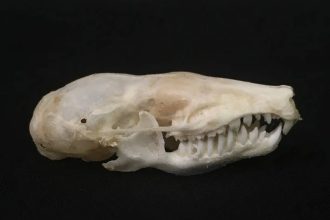
- Cynodictis was an extinct carnivorous mammal belonging to the amphicyonid family.
- It lived between 37.9 and 28.4 million years ago, during the Late Eocene and Early Oligocene periods.
- Cynodictis had a slender, marten-like body, specialized dentition, and was not the progenitor of modern canids.
The extinct carnivorous mammal genus Cynodictis belonged to the amphicyonid family. Its fossils have been found in several parts of Europe and Asia, and Cynodictis is thought to have existed between 37.9 and 28.4 million years ago, during the Late Eocene and Early Oligocene periods.
Cynodictis was first described by Bravard and Pomel in 1850.
How Did Cynodictis Look Like?
The closest comparison of Cynodictis would be to a huge, lean marten. Its shoulder height was around 12 inches, and its cranium was about 4 inches in length. It had a large body and small legs; however, they were longer than those of the Miacids from which Cynodictis descended.
Cynodictis was a slender and long-muzzled animal. Its carnassial teeth allowed it to tear off large portions of flesh from dead animals.
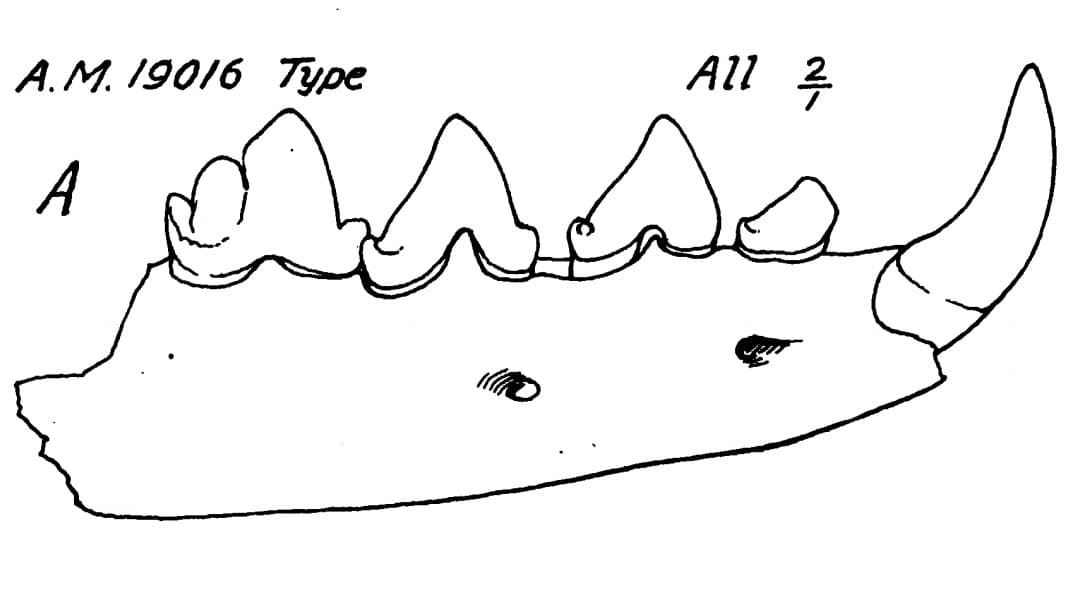
The skull of Cynodictis was also stronger than in previous species, and the dentition was more specialized; the final molars were missing, and the cusps were not as sharp as in Miacids, also a marten-like animal.

Cynodictis was not the progenitor of modern canids.
Cynodictis was not the progenitor of modern canids, but its overall morphology suggests it may have served as a forerunner. Because more powerful creodont predators like Hyaenodon and Sarkastodon (a giant wolverine) existed during the same period, the smaller stature of this animal is understandable.
The Daily Life of a Cynodictis
Cynodictis’s proportions made it well suited to life on the grassy plains that were spreading throughout Eurasia at the time. But its tiny legs would have let it avoid bigger predators and build deep holes to hide in while hunting smaller food, just like some similarly sized animals do today.
Where Do You Put Cynodictis?
It is one of the most ancient and primitive European amphicyonids.
Important in the development of carnivorous mammals, Cynodictis is represented in the faunas of Late Eocene Europe (particularly in France, Germany, and England). Cynodictis had a body type and proportions comparable to those of ancient Miacids, but it possessed teeth more like those of canids. (Miacids lived between 65.5 and 33.9 million years ago.)
At first, it was thought that this creature was the ancestor of all dogs and other members of the Canidae family. Cynodictis was one of the oldest members of the amphicyonids (the so-called “beardogs,” long considered to be progenitors of bears), as shown by morphological changes in teeth.

The distinctiveness and separation of this family from other caniforms were later verified by the discovery of Pseudocyonopsis, Ysengrinia, Amphicyon, and Cynelos.
On the other hand, true canids like Prohesperocyon first arose in North America around the same time Cynodictis was at its peak in Europe.
Along with Guangxicyon and the less well-known Brachycyon, Cynodictis is considered one of the most ancient and primitive European amphicyonids. The best-known member of this genus is Cynodictis elegans, which was first discovered in the Late Eocene of France.
Fossil similarities in teeth imply that this species may also be the origin of the subfamily Haplocyoninae (genera Haplocyon, Haplocyonoides, and Haplocyonopsis), which ultimately gave birth to the American temnocyonines (medium-sized amphicyonids).
Modern References
Cynodictis made an appearance in the Walking with Monsters mini-TV series (2005), referred to as “nocturnal predators” and “beardogs”. The nocturnal Cynodictis is captured by an Ambulocetus in the first episode, and a family of Cynodictis emerges in the third episode, cohabitating with an Indricotherium.
Species
- Cynodictis cayluxens
- Cynodictis crassus
- Cynodictis elegans
- Cynodictis exilis
- Cynodictis ferox
- Cynodictis lacustris
- Cynodictis longirostris
- Cynodictis parisiensis
- Cynodictis peignei