- Ancient Asian predator of the Eocene era.
- Skull discovered in 1930s China, revealing massive size and unique features.
- Carnivorous diet, possibly scavenging carrion and hunting prehistoric animals.
During the Eocene, Asia (Mongolia and Inner Mongolia) was home to a genus of predatory animals known as Sarkastodon (“meaty tooth,” from the Greek σαρκάζω – to rip flesh and ὀδούς – tooth), which belong to the family Oxyaenidae of the Creodonts. This is one of the few Asian members of the mostly American family Oxyaenidae.
The Discovery of Sarkastodon
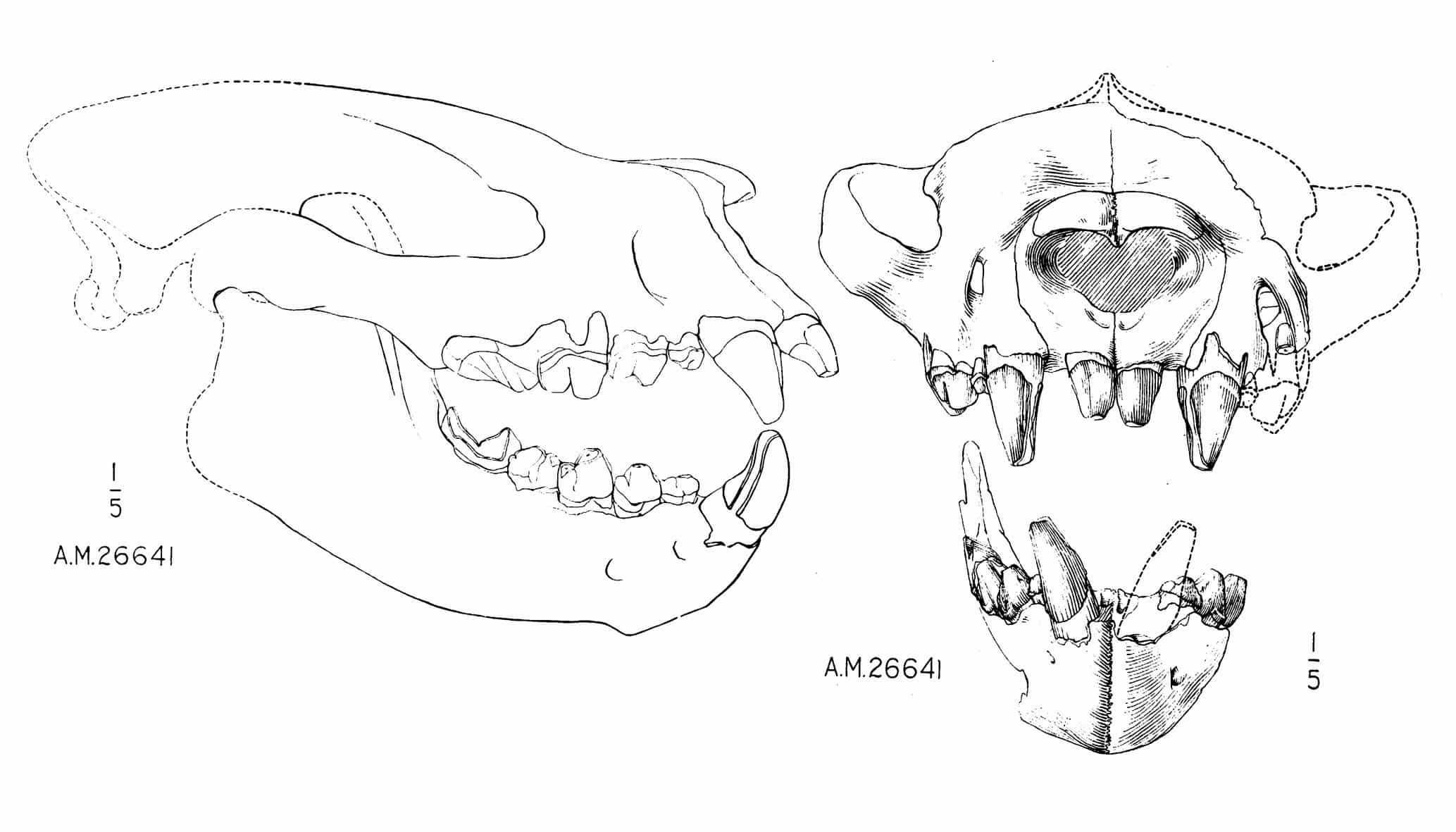
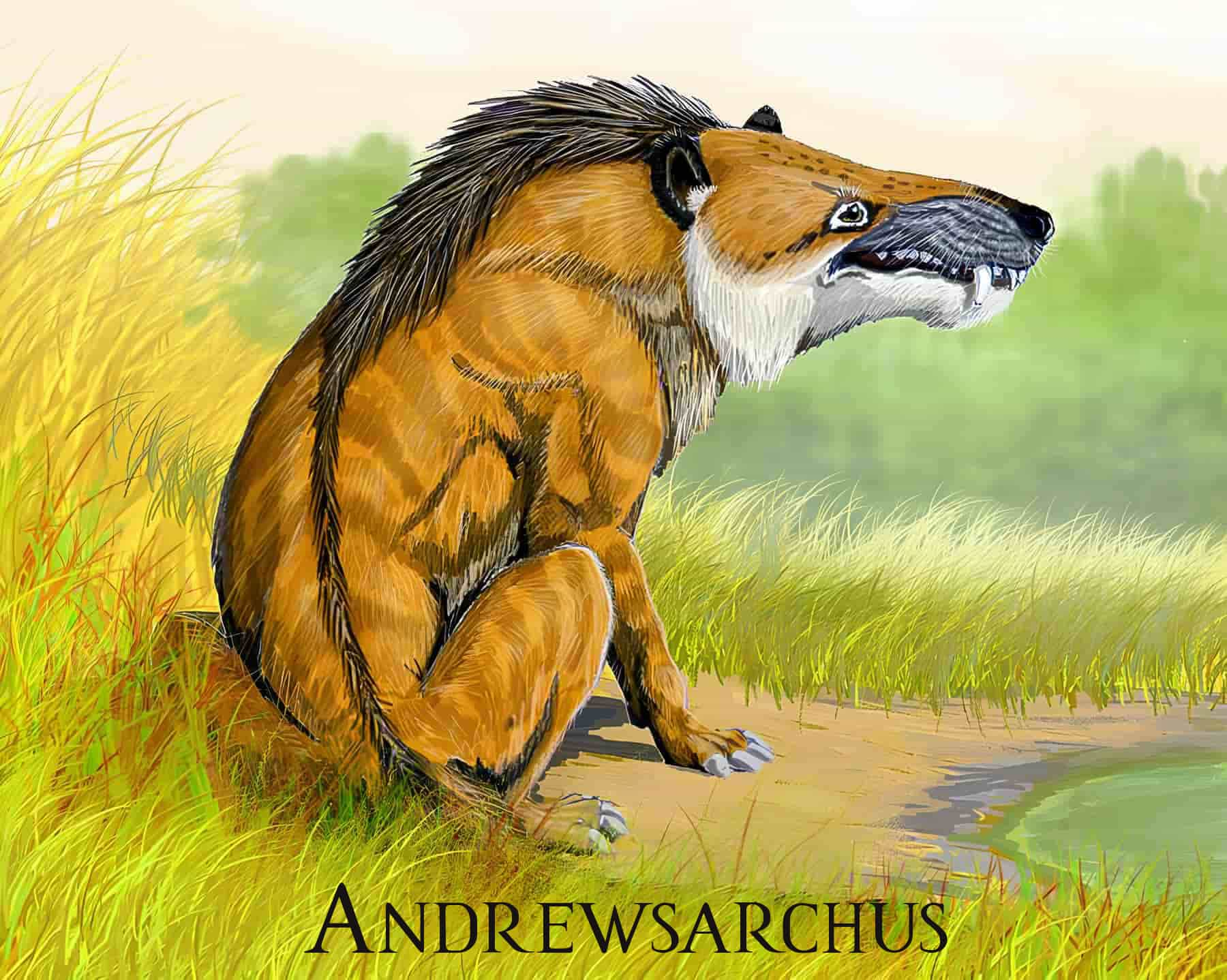
In 1930, the Central Asian Expedition of the American Museum of Natural History uncovered the skull of a Sarkastodon mongoliensis that had been substantially damaged. The discovery was made in the Irdin-Manha Formation, which is located near the town of Iren-Dabasu in China and contains Eocene strata (the skull of the famous Andrewsarchus was also discovered in these levels). A right mandibular branch was discovered in the same age sediments two years before the skull was unearthed in the Ulan-Shireb region (about 100 miles away). There were no bones beyond the skull.
In 1938, Walter Granger provided the first description of the Sarkastodon species.
A huge oxyaenid (perhaps a Sarkastodon) molar tooth was discovered in Hetaoyuan, China, in the 1970s. S. henanensis, a species of questionable legitimacy, was described based on this discovery. The discovered tooth has a chance of being from the type species as well.
A Sarkastodon Compared to a Patriofelis
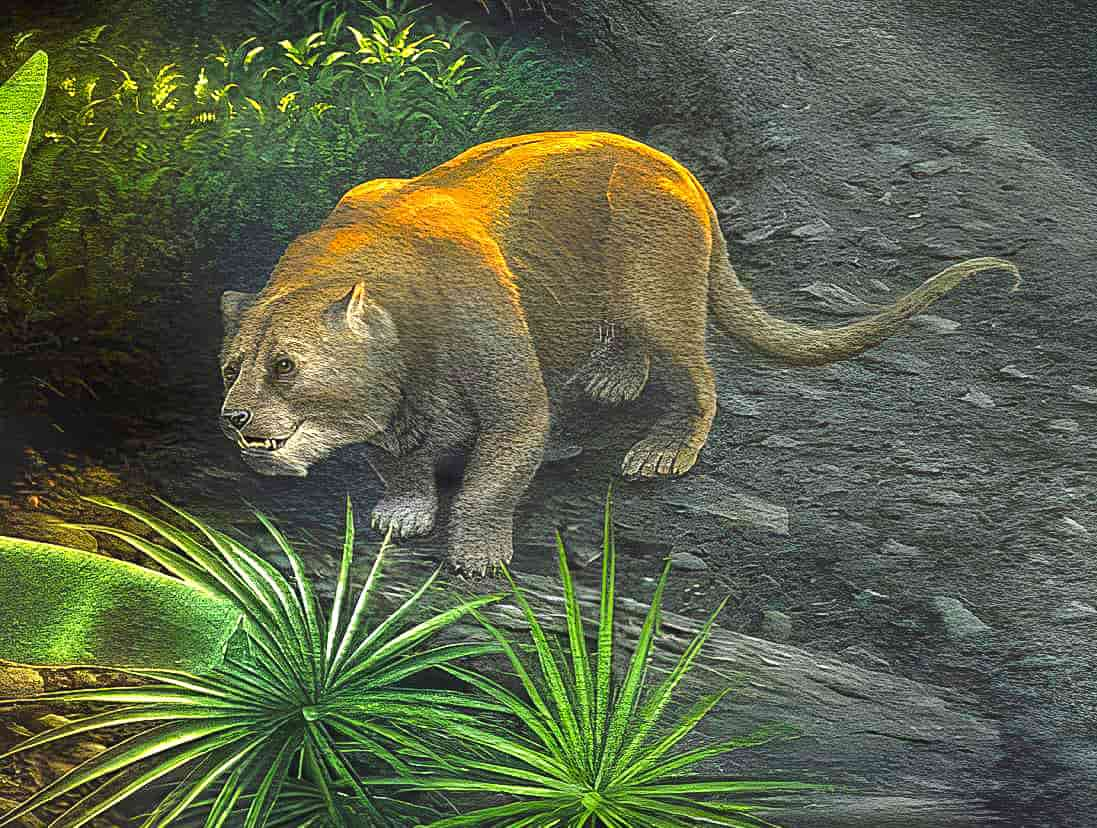
Sarkastodon was a typical oxyaenid, with a head shape like that of the famous Patriofelis (“father of cats”) who lived in the middle Eocene Wyoming.
Short, wide, and heavy, with a prominent jaw, characterized the skull of this creature. A Sarkastodon had a short muzzle. Its lower incisors were quite small and tucked in between the molars, making them invisible from the side.
However, the massive canines and the molars could be seen clearly. Its lower incisors were drastically smaller, but the lower premolars were much larger than a Patriofelis, whereas the incisor of the first molar was significantly more developed. When compared to that of Patriofelis, the skull of a Sarkastodon was noticeably shorter.
The Appearance and Size of This Animal
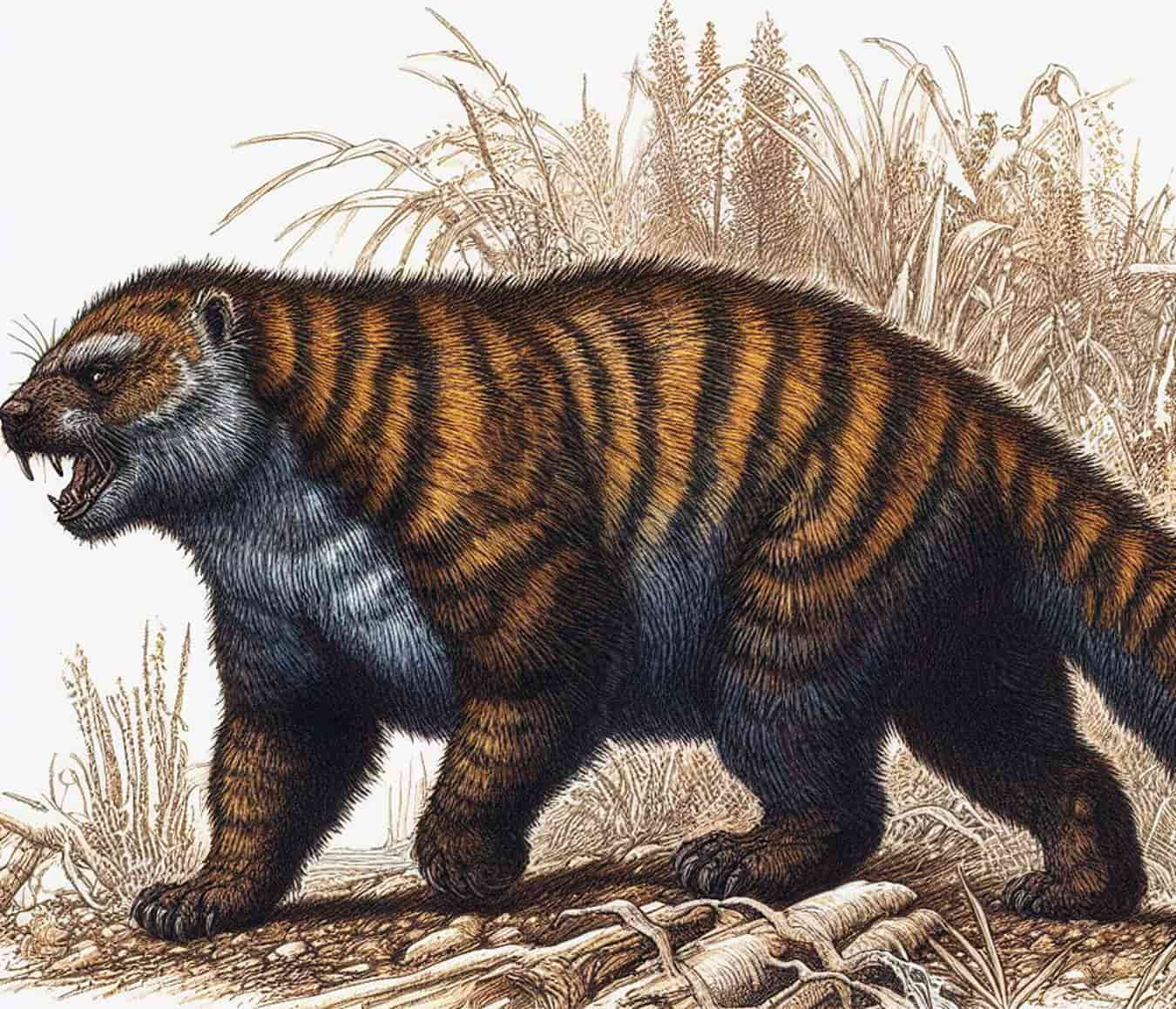
The dimensions of the Sarkastodon skull, as determined by Walter Granger, are about 21 inches (53 cm) in length and 15 inches (38 cm) in width (at the cheekbones). Sarkastodon’s body and head length were around 102 inches (260 cm) (excluding the tail length of 67 inches or 170 cm), its pelvis height was 49 inches (125 cm), and its mass was 1300 to 1750 pounds (600–800 kg), making a Sarkastodon about the size of the biggest polar bear today. It measured 10 feet (3 m) in length.
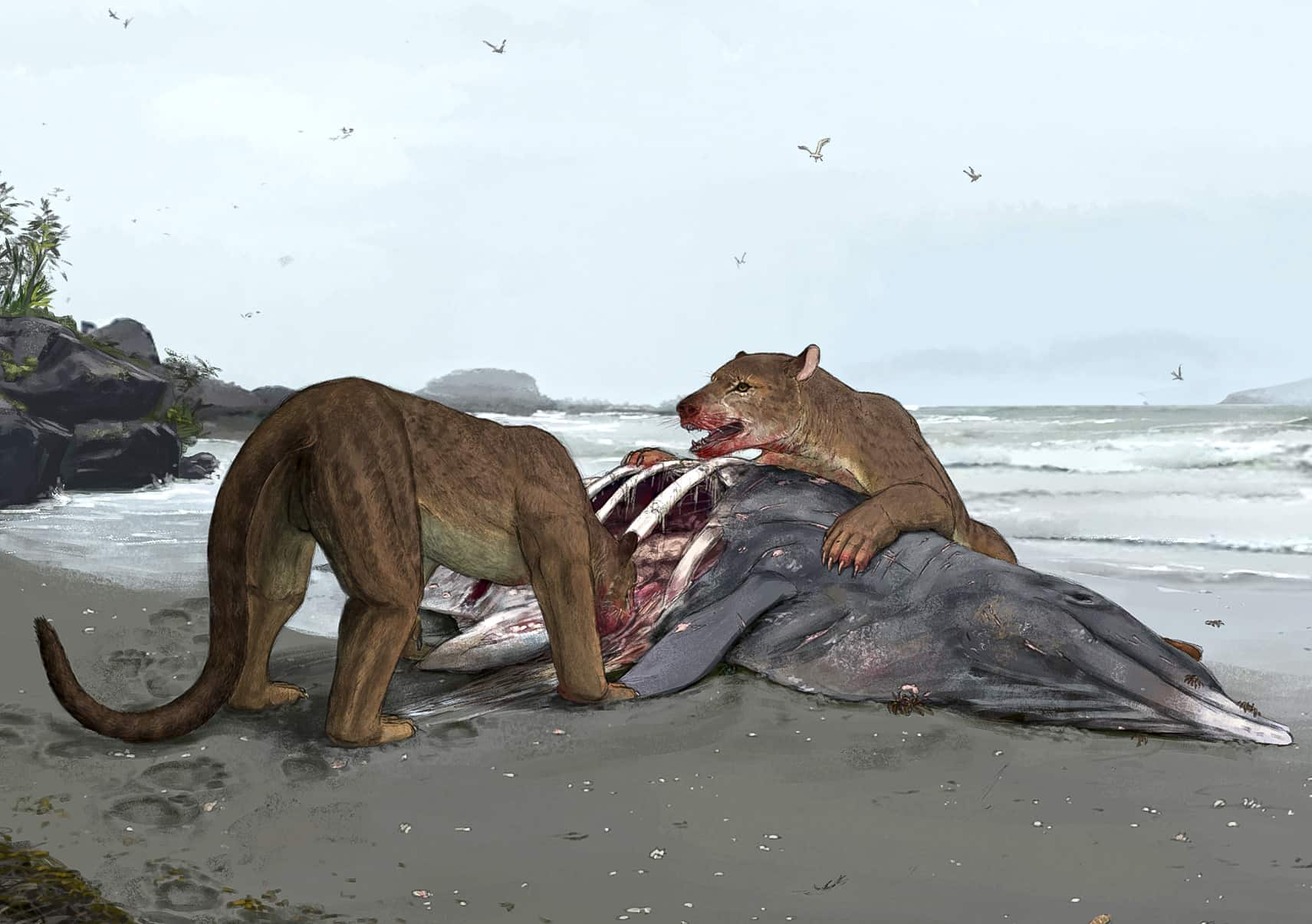
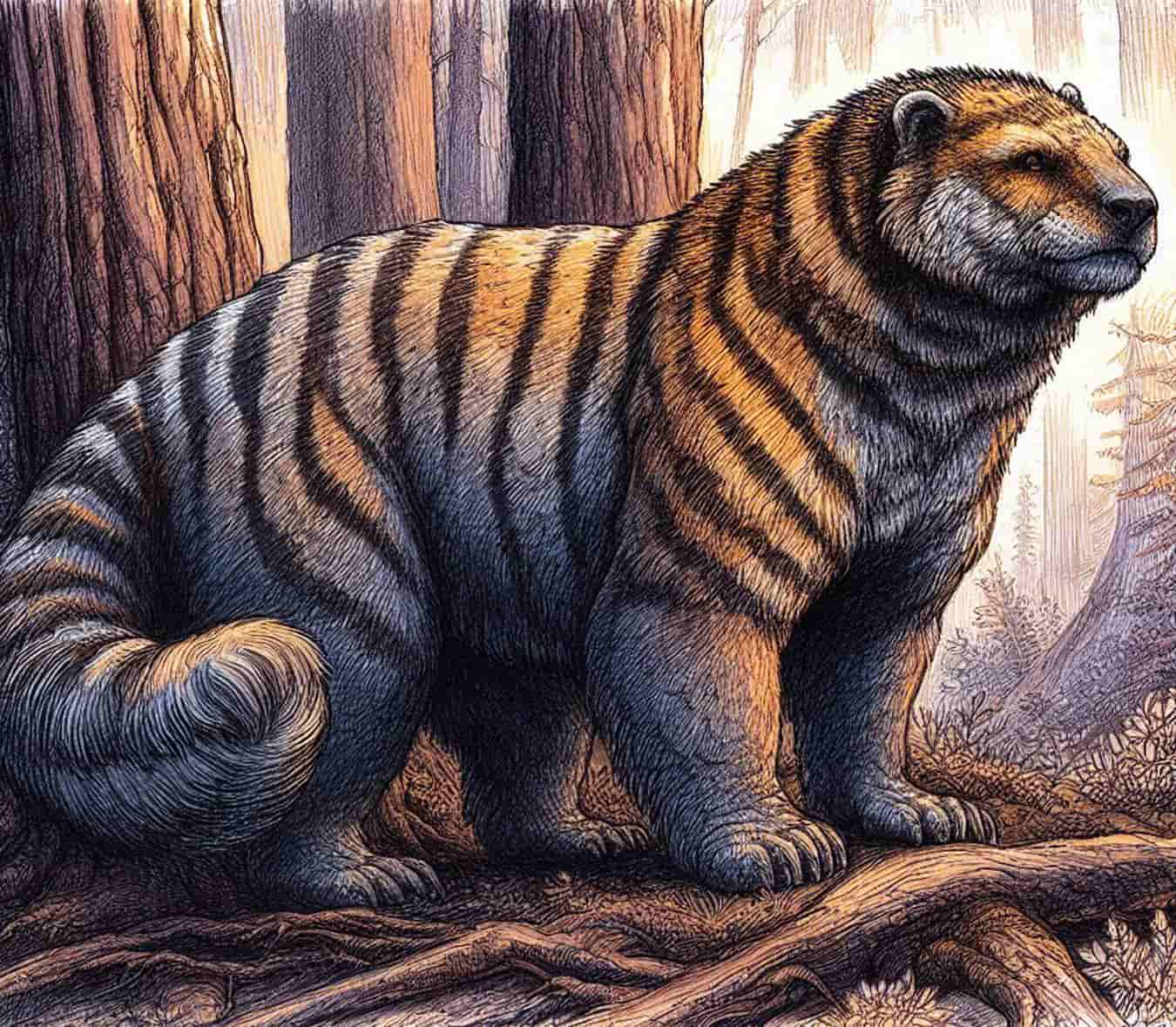
The Sarkastodon has traditionally been portrayed as looking like a giant wolverine or a bear with a long, fluffy tail. This animal was related to Patriofelis; therefore, it probably looked like a big cat with short yet strong legs. It probably didn’t use its paws while hunting. Skull shape suggests that, like other oxyaenids, they had a cat-like snout.
What Did a Sarkastodon Hunt?
It is hypothesized that Patriofelis, Sarkastodon’s closest living cousin, had a strictly predatory lifestyle. Some have speculated that it consumed turtles and crocodiles (in keeping with its presumed semi-aquatic existence).
The snout and teeth of a Sarkastodon were worn down, as if the animal were an active predator, although the skull and teeth of hyenas are otherwise comparable.
It’s possible that this bear-cat, like other ancient carnivores, relied heavily on carrion for sustenance. Prehistoric rhinoceroses, for instance, might have made good dinner for it.
Competitors to the Sarkastodon might have included huge hyaenodons and Andrewsarchus. One counterargument is that Andrewsarchus and Sarkastodon did not share the same environment. The larger Andrewsarchus, for instance, was well-suited to broad plains, while the more arboreal and mountainous Sarkastodon was more suited to forests.