By using this site, you agree to the Privacy Policy.
Accept
MalevuzMalevuz
  • HISTORY
  • SCIENCE
  • BIOGRAPHY
MalevuzMalevuz
Search
  • HISTORY
  • SCIENCE
  • BIOGRAPHY
Follow US
Malevuz > Animals > 5 Things to Know About the Leopard Seal
Animals

5 Things to Know About the Leopard Seal

Bertie Atkinson
Bertie Atkinson
ByBertie Atkinson
Science & Biology Editor
Bertie studied science at Columbia University, and he covers a wide range of subjects for Malevus. He provides in-depth insights into various scientific phenomena and natural...
Follow:
- Science & Biology Editor
6 June 2025
Share
4 Min Read
SHARE

Where does the leopard seal live?

The leopard seal inhabits the cold waters of the Southern Hemisphere, including the Southern Ocean (Antarctic Ocean), the South Pacific Ocean, and the South Atlantic Ocean. It can be spotted along the southern coasts of Argentina, Chile, Australia, New Zealand, and South Africa. During the austral winter, young leopard seals migrate north, while the older ones remain in the icy waters south of the 78th parallel. When not hunting in the water, the leopard seal enjoys resting on the pack ice or small drifting icebergs.

Contents
  • Where does the leopard seal live?
  • What are the predators of the leopard seal?
  • How fast can leopard seals swim?
  • What does the leopard seal eat?
  • Is the leopard seal dangerous?
buy cialis soft online http://francisholisticmedicalcenter.com/resources/html/cialis-soft.html no prescription pharmacy

What are the predators of the leopard seal?

The leopard seal is not a top predator; it falls prey to species like the great white shark (Carcharodon carcharias) and orcas (Orcinus orca). Humans can also be a threat to this large seal. The Convention for the Conservation of Antarctic Seals (CCAS) permits the hunting of up to 12,000 leopard seals per year. However, the International Union for Conservation of Nature (IUCN) does not consider this species endangered, with an estimated population of around 300,000 individuals.

buy flexeril online http://francisholisticmedicalcenter.com/resources/html/flexeril.html no prescription pharmacy

How fast can leopard seals swim?

An excellent swimmer, the leopard seal can reach speeds of up to 30 kilometers per hour in the water. Its streamlined pectoral flippers allow for precise steering, while a powerful tail fin provides propulsion. Its hydrodynamic body, with a smooth head and a neck that seamlessly extends from its torso, aids its movement in the water. The leopard seal can hold its breath for an hour and dive to depths of up to 100 meters.

buy arimidex online http://francisholisticmedicalcenter.com/resources/html/arimidex.html no prescription pharmacy

Despite weighing up to 600 kilograms, it has enough power to leap two meters out of the water. However, it is much less agile on ice.

What does the leopard seal eat?

According to researchers, the leopard seal’s diet consists of about 45% small crustaceans (krill) and 35% young seals. This predator hunts other seal species, such as the crabeater seal (Lobodon carcinophaga) and the Weddell seal (Leptonychotes weddellii). It also preys on sea lions, fish, and birds, including rockhopper penguins and other penguin species. Some individuals are capable of consuming dozens of penguins per day using refined hunting techniques. As an opportunistic predator, the leopard seal may also feed on whale carcasses.

More Read

Fruit Fly Drosophila immigrans
Male Fruit Flies Choose Mating Over Safety, Study Shows
How Rabbits Came to Australia
5 Fun Facts About Parrots
The Reason Why Woodpeckers Don’t Get Brain Damage

Is the leopard seal dangerous?

The leopard seal is often regarded as the most aggressive of the Antarctic seals and is feared by explorers and biologists. With its powerful jaws and sharp teeth, it can bite and puncture inflatable boats. In 2003, a British researcher drowned after being dragged underwater by a leopard seal—the only recorded fatal attack to date. Since then, some organizations, such as the British Antarctic Survey, have instructed their divers to exit the water immediately if a leopard seal is spotted nearby. However, this is merely a precautionary measure, as observers note that the leopard seal’s curiosity often outweighs its aggressiveness.

Share This Article
Email Copy Link Print
ByBertie Atkinson
Science & Biology Editor
Follow:
Bertie studied science at Columbia University, and he covers a wide range of subjects for Malevus. He provides in-depth insights into various scientific phenomena and natural processes.
Previous Article roman army How Did the Roman Army Gain Control of the Italian Peninsula?
Next Article Siberian tiger in Zoo Hluboka 5 Things to Know About the Siberian Tiger

Latest News

985px Landing of Lieutenant James Cook at Botany Bay 29 April 1770 painting by E Phillips Fox

Top 10: The Greatest Knights in History

Knights were the medieval equivalent of elite soldiers, and many…

List
3 November 2026
Charles Rolls driving a Peugeot 1896
List

10 of the Craziest Laws in History

For more than 4,000 years, humans have devised new laws…

18 October 2026
Ikinci Meksika Imparatorlugu
History

Why Did the Second Mexican Empire Collapse?

The Second Mexican Empire did not collapse because of a…

14 April 2026
A painting depicting Aboriginal Tasmanians attacking John Allen’s Milton Farm near Great Swanport in 1833.
History

Colonialism in Tasmania

The colonization of Tasmania was not a simple story of…

14 April 2026

You Might Also Like

Why Do Some Female Spiders Eat Their Mates?

11 December 2025
Sarkastodon
Animals

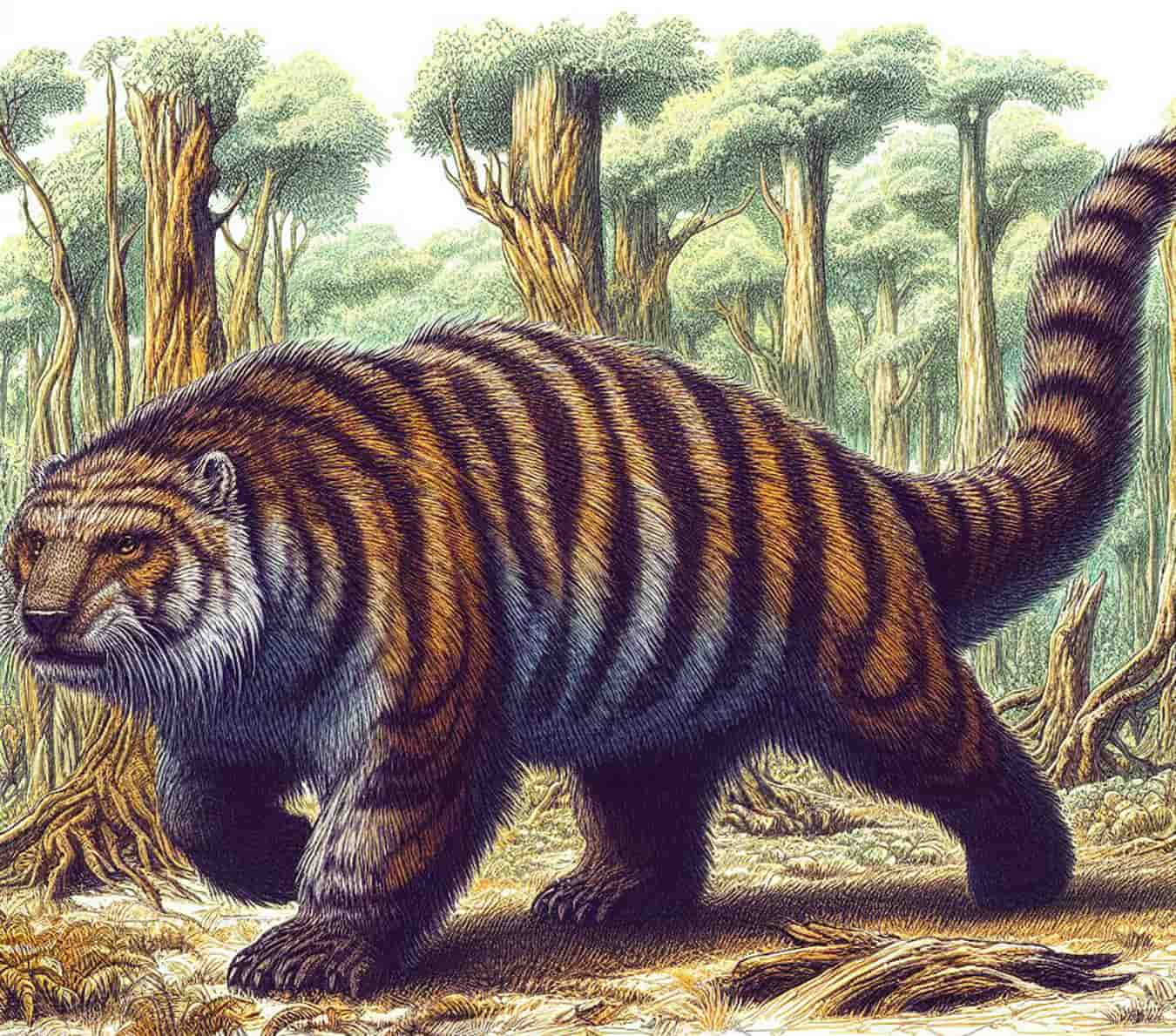
Sarkastodon: A Giant Wolverine or a Bear Cat with a Long Tail

8 October 2023

Why Do Dogs Eat Grass? All the Possible Reasons

11 December 2025

Can Frogs Really Predict the Weather?

11 December 2025
  • Privacy Policy
  • About us
  • Editorial Standards

© Malevuz. All Rights Reserved.

Welcome Back!

Sign in to your account

Username or Email Address
Password

Lost your password?