There’s a lot of intrigue around Africa’s discovery. For centuries, Africa had been known as the “Dark Continent.” As the sailors mapped the oceans and the explorers traveled across the continents, Africa’s inner region was always shown empty on world maps, probably because it was known to be an extremely dangerous place. Tropical diseases that would kill a European in a day were too common, the virgin forests were full of lions and crocodiles, and when African tribes thought foreigners were coming to “invade” them, they could become too aggressive.
The explorers who discovered Africa
Starting in 1850, this Dark Continent has become “brighter.” The drugs that heal the most dangerous diseases were found, and thanks to the new rifles, there was now an opportunity to kill the dangerous animals and scare the tribal warriors. Some explorers traveled along the tropical rivers of Central Africa to explore the great lakes, especially the source of the Nile River, while others were traveling through the plains of South Africa or exploring the interiors of tropical forests as missionaries.
David Livingstone
Dr. Livingstone, I presume?
Henry Stanley, 1871, November
As a missionary, the explorer Livingstone set out on a journey to explore Central Africa in 1866 to put an end to the Arab slave trade. However, no news had been received from him for a long time, and he was thought to be dead. American journalist Henry Stanley made the historical statement above when he met David Livingstone in a deserted village near Lake Tanganyika in November 1871.
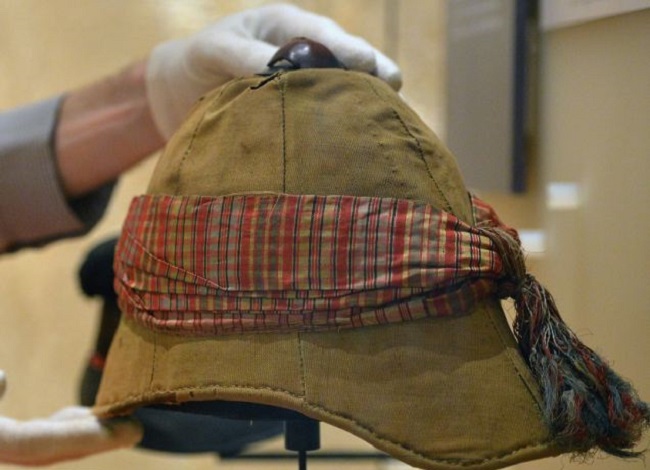
When Stanley finally came across Dr. Livingstone, he was wearing this hat. Many of the first travelers in Africa wore such hats to avoid sunstroke.
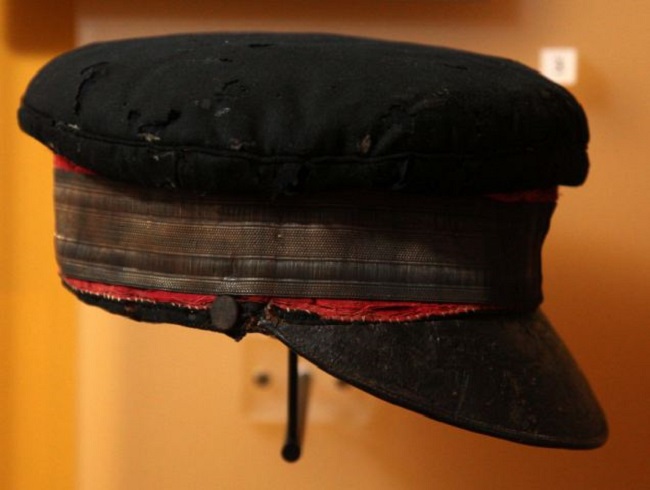
Livingstone, who was overwhelmed by the illnesses he caught during his discovery of Africa, wore this hat when he saw Stanley. Livingstone, who once said, “The mere animal pleasure of travelling in a wild unexplored country is very great,” continued to explore the surroundings of Lake Tanganyika in Africa and died of the disease there in 1873.
John Hanning Speke
Speke was a British explorer who made several trips to Central Africa. Together with Richard Burton, he went to Lake Tanganyika in 1858, then went on his way and found Lake Victoria. In 1862, he returned to prove that the Nile originates from Lake Victoria.
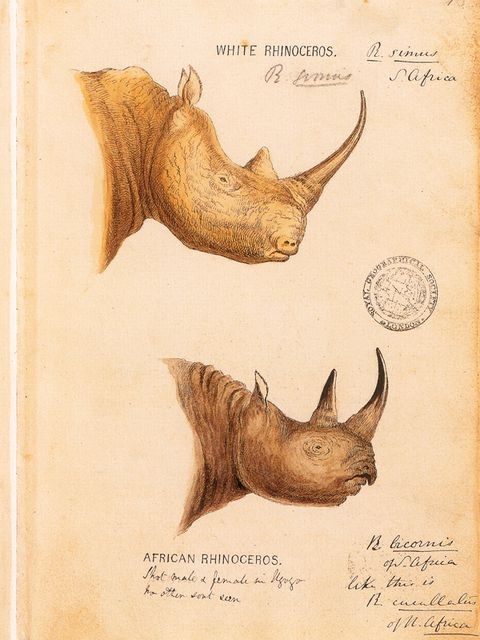
Speke was also a good naturalist. He noted down the animals and plants he saw everywhere he went. You can see his white rhino drawings above from his book. The last male white rhino went extinct some time ago. Work continues to fertilize the remaining two females.
Richard Burton
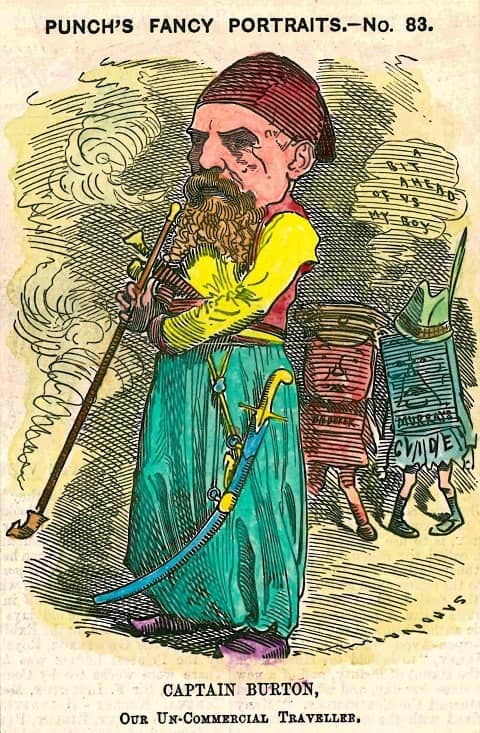
Explorer Sir Richard Burton was an officer in the English Army. He knew 28 languages other than Arabic. Dressed as an Arab, he went to places in Asia and East Africa where no Europeans had ever set foot. He also discovered much of tropical Africa and parts of South America.
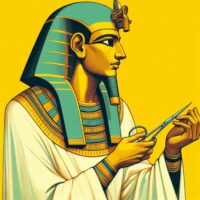
Pierre Desceliers
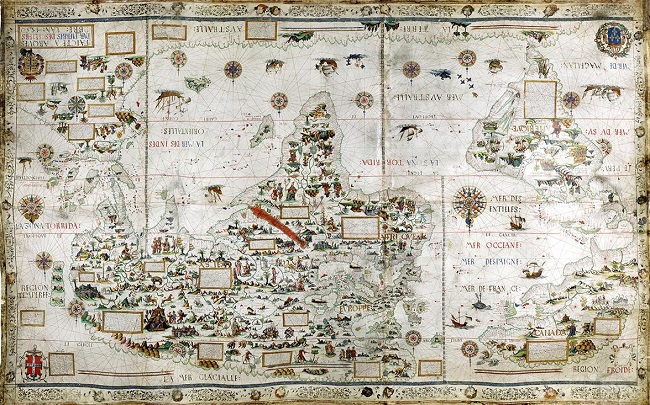
When Desceliers drew this map in the 16th century, sailors had traveled all over Africa. The map shows the African coasts quite accurately, but the middle is a space filled with imaginary things. That’s why this map is called Map Monster. The origin of the Nile was unknown, and Desceliers’ proposal was only an estimation; the real source of the Nile River would be found only 300 years later.
The British and then the Americans take the lead in the discovery of the priceless African continent. The main goal of both countries was to find the source of the Nile River, and the winner would take everything.