The Sumerians of ancient Mesopotamia are believed to have been the first to invent the wheel around 4,500 BC. But this first Mesopotamia wheel was actually a pottery wheel. And they invented the first Mesopotamia wheel used for transportation in 3,500 BC. The earliest wheels used in Mesopotamia were built of stone and were intended more for pottery than for moving objects. There is evidence that they were developed in Mesopotamia in approximately 4,000 BC to be used as potter’s wheels. After 800 years, some Mesopotamians discovered how to employ them as chariots.
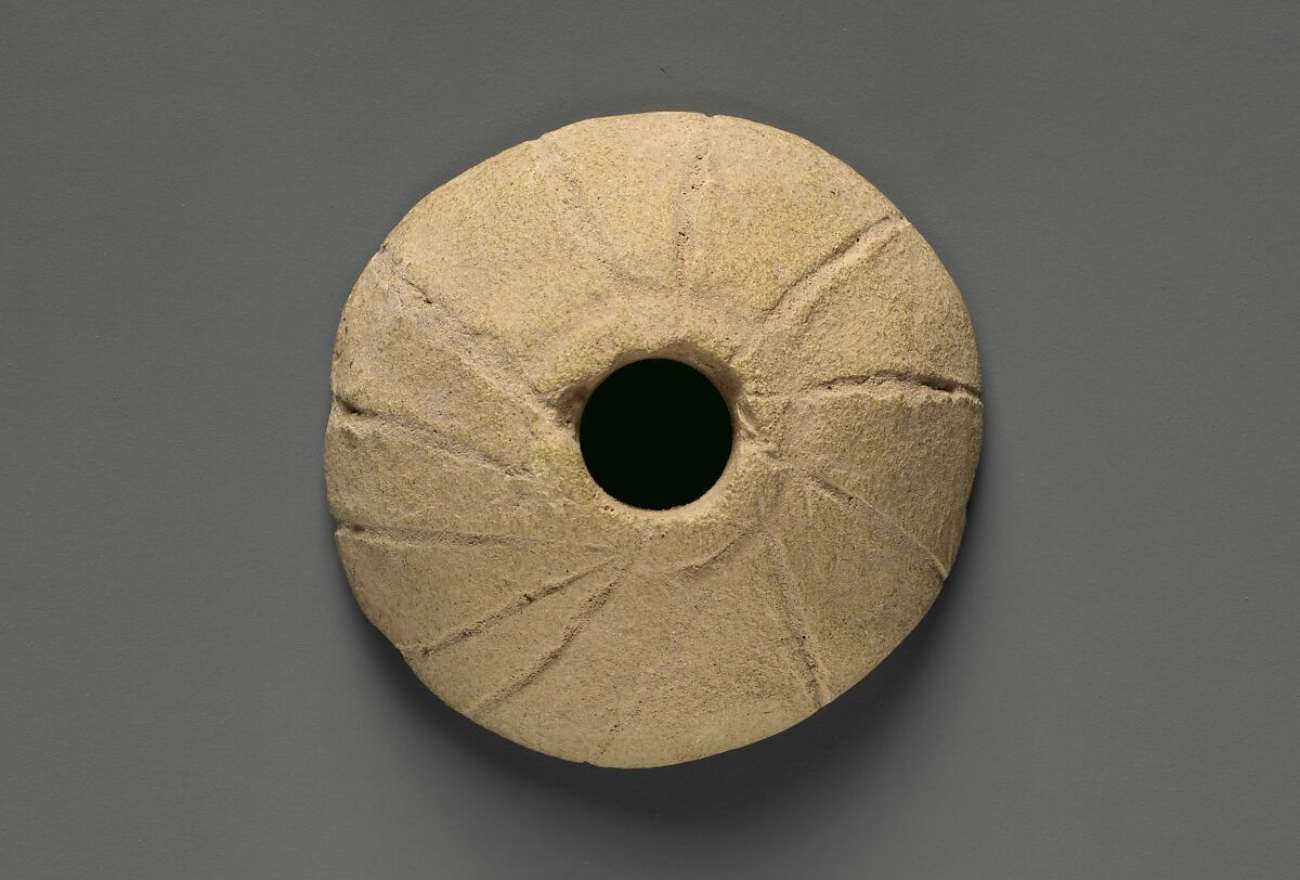
It is believed that before the first Mesopotamia wheel, the domestication of sheep and the use of wool led to the creation of the spindle whorl, which is a spinning tool with a circular flywheel attached to the bottom. The oldest Mesopotamian spindle whorl ever found (below) is from 2,900–2,600 BC and is technically one of the oldest Mesopotamia wheels discovered. It was used to braid strands of raw wool into thread while winding it around the spinning spindle. There are also spindle whorl findings in north China from the Middle to Late Neolithic that date back to 3,000–6,000 BC.
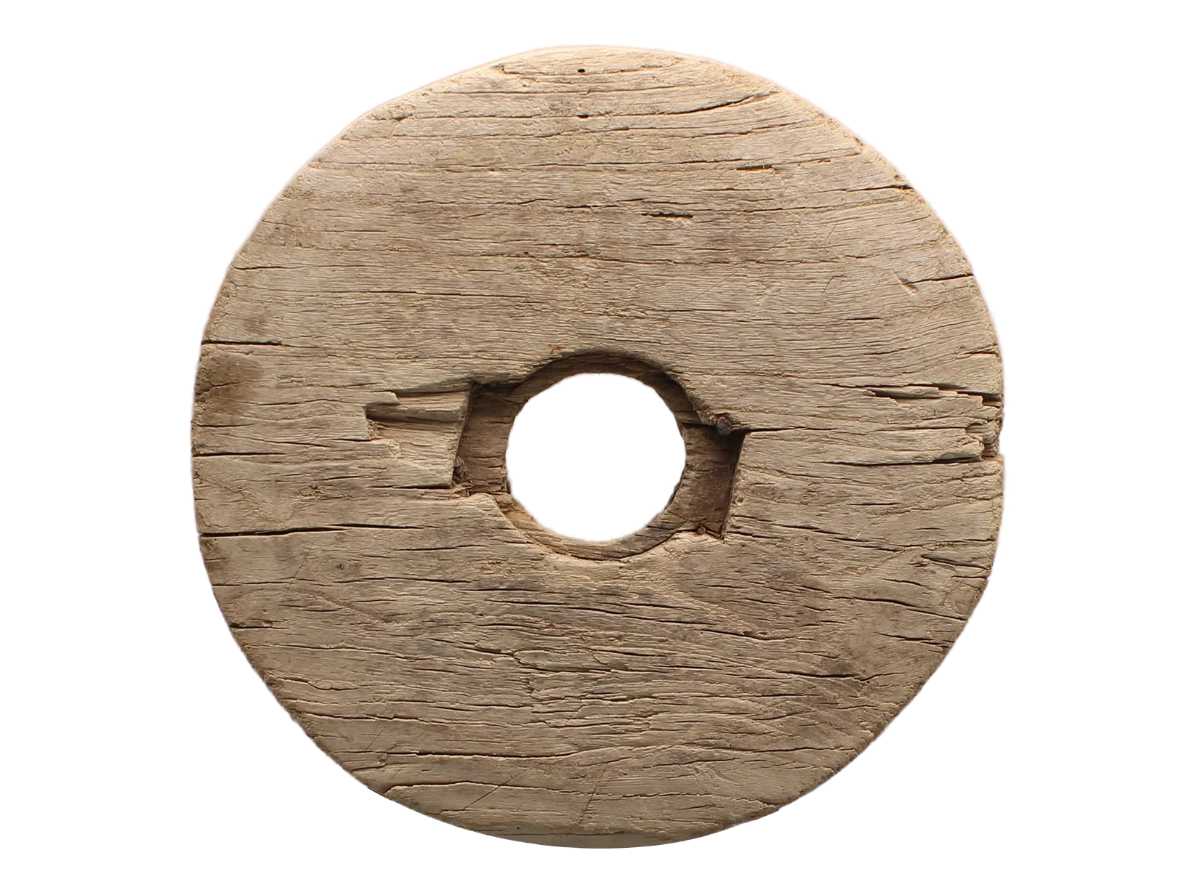
But the first Mesopotamia wheel used for transportation was created around 3,500 BC in southern Mesopotamia by the Sumerians. The Sumerians put revolving axles inside wooden disks. The earliest mechanized procedures were made possible with the creation of the Mesopotamia wheel, which also greatly impacted the outcome of the first battles and the ease with which goods could be carried across long distances.
The wheel spurred change and innovation. The Sumerian Standard of Ur (below), dating back to about 2,500 BC, has a picture of a battle carriage equipped with disk wheels. To create a more maneuverable and lightweight wheel, disks started to be hollowed out about 2,000 BC.

The earliest evidence of wheeled vehicles can be found in Mesopotamia in the form of illustrations, and drawings of four-wheeled carriages discovered on clay tablets from the late Uruk period (4001 BC-3101 BC). The Sumerians, who lived about a hundred miles inland from the Persian Gulf in modern-day Iraq, were the first to employ the Mesopotamia wheel in carts and then chariots.
The first chariots built in the Balkans and Mesopotamia employed the same wooden disks attached to axles. Physical representations of wheels made of solid material, created using limestone or clay, have been uncovered in Syria and Turkey at locations that are believed to be from a century or two following the Mesopotamian wheels.
Why Did Mesopotamia Make Wheels?
Around 4,000 BC, the first Mesopotamia wheels were developed to be used as potter’s wheels. Clay is shaped in a variety of ways using a potter’s wheel. The wheel may be used to trim excess clay from stiff but flexible dry pottery and to add incised decoration.
The development of the Mesopotamia wheel aided travel since it was used on carts and military vehicles. Plus, the wheel was crucial in the development of contemporary agricultural methods and commercial sectors.

The Oldest Wooden Wheel Ever Found
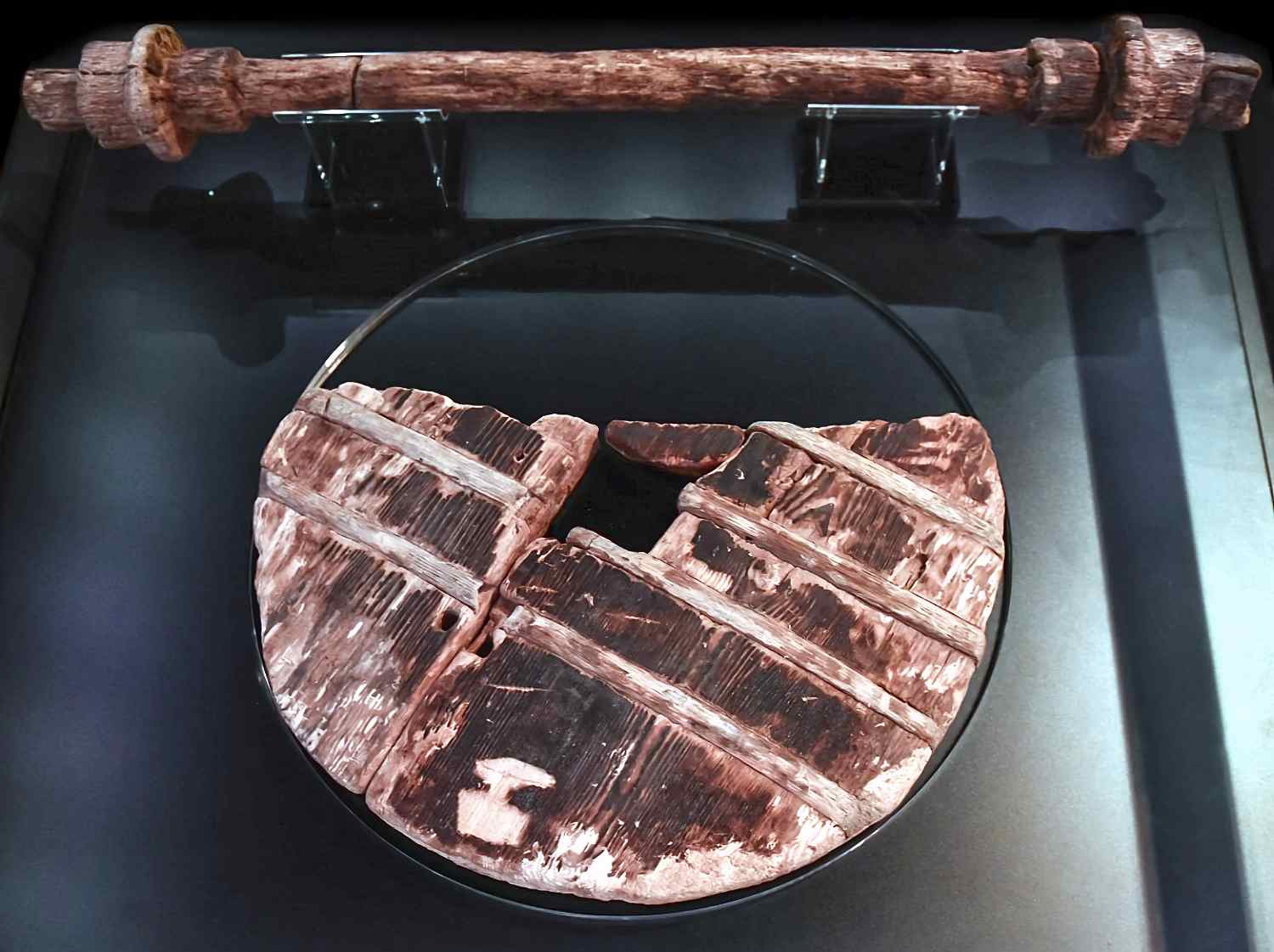
A wooden wheel with an axle dating back 5,100 to 5,350 years was unearthed in the Ljubljana Marshes of Slovenia in 2002. Dated at roughly 3,200 BC, this wooden Ljubljana Marshes Wheel is the earliest known example of a wheel ever discovered.
Bibliography
- The wheel used in the featured image: The National Museum of Science and Technology, Italy, Aisa/Leemage-Bridgeman Images.
- Moorey, Peter Roger Stuart, 1999. Ancient Mesopotamian Materials and Industries: The Archaeological Evidence. Winona Lake.
- Holm, Hans J. J. G.: The Earliest Wheel Finds, Their Archaeology and Indo-European Terminology in Time and Space, and Early Migrations around the Caucasus. 2019. [PDF] ISBN 978-615-5766-30-5.