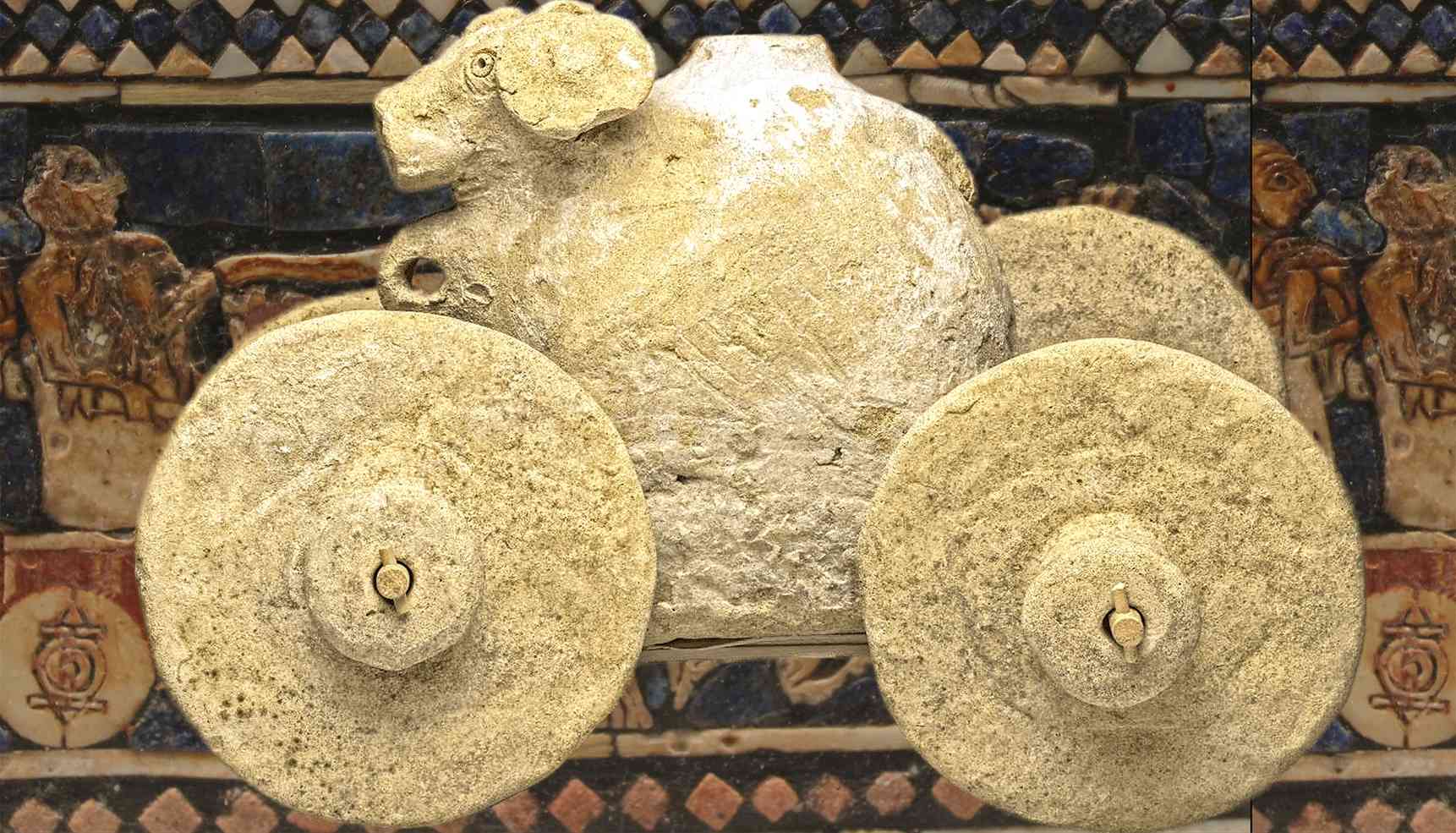
The Ljubljana Marshes Wheel is believed to be over 5,100–5,350 years old, making it the oldest of its kind in the world. This ancient wooden wheel from the Chalcolithic (Copper Age) measuring 72 cm (28.35 inches) in diameter was found 12.5 miles (20 kilometers) south of Ljubljana in Slovenia. The Ljubljana Marshes Wheel is technically not the oldest wheel in history since we have older evidence of the wheel’s usage in Mesopotamia, as there are several clay toys with an axle. However, what matters is the creation of the axle, not the wheel. And the Ljubljana Marshes Wheel is the oldest wheel ever discovered. Dated to around 3,200 BC, it is the oldest wooden wheel in the world with an axle used for transportation.
The Oldest Wheel
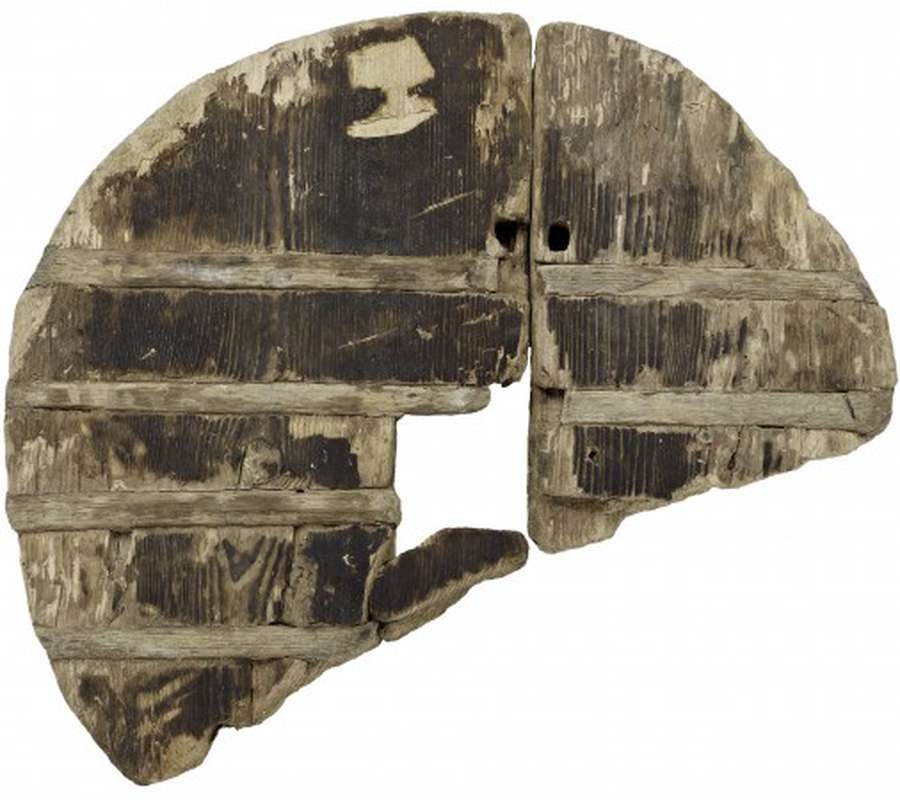
The earliest wheels in Europe, like those in Mesopotamia, lacked spokes. However, in 2002, an exciting discovery was made when the oldest known wooden wheel mounted on an axle was found buried in a marsh near Ljubljana, Slovenia. Radiocarbon dating revealed that the wheel and axle date back to 3340–3030 BC and 3360–3045 BC, respectively, making it a valuable Neolithic artifact.
The finding generated controversy regarding who actually developed the first wheel and if it was invented concurrently in Mesopotamia and Europe. Stone, chopped tree trunks, or clay would be used to create the earliest wheels, but these would be too coarse, heavy, and brittle. Those “tournettes” are seen in Iranian pictograms from the 6th millennium BC. But the vehicle wheel itself has a considerably more contested lineage.

In 1875, archaeologists uncovered the foundations of pile houses in the Ljubljana Marshes. These ancient ruins, situated in a regional park just outside of Ljubljana, are characterized by their unique construction on wooden columns in wetlands or watery areas. With a length of 7 meters (23 feet) and a width of 3.5 meters (11.5 feet), the dwellings were spaced 2 meters (6.6 feet) to 3 meters (9.8 feet) apart. The pile dwelling settlements at Ljubljansko barje have been recognized as a World Heritage site by UNESCO since 2011.
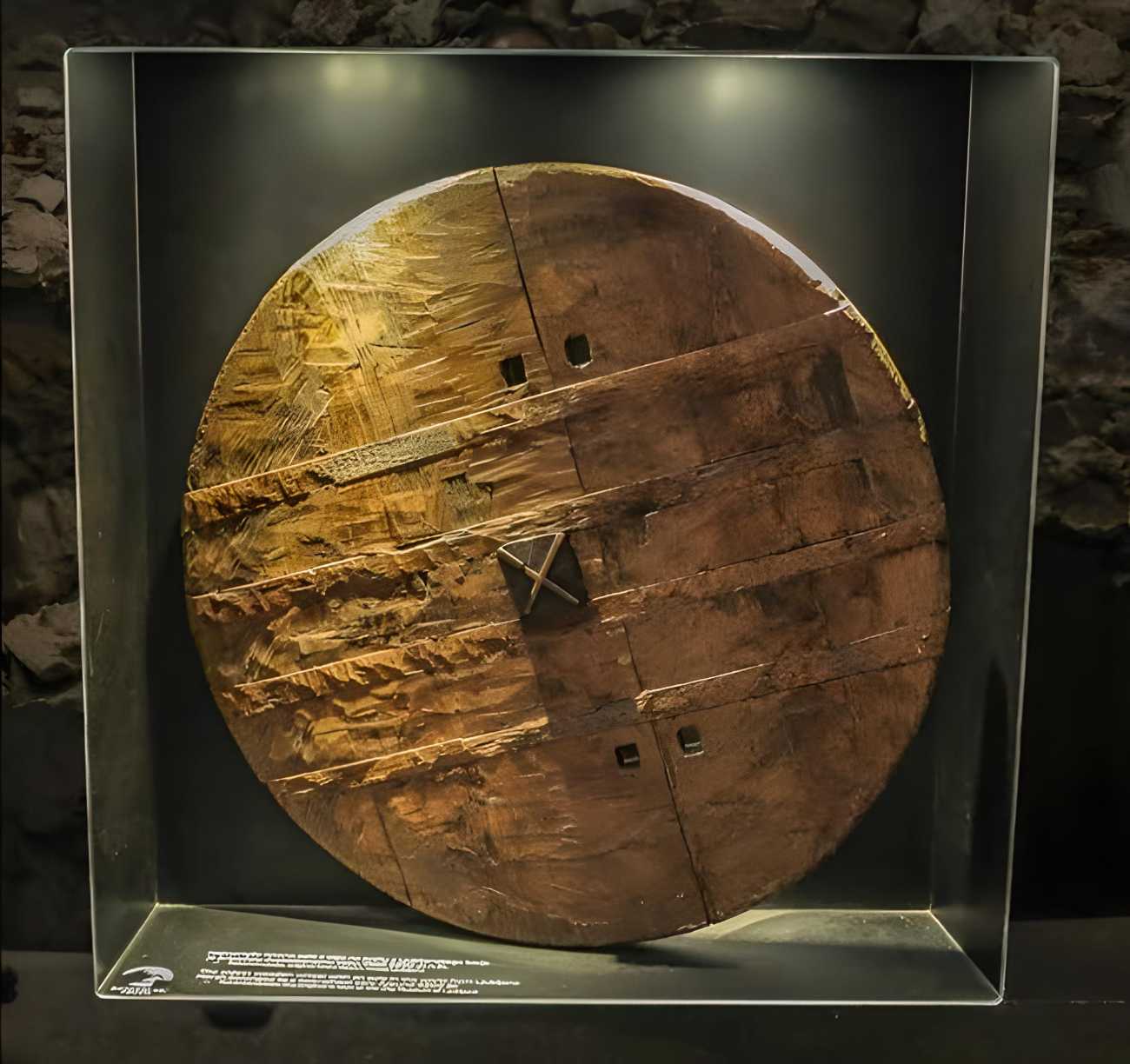
One particularly fascinating discovery from the site is an ancient wooden wheel with an axle. This Ljubljana Marshes Wheel with a 72 cm (28.4 in) diameter and 5 cm (1.97 in) thickness was crafted from oak and ash some 5,200 years ago. Because the hole on the wheel is crimped by the wedges into a square shape, it is believed that its 124-centimeter (49 in) long axle also rotated.
How Was Ljubljana Marshes Wheel Constructed?
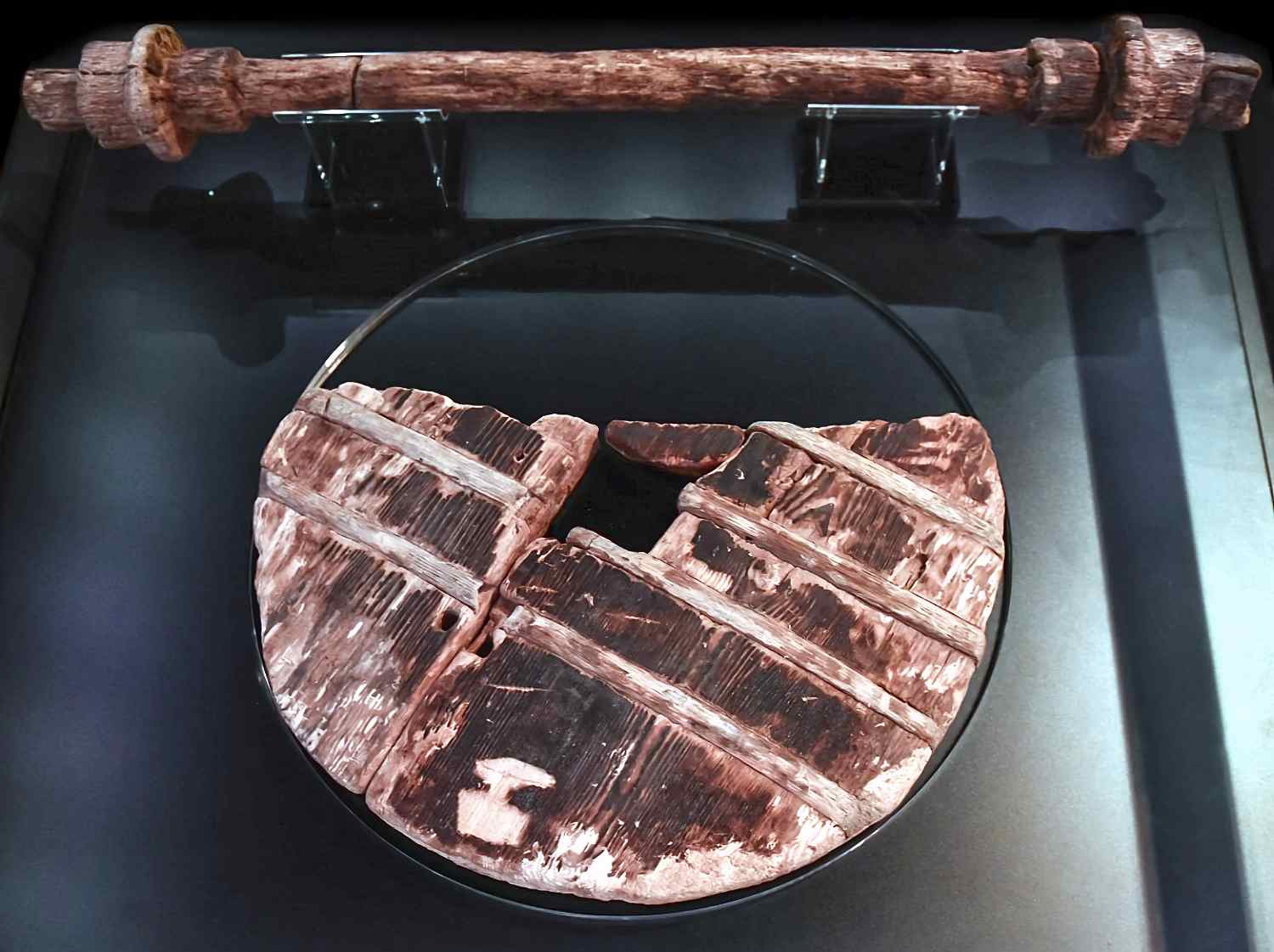
The dendrochronology, or the study of tree rings, was a useful addition to the radiocarbon dating. Because the tree used for the crafting of this wheel was 80 years old. The wheel was crafted from two wooden boards that were fastened together with the use of four supports, which were inserted into meticulously carved grooves known as tenon slots. This method of construction is a traditional technique that dates back to ancient times.
Burn marks can be seen on both the wheel and the axle, indicating that the wood was scorched to protect it from the xylophagous parasites.
The wheel-axle assembly technique used for the Ljubljana wheel is unique in that it allows for the wheel and axle to rotate together, similar to the pile dwelling constructions found in the Alps. Pile-dwellers first called this place home about 9,000 years ago. In the Mesolithic, they began a subsistence lifestyle focused on hunting, fishing, and gathering that would last them until the Neolithic, in the seventh millennium. These prehistoric humans had a knack for elevating their dwellings on wooden piles above the damp earth.

What Purpose Did the Ljubljana Marshes Wheel Serve?
The Ljubljana Marshes Wheel either belonged to a hand-pulled or ox-pulled cart that had just two wheels. The initial idea was that the set related to a hand-pulled cart rather than a draft vehicle. But according to modern theories, it could have really been used to harness a couple of animals for transportation.
The Ljubljana Marshes Wheel may have been used to transport crops and other heavy goods, allowing for the establishment of a trading route around the area. The wheel is remarkable for its size and antiquity, setting it apart from others of its kind discovered in areas like Switzerland and Germany.
The Ljubljana Marshes Wheel was restored during a ten-year period at the Institute for Archaeological Research in Mainz, Germany, and is presently on exhibit at the Ljubljana Museum. At the Ljubljana City Museum and the National Museum of Slovenia, people can see some of the most important finds from the excavation, along with the oldest wheel ever found.
Bibliography
- The featured background image: AdobeStock / Rangizzz
- Holm, Hans J. J. G.: The Earliest Wheel Finds, Their Archaeology and Indo-European Terminology in Time and Space, and Early Migrations around the Caucasus. 2019. [PDF] ISBN 978-615-5766-30-5.