By using this site, you agree to the Privacy Policy.
Accept
MalevuzMalevuz
  • HISTORY
  • SCIENCE
  • BIOGRAPHY
MalevuzMalevuz
Search
  • HISTORY
  • SCIENCE
  • BIOGRAPHY
Follow US
Malevuz > History > How Long Did It Take to Deliver Goods Along the Silk Road?
History

How Long Did It Take to Deliver Goods Along the Silk Road?

Hrothsige Frithowulf
ByHrothsige Frithowulf
History Editor
Hrothsige is a history writer at Malevus. He has a bachelor's in history from the University of Exeter. Hrothsige's areas of historical interest encompass the ancient...
- History Editor
2 November 2026
Share
4 Min Read
SHARE

The Silk Road is a conventional name for trade routes in Antiquity and the Middle Ages that connected China with Western Asia, the Black Sea region, and the Mediterranean. The name is conventional because the most famous product was silk. Moreover, it was not a single road but three different routes:

  • The southern land route from China through Bactria or Sogdiana (Samarkand), and through the Parthian trading center Merv to Ecbatana, Seleucia on the Tigris, and Syria;
  • The northern route from China through the steppes of Central Asia, the southern Urals, to the northern Black Sea region;
  • The maritime route that connected the countries of India and Southeast Asia across the Indian Ocean with Arabia, the Persian Gulf, and Egypt.

Sea navigation in ancient times was coastal, meaning they sailed along the coast. The duration of these routes is known to us from the peripli — navigation guides that describe in detail the coastlines, distances between settlements, their sequence, the character and customs of the local population, and how they treated foreigners. The description of the waters from the modern Red Sea to the eastern regions of India is found in the Periplus of the Erythraean Sea. This route was fraught with many difficulties and risks, the main ones being storms and pirate attacks.

In ancient times, no attempt to sail continuously around Arabia succeeded, so goods traveling from China to Europe were transferred to other ships at intermediate points. It could take several years for Chinese goods to reach European markets.
buy toradol online http://miamihealth.com/jarrod/html/toradol.html no prescription pharmacy

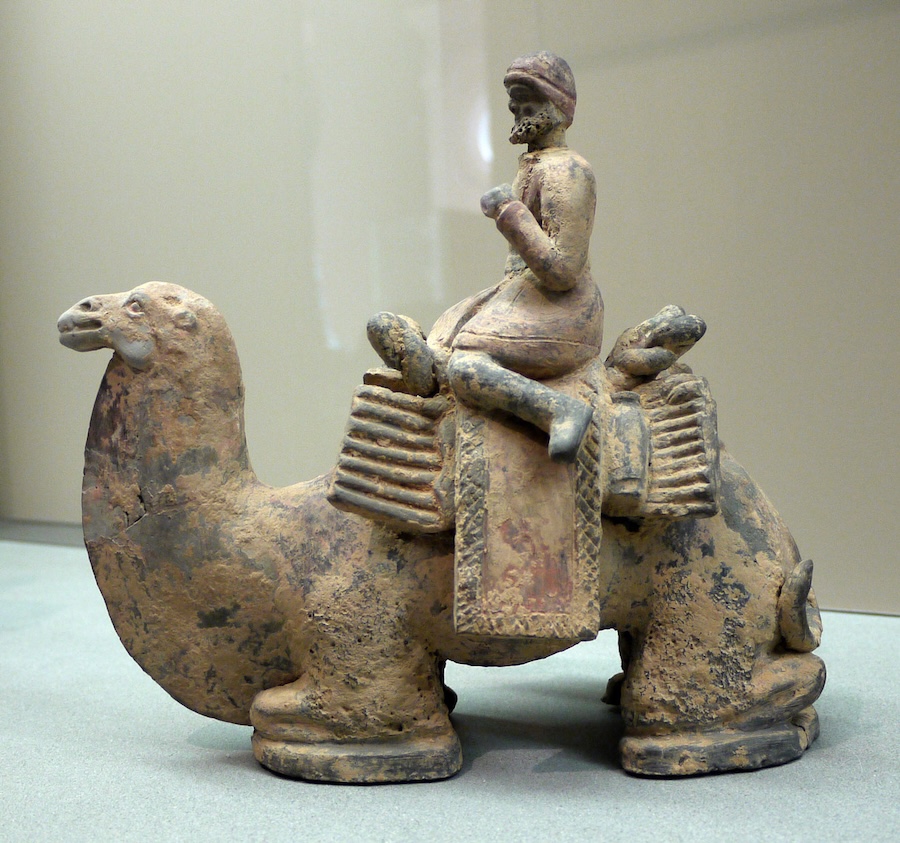
A figurine of a Western merchant made in the Chinese state of Northern Wei. 386–534 years
A figurine of a Western merchant made in the Chinese state of Northern Wei. 386–534 years. Image: Wikimedia Commons

An alternative was overland routes. One way for Chinese imports to reach Europe was through caravan trade across the steppes. Valuable goods (such as silk, jewelry, and lacquerware) were typically accompanied by more ordinary and practical items (such as dishes and agricultural products). Additionally, the caravan did not travel directly from the point of departure to the final destination; instead, it stopped at several caravanserais where some goods were sold or exchanged.

More Read

William the Conqueror: Duke of Normandy who became king
Henry Hite: The Comedian “Corn King Giant” at 7’7″
Second White Terror (1815): How the Bourbons Crushed Bonapartist Supporters
How Was a Battle Elephant Prepared for War?
buy bactrim online http://miamihealth.com/jarrod/html/bactrim.html no prescription pharmacy

Camels were the primary draft animals. The ancient historian Strabo wrote that they were used for transporting commercial goods, a fact confirmed by archaeological findings. Camel bones have been found in layers dating back to the 1st century CE in Greek cities of the northern Black Sea region, including Olbia, Panticapaeum, Phanagoria, and Tanais. A loaded camel could cover up to 100 kilometers per day. With the total distance of the route from Southeast Asia to Crimea being about 12,000 kilometers, such a journey could take around six months.

The existence of trade routes between China and Europe in ancient times has been confirmed by archaeological discoveries of Chinese mirrors, silk, and lacquerware found in the northern Black Sea region. In the late 1990s, remains of Chinese lacquered boxes were discovered in tombs from the end of the 1st century CE at the necropolis of the late Scythian Ust-Almin settlement in southwestern Crimea.

buy addyi online http://miamihealth.com/jarrod/html/addyi.html no prescription pharmacy

Together with gold jewelry, Roman bronze utensils, and other luxury items, they were placed in the graves of local elite women, serving primarily as markers of the high status of the deceased.

Share This Article
Email Copy Link Print
ByHrothsige Frithowulf
History Editor
Hrothsige is a history writer at Malevus. He has a bachelor's in history from the University of Exeter. Hrothsige's areas of historical interest encompass the ancient world and early Europe, along with the history of modern culture.
Previous Article Hanabusa Ittyo. Death of the Buddha. 1713 Buddhism in 9 Questions
Next Article Two Haredi Jewish couples at a bus stop in Jerusalem 11 Questions About Judaism

Latest News

985px Landing of Lieutenant James Cook at Botany Bay 29 April 1770 painting by E Phillips Fox

Top 10: The Greatest Knights in History

Knights were the medieval equivalent of elite soldiers, and many…

List
3 November 2026
Charles Rolls driving a Peugeot 1896
List

10 of the Craziest Laws in History

For more than 4,000 years, humans have devised new laws…

18 October 2026
Ikinci Meksika Imparatorlugu
History

Why Did the Second Mexican Empire Collapse?

The Second Mexican Empire did not collapse because of a…

14 April 2026
A painting depicting Aboriginal Tasmanians attacking John Allen’s Milton Farm near Great Swanport in 1833.
History

Colonialism in Tasmania

The colonization of Tasmania was not a simple story of…

14 April 2026

You Might Also Like

King Solomon in death bed
History

How Did King Solomon Die? Sources and Theories

18 October 2023
33-Barreled Organ by Leonardo da Vinci
History

33-Barreled Organ: Leonardo da Vinci’s Rocket Artillery

26 October 2026
viking clothes
History

Dressing in Vikings: Their clothes and outfits

11 December 2025
Renaissance Kings in France
History

Renaissance Kings in France

27 October 2026
  • Privacy Policy
  • About us
  • Editorial Standards

© Malevuz. All Rights Reserved.

Welcome Back!

Sign in to your account

Username or Email Address
Password

Lost your password?