Holding absolute power over tens of millions of subjects from the rainy hills of northern Britain to the deserts of Mesopotamia, Roman emperors occupied a political office with almost zero constitutional checks on their personal whims. While statesmen like Augustus, Trajan, and Marcus Aurelius spent their reigns codifying laws and inspecting frontier legions, other rulers used the imperial treasury to indulge bizarre obsessions, theatrical pranks, and terrifying displays of cruelty. Examining five verified historical episodes from the lives of Roman emperors reveals how quickly absolute authority blurred the line between comedy and horror.
Caligula’s War Against the Sea and His Horse Incitatus
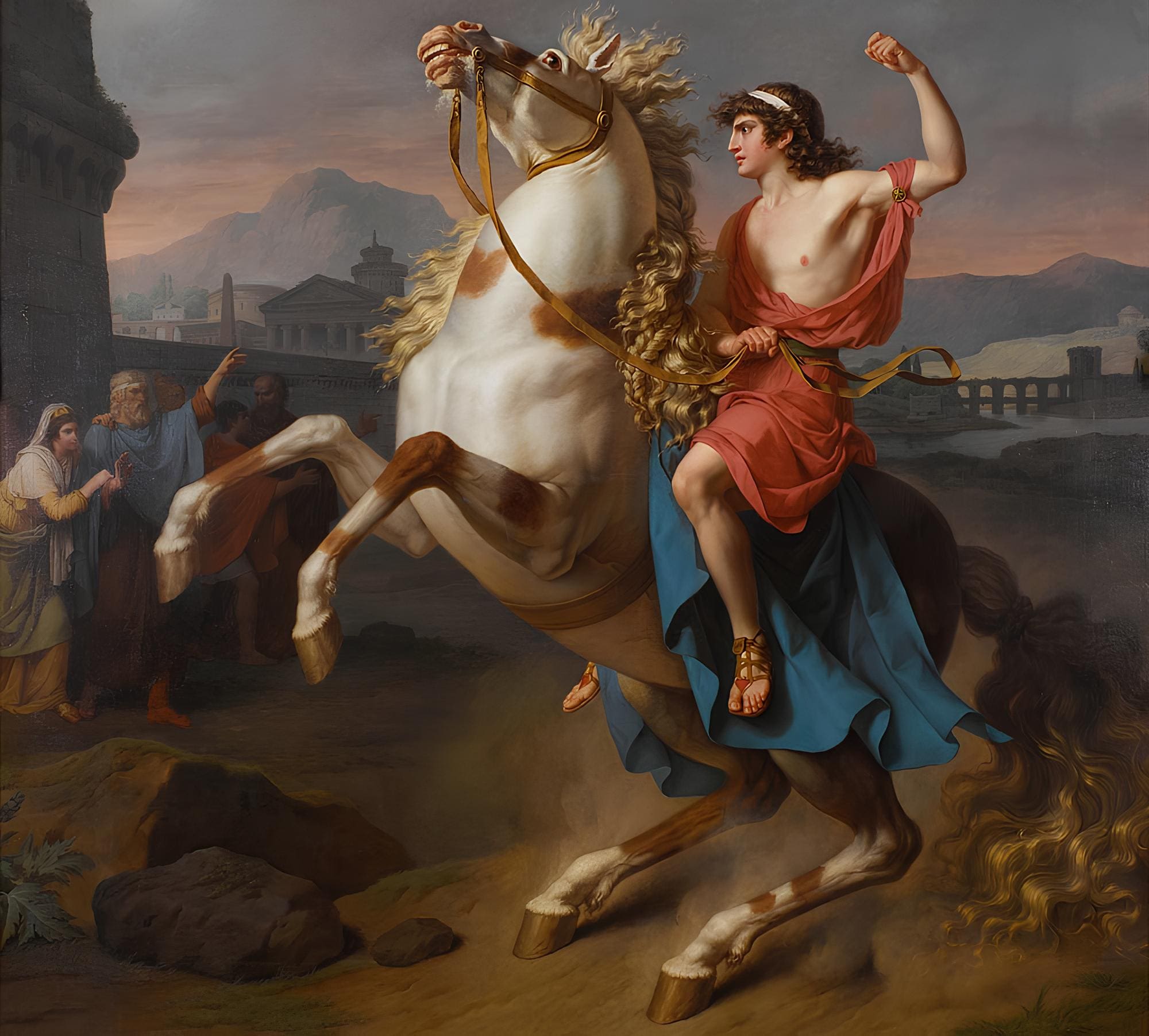
Few rulers combined dark absurdity and terror as unpredictably as Gaius Julius Caesar Augustus Germanicus, universally known by his childhood military nickname Caligula, meaning Little Boots. According to the Roman biographers Suetonius and Cassius Dio, Caligula lavished an unimaginable fortune on his favorite racing stallion, Incitatus. To ensure the horse slept undisturbed before races at the Circus Maximus, the emperor stationed Praetorian guards around the neighborhood to enforce absolute silence, built the stallion a marble stable fitted with an ivory manger, dressed him in imperial purple blankets, and hosted dinner parties in the horse’s name where senators were forced to attend, culminating in Caligula’s infamous threat to appoint Incitatus to the high office of Roman Consul as an insult to the Senate’s competence.
Equally surreal was Caligula’s military campaign along the English Channel in 40 AD. After marching legions to the northern coast of Gaul as if preparing to invade Britain, the emperor suddenly ordered his battle lines to face the waves while catapults and ballistae were drawn up on the sand. When the bewildered soldiers stood waiting, Caligula commanded them to draw their swords, charge into the surf, and collect seashells in their helmets as plunder from the conquered ocean to carry back in triumph to Rome—a stunt historians interpret either as a symptom of severe mental instability or a calculated public humiliation of mutinous troops.
Emperor Claudius Legalizing Flatulence at Banquets
Following the assassination of his nephew Caligula in 41 AD, Claudius was discovered hiding behind a palace curtain by Praetorian soldiers and unexpectedly elevated to the throne. Remembered as an able administrator who conquered Britain and expanded the empire’s aqueducts, Claudius was also a lifelong hypochondriac who worried obsessively about digestive ailments after suffering illnesses in his youth. According to Suetonius in The Twelve Caesars, Claudius was deeply concerned after hearing a story about a polite dinner guest who nearly died of severe abdominal cramps because embarrassment prevented him from relieving gas in the emperor’s presence.
Determined to protect the gastrointestinal health of Roman citizens, Claudius drafted a formal imperial edict legalizing and encouraging flatulence at state banquets and social gatherings. At his own crowded dining tables, Which frequently hosted up to six hundred guests at a time, the emperor prioritized bodily comfort over aristocratic etiquette, though he frequently fell asleep at the table immediately after eating and had to be tickled awake with feathers by palace attendants so he could digest safely.
Domitian’s Pitch-Black Dinner Party of Terror
During the late first century AD, Emperor Domitian grew increasingly paranoid toward the senatorial aristocracy and devised psychological games designed to remind Rome’s elite that their lives hung by a thread. In 89 AD, as recorded by the historian Cassius Dio, Domitian invited a large group of leading senators and equestrian knights to an evening banquet at his palace. Upon entering the dining hall, the horrified guests discovered that the ceilings, walls, and floors had been painted entirely matte black, with bare wooden benches arranged like funeral biers.
Next to each senator’s seat stood a carved stone gravestone inscribed with that specific guest’s full name and lit by a flickering oil lamp of the exact type hung inside Roman tombs. Naked Slave boys painted completely black danced silently around the room before serving food traditionally offered to spirits of the dead on black platters. Throughout the entire meal, Domitian spoke exclusively about murder, executions, and slaughter while the terrified senators sat frozen in silence, convinced their throats would be cut the moment the meal ended. When they were finally sent home in carriages pulled by strangers, each senator received a knock at his door hours later from an imperial messenger—only to discover that Domitian had sent them the silver “gravestones” and expensive platters from the dinner as a macabre practical joke.
Commodus Fighting Disabled Citizens and Ostriches in the Arena
When the philosopher emperor Marcus Aurelius died in 180 AD, sole rule passed to his nineteen year old son, Commodus, whose megalomania brought an end to the era of the Five Good Emperors. Obsessed with gladiatorial combat and convinced he was the living reincarnation of the demigod Hercules, Commodus abandoned state administration to wear a lion skin, carry a wooden club, and rename the city of Rome Colonia Commodiana as well as renaming all twelve months of the calendar after his own personal titles.

Stepping onto the sands of the Colosseum himself—an act Romans considered deeply shameful for an aristocrat, let alone an emperor—Commodus charged the public treasury one million sesterces for every appearance. In the morning animal hunts, he used specially forged crescent shaped arrowheads to decapitate running ostriches, then walked over to the senatorial seating section holding a severed ostrich head in one hand and a bloody sword in the other, grinning and gesturing that he could do the exact same thing to the senators. Even more disturbingly, he ordered all citizens in Rome who had lost their feet to disease or accidents to be rounded up, tethered together at the knees in the arena, costumed as mythological serpentine giants, and beaten to death with his Hercules club while the crowd was forced to applaud.
Elagabalus Smothering Dinner Guests with Deadly Rose Petals
Crowned emperor in 218 AD at the age of just fourteen, Varius Avitus Bassianus, known to history as Elagabalus after the Syrian sun god he served as high priest, shocked conservative Rome during his brief four year reign with extravagant pranks and sensory excess. Inside his palace, the teenager seated compliant dinner guests on inflatable leather cushions that were secretly deflated mid meal, dropping dignified magistrates onto the floor underneath the tables while serving them fake food crafted out of wax, glass, or painted stone.
His most infamous banquet spectacle, recorded in the Historia Augusta, turned deadly through sheer luxury. Dining inside a hall fitted with a mechanical reversible ceiling, Elagabalus triggered a hidden lever that released tons of fresh violets and rose petals onto his guests from above. The volume of flowers cascading from the rafters was so immense and heavy that several trapped guests were unable to crawl to the surface and suffocated to death beneath the fragrant mountain of petals.