By using this site, you agree to the Privacy Policy.
Accept
MalevuzMalevuz
  • HISTORY
  • SCIENCE
  • BIOGRAPHY
MalevuzMalevuz
Search
  • HISTORY
  • SCIENCE
  • BIOGRAPHY
Follow US
Malevuz > History > Almost 170 more Nazca lines discovered
History

Almost 170 more Nazca lines discovered

Hrothsige Frithowulf
ByHrothsige Frithowulf
History Editor
Hrothsige is a history writer at Malevus. He has a bachelor's in history from the University of Exeter. Hrothsige's areas of historical interest encompass the ancient...
- History Editor
11 December 2025
Share
5 Min Read
SHARE

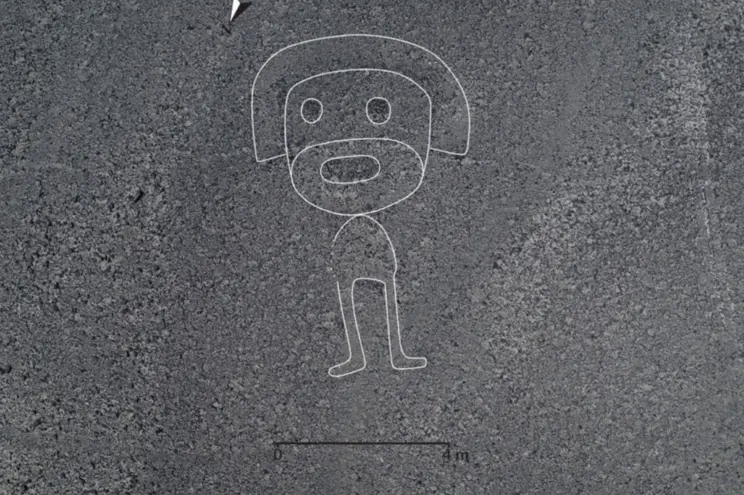
Strange and mysterious artworks. Another 168 Nazca geoglyphs have been found in the Peruvian Andes. Animals including llamas, birds, huge cats, snakes, and whales, as well as some human figures, are shown in the 1,700- to 2,100-year-old ground drawings. The inhabitants of the Nazca civilization made them by moving away the darker surface stones to expose the brighter background. Now that they have identified a large enough sample of geoglyphs, the researchers want to employ AI-powered analysis to assess their prevalence and interpret their likely significance.
Contents
  • Geoglyphs discovered by an AI
  • There are animals, humanoids, and geometric designs
nazca lines 3
In order to reveal the white sandy surface underneath these geoglyphs, the black stones at the surface of the ground had to be removed. (Image: Yamagata University)

Peru’s Nazca Lines are one of the world’s most enigmatic clues to lost civilizations. Large ground pictures, such as birds, spiders, cats, and monkeys, as well as 12.5 miles (20 km) long lines and abstract designs, were scratched into the hard desert soil by members of the Paracas and Nazca civilizations for generations.

It is possible that some of these geoglyphs are astrological markers, while others were made as part of ceremonies or to honor unusual species that have since died off.

Geoglyphs discovered by an AI
nazca lines 1
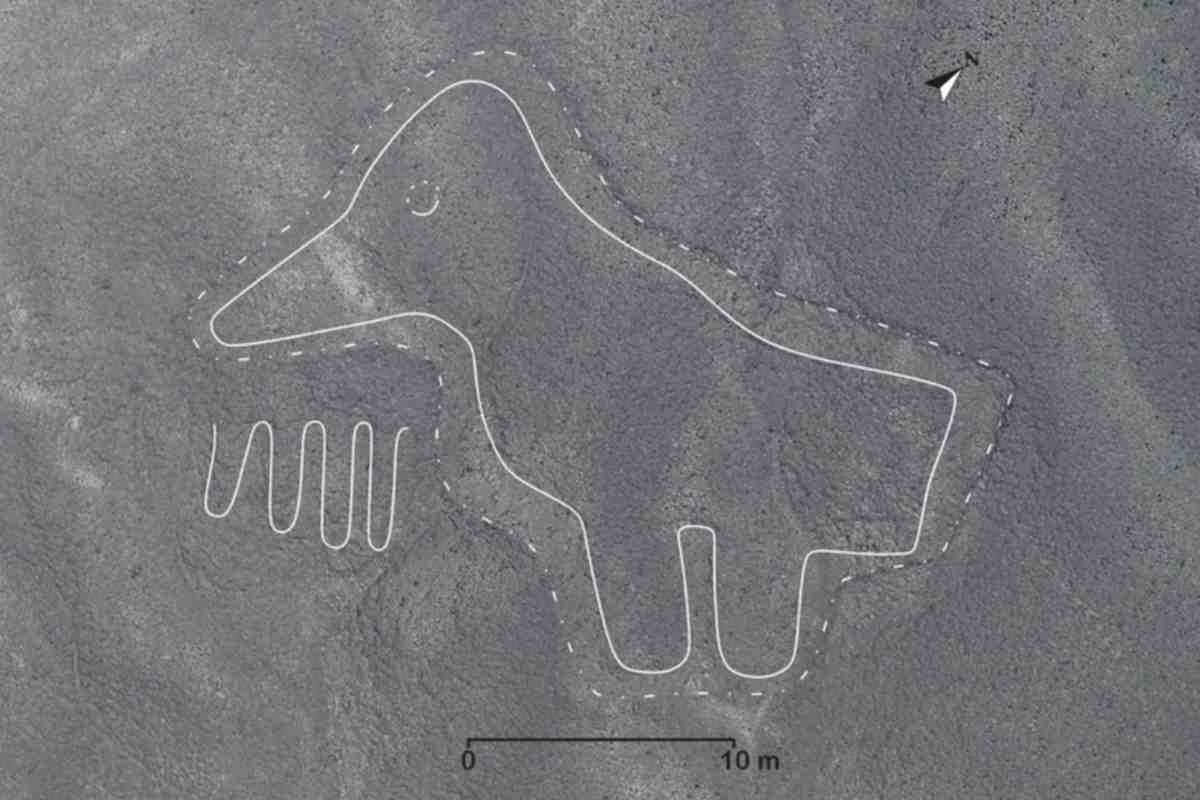
Traces of ancient rivers and many geoglyphs may be found all throughout Peru’s Nazca Plateau. (Image: Yamagata University)

Archaeologists headed by Masato Sakai of Japan’s Yamagata University used drones and aerial images to scour the desolate stone desert outside the Peruvian city of Nazca for further geoglyphs between June 2019 and February 2020.

More Read

hungary christmas santa claus
Christmas in Hungary: Traditions and Foods
Joan of Arc: Between history and legend
10 Things You Didn’t Know About Chardin
Why Did Voltaire Change His Name?

In their investigation, they looked in places where many Nazca lines and ground pictures had already been discovered. An AI system was used to examine the pictures, and it was able to pick up geometric patterns that were almost invisible to the naked eye.
nazca lines 4
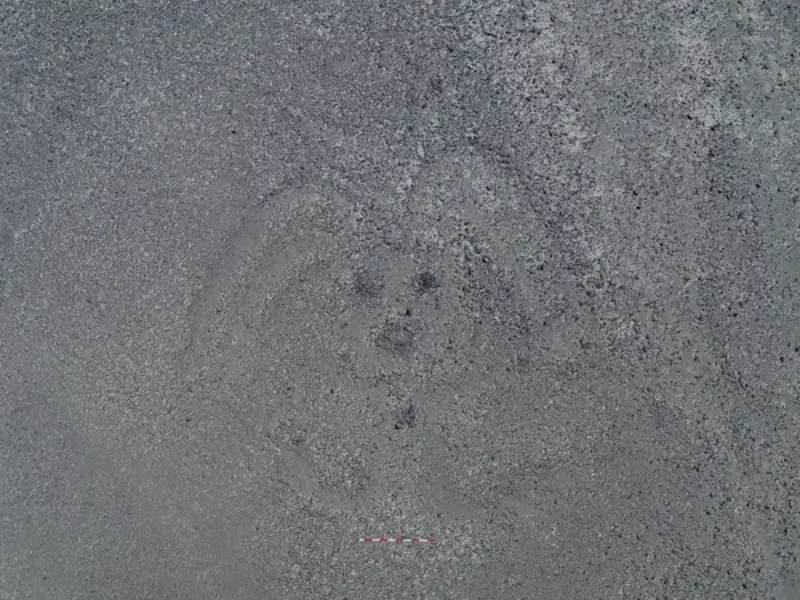
One of the Nazca lines pictures discovered in the Nazca plain by Peruvian and Japanese scholars from Yamagata University. (Image: Yamagata University)

Actually, the researchers uncovered new drawings unseen before. 168 new, unidentified Nazca ground pictures. This brings the total number of geoglyphs documented in the Nazca region to 358.

The motifs, the largest of which may span several meters in length, were likely created between the years 100 B.C. and 300 A.D. The Nazca uncovered the geoglyphs’ outlines by moving away the stones and crusts encased in black desert varnish.

There are animals, humanoids, and geometric designs
nazca lines 2
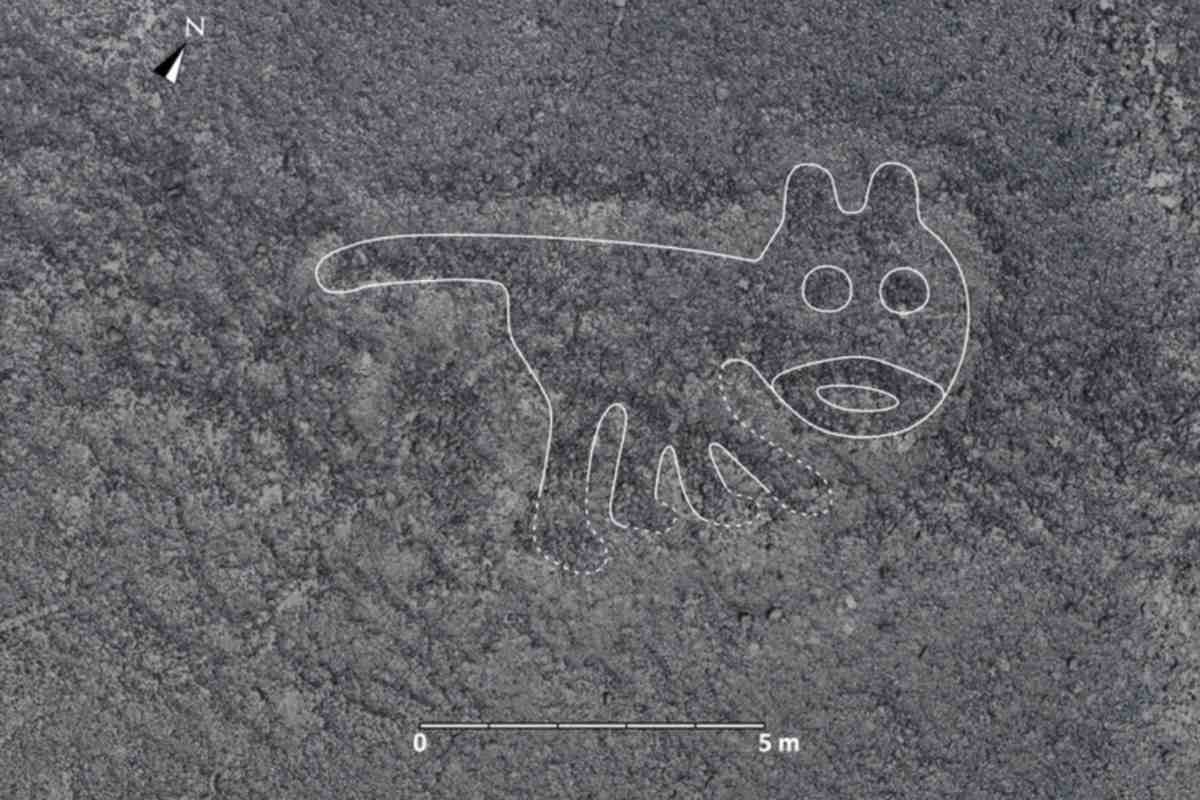
In the Peruvian Andes, archaeologists have discovered more relics of ancient civilizations in the form of ground drawings. (Image: Yamagata University)

Birds, cats, snakes, llama-like ungulates, and even orcas are just some of the species shown in the recently found Nazca drawings. Also seen among the geoglyphs are humanoids, lines, and other rudimentary geometric designs. These ground drawings typically cover a distance of less than a dozen feet. Most often, you’ll find them on the outskirts of long-lost trails in the stony wastes.

More Read

Five Elements
Five Elements: History and Origin
Was King Solomon Black? Accounts and References
Delian League: How Did 250 Greek Cities Unite Under a Coalition
How Long Did Europeans Consider Themselves “Romans”?

It is still not entirely clear why the Nazca and, earlier, the Paracas civilizations made these somewhat huge ground drawings. The criteria through which they chose their motivations are also debatable.

Future assessments of the distribution of the different ground pictures and their themes, aided by AI, are expected to provide additional insight into this question for archaeologists working in the area.

In 2017, an archaeological park was formed in a region close to the heart of the Nazca lines due to the very high concentration of geoglyphs in that location. It has grown to include 77 of these geoglyphs, with the stated goal of protecting them against future human development.



Share This Article
Email Copy Link Print
ByHrothsige Frithowulf
History Editor
Hrothsige is a history writer at Malevus. He has a bachelor's in history from the University of Exeter. Hrothsige's areas of historical interest encompass the ancient world and early Europe, along with the history of modern culture.
Previous Article Henry Ford Henry Ford’s ties to the Nazis: How Ford became Detroit’s dictator
Next Article Does the Earth’s core contain oxygen?

Latest News

985px Landing of Lieutenant James Cook at Botany Bay 29 April 1770 painting by E Phillips Fox

Top 10: The Greatest Knights in History

Knights were the medieval equivalent of elite soldiers, and many…

List
3 November 2026
Charles Rolls driving a Peugeot 1896
List

10 of the Craziest Laws in History

For more than 4,000 years, humans have devised new laws…

18 October 2026
Ikinci Meksika Imparatorlugu
History

Why Did the Second Mexican Empire Collapse?

The Second Mexican Empire did not collapse because of a…

14 April 2026
A painting depicting Aboriginal Tasmanians attacking John Allen’s Milton Farm near Great Swanport in 1833.
History

Colonialism in Tasmania

The colonization of Tasmania was not a simple story of…

14 April 2026

You Might Also Like

Battle of Waterloo: The final fight of Napoleon’s the Hundred Days

2 November 2026
Christmas-in-the-Philippines
History

Christmas in the Philippines: Traditions and Celebrations

7 June 2025
Klement Gottwald Joseph Stalin 1948 Czechoslovak Coup d'état
History

Czechoslovak Coup d’état: Communist coup in 1948

16 October 2023
yakuza Yubitsume
History

Yubitsume: A Japanese Way of Reflection, Arbitration, and Protest

11 December 2025
  • Privacy Policy
  • About us
  • Editorial Standards

© Malevuz. All Rights Reserved.

Welcome Back!

Sign in to your account

Username or Email Address
Password

Lost your password?