Sound refers to the aural impression produced by an acoustic wave. Understanding the nuances of music is essential for telling it apart from “non-musical” noise. The term “music” refers to any sequence of sounds that has been arranged in a certain way. It may be described in terms of pitch, duration, and timbre. If you can’t identify the pitch, what you’re hearing isn’t sound; it’s just noise.
It’s possible to make a noise by hitting any item, but it’s usually not the same as a musical instrument’s sound since the pitch of the noise can’t be pinpointed to a certain note on the musical scale.
Noise is a very intricate frequency combination in which no one frequency can be isolated as the dominant force. This is true of percussion instruments such as drums, bass drums, and cymbals. Xylophones, timpani, and bells are all examples of instruments in which a single frequency predominates while nevertheless producing a distinct pitch. The percussion instruments all have this characteristic manner of emission.
The term “percussion instruments” refers to a broad class of musical instruments that produce audible vibrations when hit, shaken, or rubbed. The sound is produced by the entire item vibrating and releasing air molecules. Musicologists have given them the label “idiophones” because of their unique abilities.

There are musical instruments here whose sounds cannot be placed on a musical scale. They might emphasize the music’s rhythm by highlighting its prominent beats, or they can provide a distinct hue to certain sections of the score. In contrast, some may be identified by their pitch note and have a melodic function.
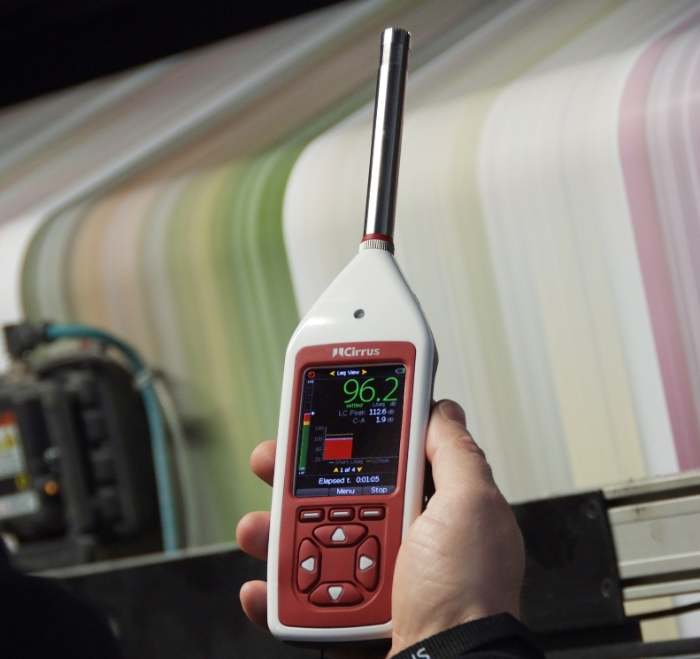
Common noise-measuring tools include the sound level meter, audio meter, and integrated sound level meter.
In terms of its “pitch,” a sound wave is what we hear. Scientists use the term “compression wave” to describe the phenomenon of air vibration. This wave travels through the air at a pace of around 1080 feet (330 meters) per second, therefore conveying audible vibrations.
The frequency of an object is defined as the rate of vibration in cycles per second. Frequency is measured in hertz, often abbreviated Hz. The frequency of a sound wave is what gives it its pitch. On a tuning fork, the A note has a frequency of 440 hertz. This translates to a frequency of 440 oscillations per second for the blades.
In the same way that decibels can be measured using a sound level meter, “pitch” may also be quantified in this way. There is a sweet spot for human hearing somewhere between 500 Hz and 6 kHz, and your sensitivity drops off significantly outside of that range. Sound level meters and dosimeters rely on frequency weightings to accurately record and report the decibels we’re exposed to. There are built-in electronic filters that can be employed to modify the sensitivity of the instrument’s noise measurements.

The frequency and intensity of a sound are two different things. Low-pitched sounds have a low frequency, whereas high-pitched ones have a high frequency. Thus, hertz (Hz) is the unit of frequency measurement.
The louder the sound, the greater the amplitude of the vibration; conversely, the weaker the sound, the smaller the amplitude. It is commonly expressed in decibels (dB).