Some spider species use their threads to soar through the air. They employ more than just wind and thermals to accomplish this. Additionally, even in a dull environment, the electrical field of the ground still gives them the required propulsion. Since spiders lack wings, they shouldn’t be able to fly in reality. But sometimes you witness them soaring through the air on long silk strands, dramatically dispelling this belief. Many spider species have been documented to use this flying strategy for a very long period of time.
The Electrostatic Processes
The “Beagle,” Darwin’s research vessel, has already had guests with eight legs. He explained how a spider entered the aircraft and left once again, “thrusting four or five threads out. They were more than 3.3 feet (1 m) long and stretched upward away from each other, starting from the gland openings. Suddenly the spider released its grip from the post and was quickly carried out of sight,” said Charles Darwin.
Darwin reported that the day was hot and windless. He attributed the spider’s ability to fly in spite of the lull to minute thermal convection movements. In fact, the theory could help explain certain crucial facets of the phenomenon. Darwin also had a sneaking suspicion that electrostatic forces might be involved. The spreading of the threads that were shooting out in a fan-like pattern, seeming to oppose one another, reinforced this.
The belief that spider flying was solely dependent on aerodynamics persisted up to the present day, despite such signs of potential charge effects. Scientifically speaking, this made sense. However, study findings that provide electrostatic processes with an additional supportive function have just been released.

If aerodynamic lift alone is to blame for recent advancements, then difficulties that become apparent upon closer inspection are likely to have played a role. For instance, it is unknown how spiders, which can weigh up to 100 milligrams, utilize their filaments to launch themselves upwards at a startlingly high rate of speed despite the lack of any breeze. Additionally, Darwin had previously seen the spreading of the bundles of expelled threads. Additionally, species of flying spiders were discovered at an altitude of 2.5 miles (4 km), which presented a significant fluid dynamics difficulty.
By taking into account the impacts of the Atmospheric Potential Gradient (PG), these issues may be resolved. Charge disparities between the atmosphere and the earth are involved in this. The Earth’s surface is negatively charged, whereas the ionosphere, which is more than 43 miles (70 km) above it, is mostly positively charged. The whole region between them is impacted by the disparity. As a result, the atmosphere above the ground is positively charged in comparison to it, creating an electrical potential difference between a location on the ground and a point in the atmosphere above. Up to around 100 volts per meter are possible. However, the intensity of the impact fluctuates and is strongly influenced by the weather.
Sensitive to Electric Fields
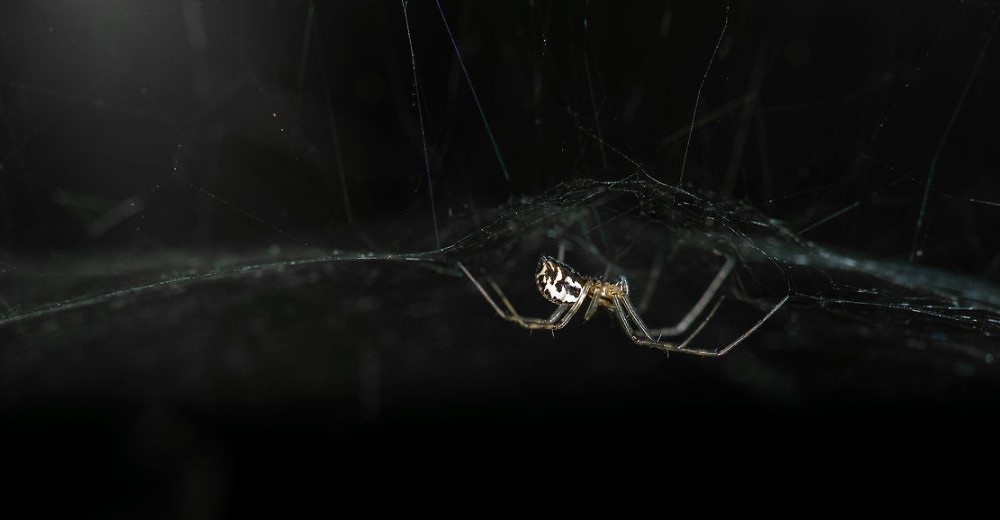
This is already evident from the way the spider’s strands repel one another. Additionally, silk filaments are electrically charged. As a result, they will always interact with each other and the air field, which will result in movement. But how can the spider predict if the pressures would be powerful enough to pull it along with its thread in advance? It must be able to detect electric fields and assess their strength in order to achieve this. Insects’ ability to accomplish this, at least in certain cases, has been known about for a while now.
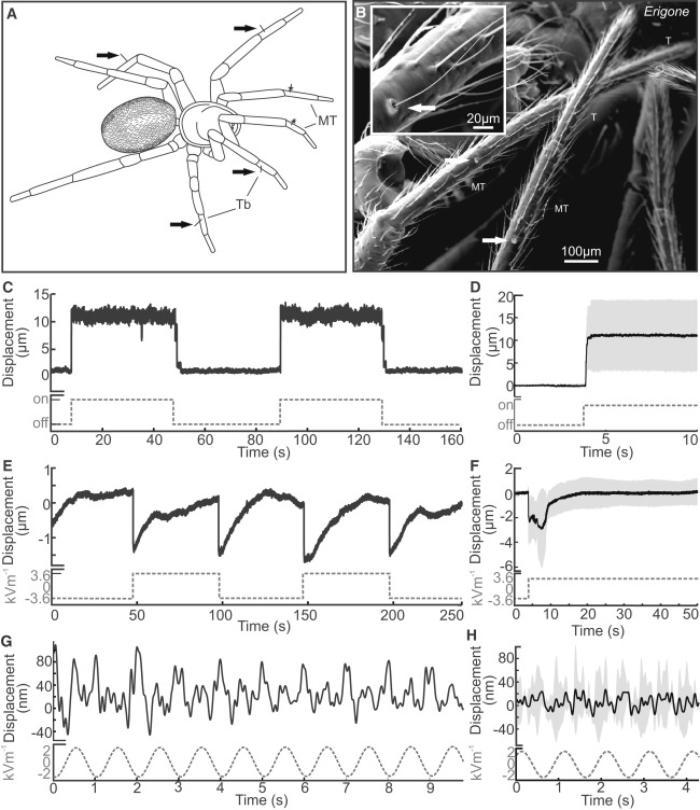
Erica Morley and Daniel Robert from the University of Bristol investigated the effects of fields on spiders in 2018. In controlled laboratory studies, canopy spiders (Linyphiidae) were subjected to electric fields of comparable intensity to those found in the environment during various weather situations.
Indeed, in response, the spiders made obvious preparations to take to the air. When the fields were turned on or off, the flying creatures either rose or fell. It follows that the electrical contact between the animals and the external fields must play a part in the ascent, in addition to the aerodynamic lift. It is thought that spiders are able to detect electric fields via the movement of specialized tactile hairs called trichobothria located on the animal’s skin.
The air potential gradient and wind conditions have a significant impact on the lives of flying spiders. Even so, they likely have some sway. Charbel Habchi from Notre Dame University Louaize in Lebanon and Mosbeh M. Khalid Jawed from the University of California, Los Angeles published the findings of their computational modeling in a paper this year (2022). According to the findings of the two engineers, spiders may manipulate fluidic and electrostatic conditions by adjusting the quantity and length of their filaments. Therefore, the flying critters were not totally powerless.
The mechanism by which the spinning threads are electrically charged remains unclear. Consequently, this interesting example of nature using an electric motor to power itself is likely to continue to reveal its mysteries for years to come.