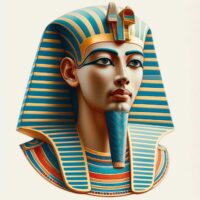
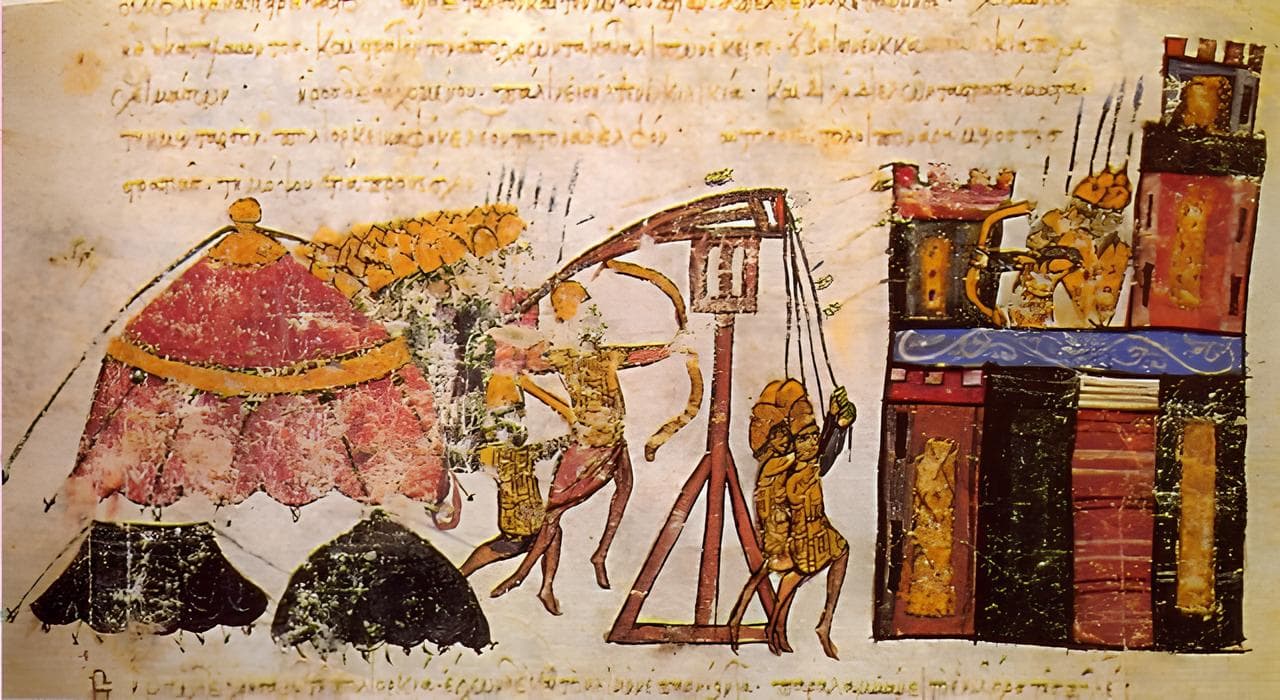
The “Khepresh” is an ancient Egyptian exclusively royal head covering, one of the important regal insignia by which a king’s person was distinguished from others in depictions. Due to its color and presumed significance, it is generally referred to as the “blue crown” in Egyptology, although it is uncertain whether it was actually part of the regalia as the white, red, and combined crowns were. Some scholars believe that the Khepresh crown is derived from a military helmet, and because it appears in scenes depicting the king during military activities, it was previously referred to as a “war crown.
” However, this usage is by no means exclusive; therefore, this designation is currently considered outdated by scholars. Unlike other headgear worn by monarchs, it is never adorned with gods. Perhaps this is because the iconography of the gods was established relatively early, while the blue crown is reliably documented only in the New Kingdom period.
History
Like other Egyptian royal crowns, the Khepresh crown is not archaeologically documented and is known only indirectly from depictions of kings; therefore, it is uncertain what material it was made of. Scholars speculate that it could have been made of reinforced fabric or, rather, leather (in this case, possibly ostrich leather) with metal rings attached to such a base. It is always accompanied by the uraeus, and two ribbons sometimes flow from the back.
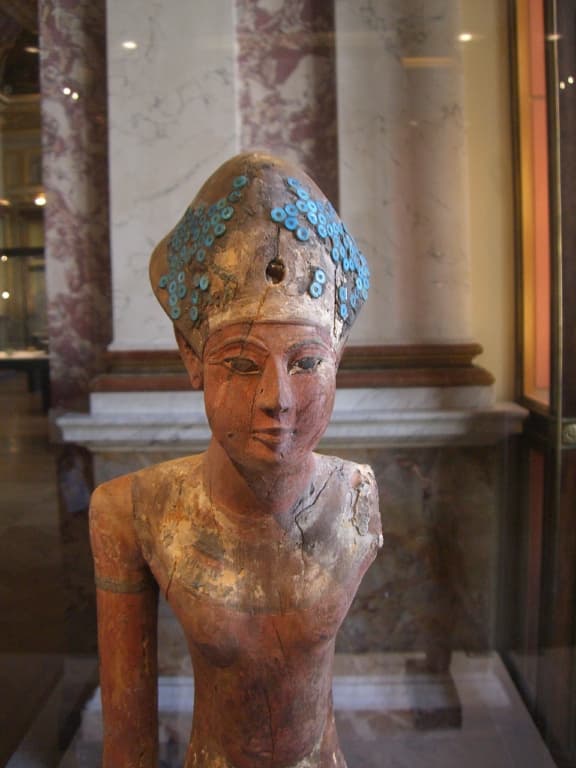
According to Egyptologists, stela 20799, created during the Second Intermediate Period, is one of the earliest mentions of the Khepresh crown. Amenhotep I was one of the first pharaohs depicted wearing the blue crown. Pharaohs of the XVIII — XIX dynasties wore this crown as their main headgear. After the Kushite dynasty, such a crown was no longer depicted.
Since the XVIII dynasty, the Khepresh crown has primarily been a distinctive sign of the pharaohs. In the Greco-Roman period, it was often depicted as the headgear of pharaohs. Additionally, from the beginning of the Ptolemaic dynasty, the Khepresh crown was increasingly used in iconographic depictions of divine children, such as Harpocrates.
Origin
The first evidence of the use of the blue crown is considered to be a mention on a stele from the Second Intermediate Period; however, the first ruler for whom its use is securely documented is Amenhotep I, the second king of the 18th Dynasty. It was more commonly seen during the reign of Hatshepsut and regularly during the reigns of Amenhotep III and especially Akhenaten.
Based on the frequency of its depiction, it remained popular with other kings throughout the subsequent period of the New Kingdom. It completely ceased to be used during the reign of the 25th Dynasty. The reasons are not clear; perhaps it is related to an unknown significance that could have been attributed to the headgear and its possible inconsistency with the non-Egyptian (Nubian) origin of the dynasty, or perhaps Nubian rulers decided to emphasize in their political program those aspects of royal power that were expressed by different crowns.
Use
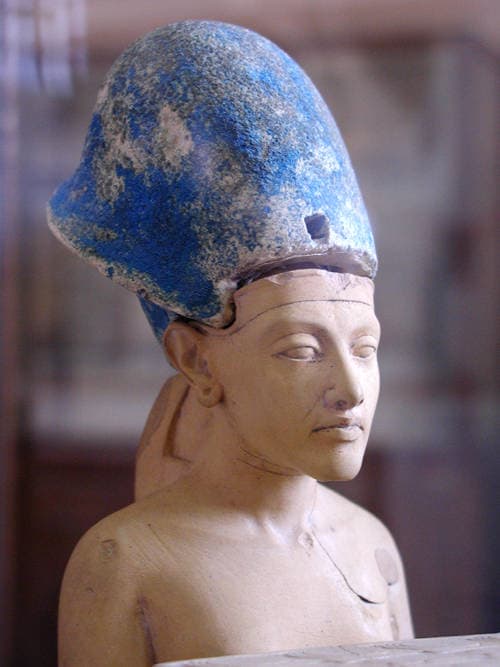
In the following period of the 26th Dynasty, the blue crown was widely used for two propaganda reasons: firstly, because members of the previous foreign conquering dynasty expelled from Egypt by Psamtik I did not wear it, so “its use in this period probably identified with the emphasis on the Egyptian origin” of the new dynasty, and secondly, because in a general sense, “it could largely be associated with the claim to legitimacy of rule.”
War Crown Khepresh
Pharaohs of the New Kingdom were often depicted with the Khepresh crown, riding chariots during animal hunts or military battles. The blue crown was also worn during various ceremonies. Khepresh is commonly referred to as the “war crown,” however, modern historians refrain from such a definition.
To this day, not a single specimen of the blue crown has been preserved, so it is unknown how and from what materials such headgear was made. There are assumptions that they were made of fabric or leather dyed blue, which was covered with small yellow discs resembling the sun on the outside. Like many other crowns, the uraeus was attached to the front.
Mythological Context
In the studies of Egyptologists, the Khepresh crown was long interpreted as a “war crown.” However, recent research shows that its use was more diverse and not limited to military actions. Although it was often depicted in graphic narratives of victory over Egypt’s enemies, other crowns were also depicted in this context. Moreover, the pharaoh was very often depicted in the blue crown when portrayed as a child, especially in those scenes where he was breastfed by a goddess.
This indicates a direct connection to divine children, who were also depicted in such scenes.
The Khepresh crown likely symbolized renewal and fertility (see the name, hieroglyph ḫpr and the deity Khepri) and also denoted the legitimate heir, whose claims to the throne were legitimate. Pharaohs and divine children shared a connection to the Khepresh crown in that only the pharaoh and his corresponding divine child were crowned with the blue crown, a sign of dominion over Egypt; for the pharaoh, it symbolized earthly rule; for the divine child, it symbolized divine rule.