There is an opinion that the Dark Ages gave humanity nothing new and were a period of stagnation and religious hysteria. But that’s not true. During those difficult times, there were certainly strange and bizarre events, but people also accomplished good things.
Glasses
Yes, it was in Medieval Europe—most likely in Pisa in 1284—that glasses were invented, helping people with weak vision to read.
Before that, a Berber astronomer, chemist, and engineer named Abbas ibn Firnas in the 9th century invented the “reading stone”—a polished piece of quartz that had to be moved across the pages of a book to magnify the letters. But it took another 300 years for Italians to come up with the idea of shaping such a stone into lenses and placing them in a frame. Allegedly, Alessandro di Spina from Florence invented glasses.
Initially, they were attached to the nose like a clip and were used only for correcting farsightedness. It wasn’t until the middle of the 15th century that they invented side pieces (temples) and lenses for nearsighted people.

Mechanical Clocks
Mechanical clocks appeared in Europe between 1280 and 1320. Of course, this wasn’t the first timekeeping device ever—the ancient Greeks and Chinese had made water clocks long before.
But the invention of the escapement mechanism with a toothed wheel, likely in Italy, allowed for the creation of fully mechanical clocks that operated without any liquid, relying instead on a weight descending on a rope. Finally, it became possible to make chronographs that didn’t take up an entire room or freeze in winter.
This can be compared to the shift from massive vacuum-tube computers with punch cards to devices that fit on a desk.
Watchmaking guilds in medieval Europe were highly respected, and their members crafted incredibly complex and finely made mechanisms. Often, clocks—especially large, tower clocks—not only measured time but also tracked the movement of celestial bodies.
This was important because, according to medieval doctors, the planets predicted the future. For example, if Jupiter entered the house of Scorpio without an invitation, a plague would break out. You needed to be prepared for such events.
Flying Buttresses
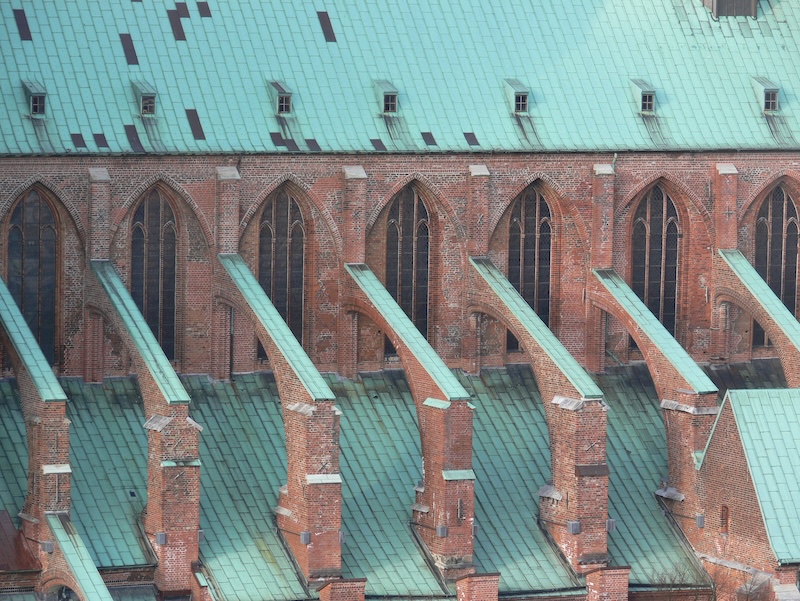
Flying buttresses are clever architectural supports that allow the weight of large building walls to be distributed, making them more stable.
These structures were invented in the 12th century, and they made the so-called Gothic architectural style possible. You know, all those huge cathedrals with statues and towers, like Notre Dame de Paris. Building them without flying buttresses would have been impossible—the buildings would have collapsed under their own weight. Structural mechanics at work.
Before this, truly massive architectural monuments had to be built on the principle of the Egyptian pyramids—with a wide base and a small top. But flying buttresses transformed them from gray, dull piles of stone into majestic works of art.
Tower Mills
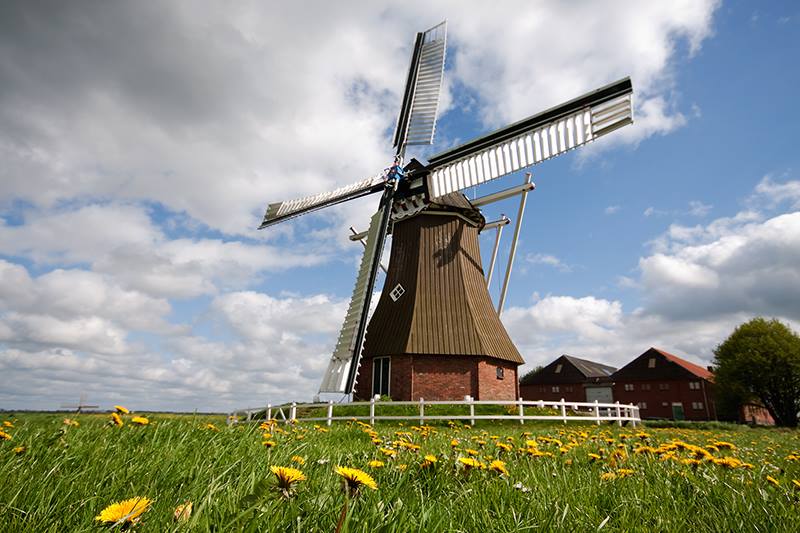
The idea of using wind to grind grain, pump water, and lift loads wasn’t new. The first windmills were invented in Eastern Persia in the 9th century, and their blades were horizontally placed.
But in the 13th century, Europeans invented the tower mill, which had a rotating roof and could carry really large sails. It was much, much more efficient than the Persians’ earlier inventions.
For almost 600 years, the tower mill was the primary energy source in Europe.
These structures were highly valuable in the Middle Ages, and building them was costly. As a result, they were often attached to castles or repurposed from existing watchtowers. The mill thus became not only a marvel of engineering but also a fortress capable of withstanding a siege.
Enemies at the gates? Take down the sails so they don’t get damaged by arrows, and with a single elegant move, the structure transforms into a battle-ready bastion.
Printing Press
What do you think wine and books have in common? Well, alcohol not only provided inspiration to some writers, but it also enabled their work to become widely distributed.
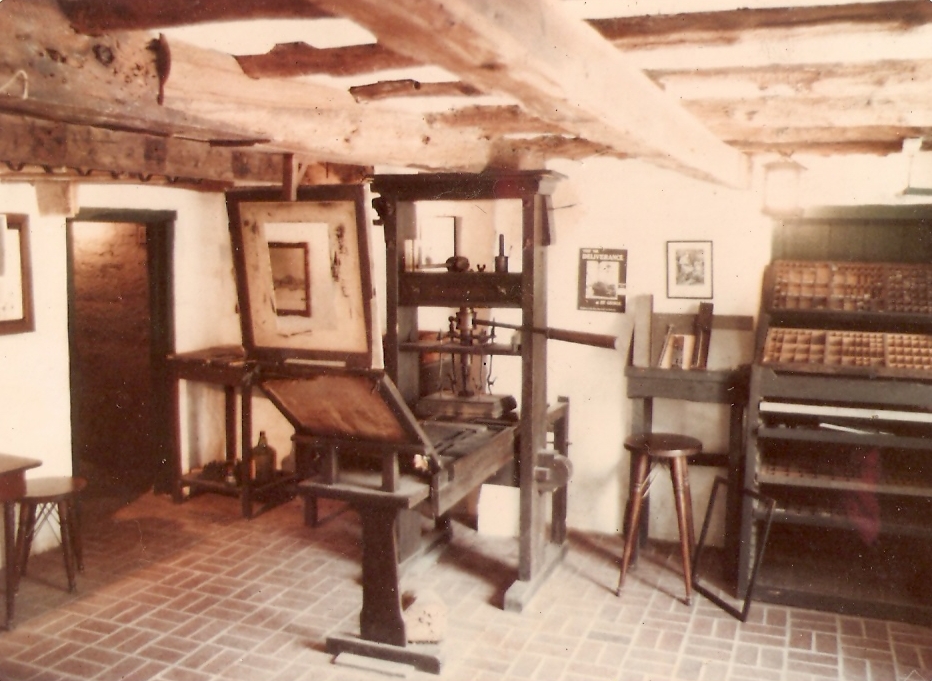
The thing is, a German engineer and engraver named Johannes Gutenberg, in the mid-1440s, looked at a wine press used to crush grapes for alcohol, thought about it, and decided to use a similar machine to print books.
The mechanism worked like this: you assemble text from lead letters, like building blocks. Attach them to a plate, fix the plate to the press, apply ink, and press page after page until you’ve produced the desired number of copies.
By the way, a couple of centuries before that, in 1282, Europe invented factories powered by water and wind, which allowed for the mass production of quality paper. Before this, the Chinese and Muslims produced it exclusively by hand, making the material too expensive.
Printing and cheap paper triggered a revolution in European education, significantly increasing literacy rates.
And yes, because books became more accessible, public libraries appeared in medieval Europe. The first was founded in 1452 by Malatesta Novello, ruler of the Italian city of Cesena.