An armistice is a political agreement to temporarily suspend hostilities between warring parties, whereas a surrender is a military act. Students, and even communicators or the media, might be prone to mistaking an armistice for surrender because of a lack of education or experience with the terms. However, as the instances we have selected to demonstrate this misunderstanding reveal, the distinction is not only semantic, since the outcomes for the nations in question are not identical.
The differences between a surrender and an armistice
When a city (in the event of the conclusion of a siege), a province (in the case of a military campaign), or a country (in the case of a total loss) surrenders, all hostilities between the two sides are immediately and permanently halted. It’s the choice of an army’s commander, and it usually means giving up control of the land in question to the enemy. The statute acknowledges the command structure’s direct accountability.
We may point to many episodes of capitulation or surrender throughout history, including:
- The American Civil War ended in 1865 with the unconditional surrender of Southern forces.
- It wasn’t until Germany surrendered on May 7–8, 1945, that the war in Europe was finally over.
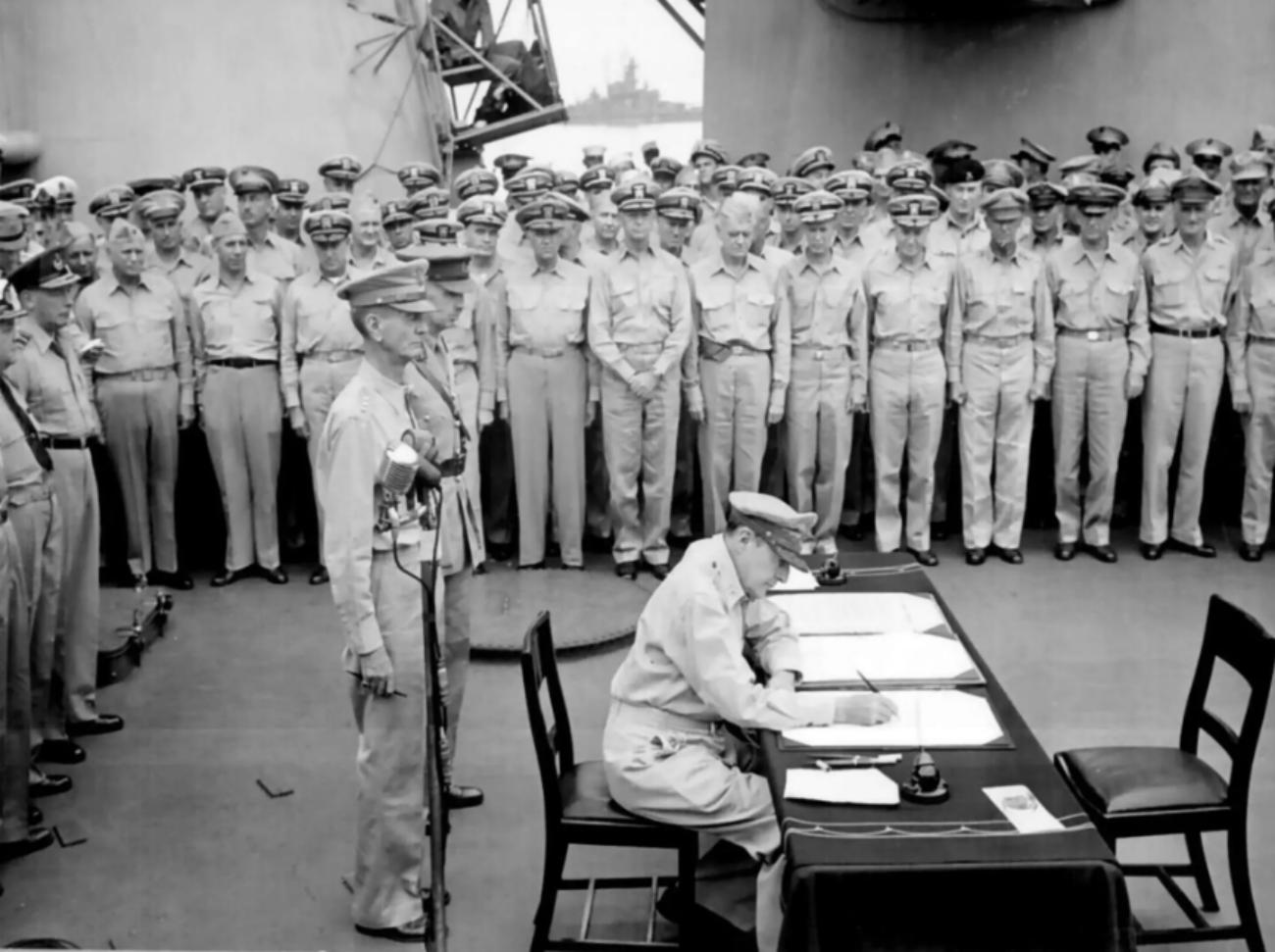
- Japan’s surrendered on September 2, 1945.
- The Argentine surrender in 1982 signaled the end of hostilities in the Falklands War.
But an armistice, which is an agreement accepted by both sides, officially ends hostilities even though both sides may theoretically resume fighting at any time. It’s the consequence of a political compromise that lets the loser keep running things in its seized area.

Armistices are not uncommon throughout history; a few notable instances include:
- Napoleon‘s armistice with the Prussians, signed at Pläswitz on June 4, 1813 (Truce of Pläswitz)
- The Franco-Prussian War of 1870 was officially ended by the Franco-German Armistice on January 28, 1871.
- An armistice was struck between the Allies and Germany on November 11, 1918; the Treaty of Versailles was signed the following year.
- The French and Germans called an armistice on June 22, 1940, thereby ending the Battle of France.
- In an armistice signed on July 20, 1954, France and North Vietnam, ended the First Indochina War.
The meaning of “armistice”
The Latin term “armistice” means “a cessation of hostilities” between opposing sides. As early as the 1600s, it was utilized in the form of a convention wherein the warring parties agreed to a temporary halt in fighting.
Armistices of 11 November 1918 and 22 June 1940
Given the advances gained (which signaled the end of trench warfare) and the possibility of a more enormous commitment by the recently landed American soldiers, it was evident that the Allies had acquired the upper hand against the German army by the year’s end of 1918.
The German leadership made the wise choice to end hostilities knowing that continuing the war would have resulted in millions of extra fatalities and possibly destroyed a significant portion of German land.
However, nationalist and revolutionary currents argued against and capitalized on this choice, arguing that it would have been a “stab in the back” for the supposedly “undefeated” German army.

In June of 1940, when France was already on the verge of defeat, Philippe Pétain and Maxime Weygand’s influence led them to decide to call an armistice to let the politicians take the blame. A surrender of the army in metropolitan France was an option. With that, all governmental control would be handed to the victors.
With an entire French navy and French soldiers in North Africa and several other colonies, the war might have continued abroad while the two countries were nominally at war.
May 7 and 8, 1945 – The German surrender
In January 1943, with the fate of World War II still uncertain, the Allies convened for the Casablanca Conference. None of the Allied leaders would consider an end to the war other than with the unconditional surrender of Nazi Germany and the other Axis states, and no armistice or separate peace would be contemplated.
Two years later, the German army sought to negotiate a separate peace to concentrate its troops on the Eastern Front after being crushed by the Soviet counterattack and locked in a vice after the Allied arrival in Normandy. Instead, the Allies demanded an unconditional surrender. Even though Hitler was dead and there were only a few hundred thousand men remaining to fight when Berlin fell, and even though a few fanatical Nazis were ready to resist the occupation by withdrawing to the mountainous territories of Austria, the army was clearly defeated and had surrendered or capitulated.
Instances of high-level state confusion between armistice and surrender
Even the states get confused between capitulation and armistice. In 2010, the President of the French Republic gave the impression of a lukewarm interest in history by referring to the “65th anniversary of the armistice of 1945” in a message meant to prepare for a commemorative event honoring the end of hostilities in Europe in May.
However, the German army did really sign an unconditional surrender on May 7 and 8, 1945. To say the least, it’s puzzling that this muddled state of affairs has been perpetuated several times at the very top… Not only do words have significance, but they also have a story.