Ancient Greece Was a Unified State
This is not true. The term “Ancient Greece” or “Hellas” was used to describe a geographical region, not a single state. It consisted of city-states (poleis), mostly located in the southern part of the Balkan Peninsula. The Greeks also spread across almost the entire Mediterranean coast, establishing many colonies. The remains of their cities can be found in modern-day Italy, Spain, Turkey, North Africa, and even Crimea. At different times, there were up to 1,035 poleis.
- Ancient Greece Was a Unified State
- Ancient Greece Was the Most Advanced State of Its Time
- Ancient Greeks Lived in An Equal Democratic Society
- Spartans Were Invincible Warriors and a Militaristic Society
- Athletes in the Ancient Olympic Games Competed Fairly
- Amazons – A Myth
- All Ancient Artworks Were White
- Troy Never Existed
- Modern Greeks Are Not Descendants of the Hellenes
Over several hundred years (11th–4th centuries BCE), these separate cities never became one unified state. This only happened under external influence when the Macedonian king Philip II united the Greek city-states under the League of Corinth in 338–337 BCE.
Ancient Greece Was the Most Advanced State of Its Time
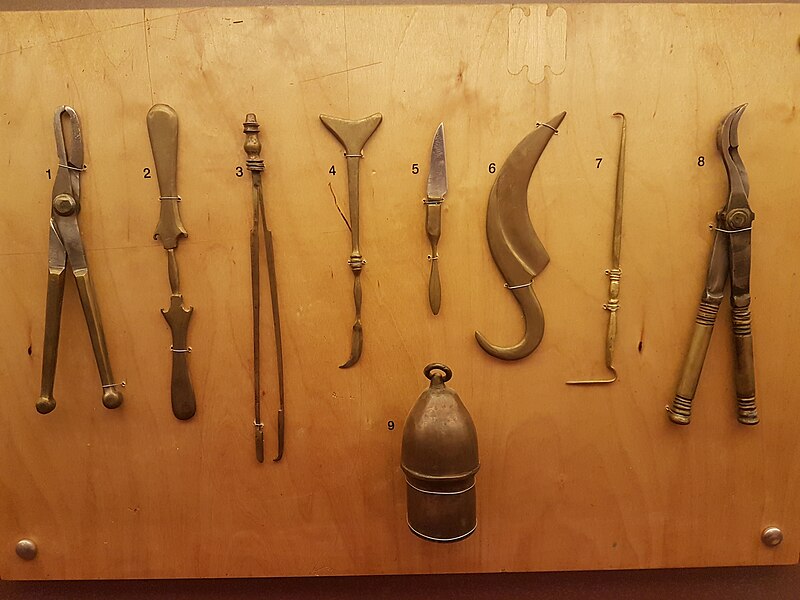
For its time, Hellas was a power with a rich culture and developed science. For instance, Pythagoras had already suggested that the Earth was round. The Greeks used complex mechanisms for astronomical calculations. They made numerous discoveries in classical mechanics and were pioneers in inventing the water mill. Greek cities had water supply systems (aqueducts), warriors used flamethrowers, and medics operated with scalpels, forceps, and even vaginal speculums.
However, more ancient Eastern civilizations had much to say in response. The peoples of Ancient India, China, Egypt, and Mesopotamia built monumental structures, such as the pyramids in Giza, dammed great rivers like the Indus, Ganges, Yellow River, Yangtze, Nile, Tigris, and Euphrates, and created their own writing systems. And all of this happened before the civilizations of Ancient Greece even existed.
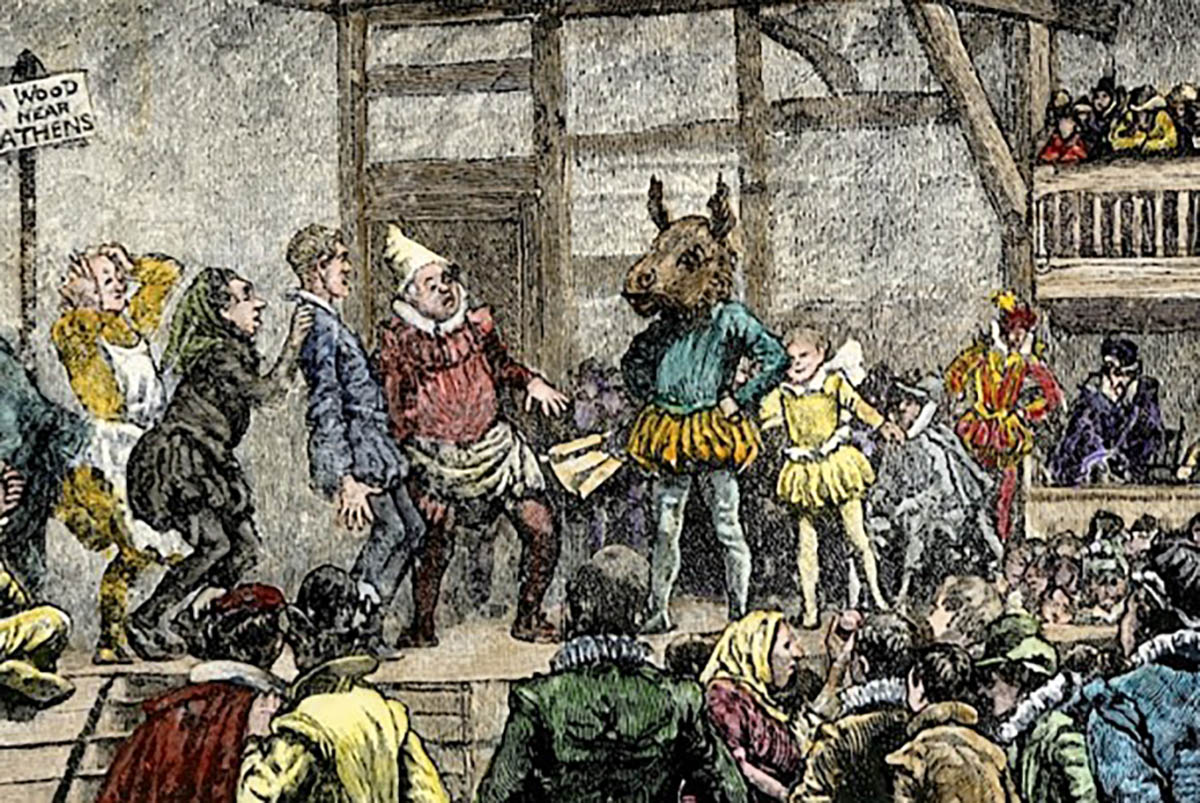
Eastern astronomers were just as knowledgeable about the cycles of day and night, the length of the year and the month, as the Greeks. For example, Indians in the 6th century BCE knew that the Earth rotates on its axis, and the Moon reflects sunlight. They used surgical instruments and could perform Caesarean sections. At this time, ancient Greek science was only beginning to emerge.
Both Eastern and ancient Greek researchers were prone to conjectures and superstitions. For instance, Aristotle wrote that some animals spontaneously emerged from water, dust, and dirt.
Ancient Greeks Lived in An Equal Democratic Society
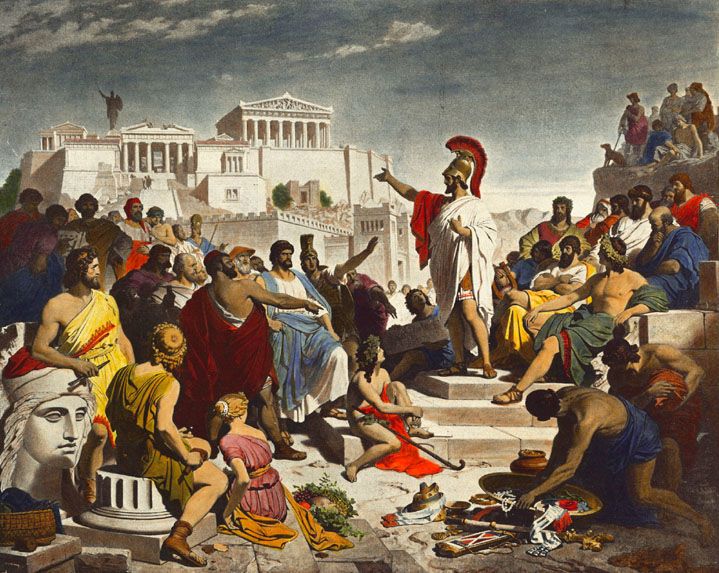
Athenian democracy, which existed for about 200 years (approximately 500–321 BCE), is considered the first democratic regime in the world. However, there are many nuances.
First, not all Greek city-states were democratic. In fact, democracy only existed in Athens. In Sparta, an oligarchy (gerontocracy) was mixed with royal power, while in Thessaly, a lifelong elected leader, the tagus, ruled. Power could also be seized by a tyrant.

Second, ancient democracy was not universal. Greek city-states thrived on slave labor. People deprived of personal freedom had no rights.
Women were entirely excluded from the public and political life of “democratic” Athens, as were children, who were considered the property of the head of the family. Lastly, even free individuals from other city-states who moved to Athens had no civic rights and were required to pay special taxes. Native Athenians contemptuously referred to such residents as metics.
Third, Athenian citizens participated directly in the political life of the city-state: they voted on decisions, could make proposals and objections in the Assembly. Modern representative democracy, where we entrust politicians with defending our interests, has its roots in the 18th century.
Spartans Were Invincible Warriors and a Militaristic Society
In popular culture, Spartans are portrayed as brave and invincible soldiers. However, this is just a myth. In reality, before the Battle of Thermopylae, which was lost, by the way, Spartan warriors were not particularly distinguished from soldiers of other city-states. Even after that, the legendary Spartans suffered defeats, such as in the battles of Sphacteria and Leuctra.
Moreover, political structures and educational systems similar to those in Sparta existed in other city-states. The primary occupation of Spartans was managing land and helot slaves, so it cannot be said that Sparta lived solely for and by war.
Athletes in the Ancient Olympic Games Competed Fairly
In modern sports, scandals and manipulations are not uncommon. But the competitions of ancient athletes were supposedly honest and fair!
Unfortunately, not everything was as poetic: cheating, bribery, and dirty tricks accompanied the Olympic Games from the very beginning. There was a strong incentive for this: besides fame and honor, victory in the Olympia often promised significant monetary rewards, lifelong free meals, and the opportunity to compete for money and valuable prizes in smaller competitions.
For a prize-winning position, an ancient athlete received from their city-state 100 to 500 silver coins—drachmas. In that era, 500 drachmas could buy two slaves and a flock of 100 sheep with some money left over.
Despite the fact that those caught cheating faced fines, many still resorted to trickery for the reward. They used herbal infusions, visited sorcerers, and bribed judges. For example, Pausanias, in “Description of Greece,” noted that the Thessalian Eupolos paid other wrestlers, whom he was supposed to compete against, to lose. Eupolos was exposed and had to pay a fine. The money from dishonest athletes was used to build statues of Zeus, which were placed along the path to the Olympic stadium.
These cases were not rare: Pausanias mentioned the names of other dishonest athletes as well.
Amazons – A Myth
In ancient Greek mythology, stories about Amazons were very widespread. The Greeks believed that this was a warlike tribe composed entirely of women. Amazons were said to cut off one breast to make it easier to shoot a bow, meet with men only for conceiving children, and later dispose of the boys. In Greek writings and works of art, Amazons appear alongside centaurs and heroes, and their place of residence is located in various remote regions of the world known to the Greeks. Because of this, historians considered the Amazons to be a fabrication.
However, archaeological excavations of Scythian burial mounds show that there were indeed warrior women among the nomads. They were buried with bows and arrows.
Scythian women were forced to know how to defend themselves, as men often went off to roam, leaving them alone. Of course, they were not a separate people, they did not kill boys, nor did they cut off their breasts. All of this is the product of Greek imagination, for whom the idea of a woman riding a horse and shooting a bow was bizarre.
All Ancient Artworks Were White
Cities and temples of white marble, sculptures perfect in their purity and simplicity—that’s how we know ancient architecture and art. However, in reality, the creators of Ancient Greece were not strangers to bright colors. They enthusiastically added color to their statues and buildings. They used natural pigments such as ochre, cinnabar, and copper blue, which degrade and flake off under the influence of bacteria and sunlight. Additionally, many statues had bronze inlays and black stone pupils.
The issue of natural pigments affects artworks from various eras. For example, they can be seen in the paintings and drawings of Leonardo da Vinci and Raphael, as well as in the frescoes of Michelangelo in the Sistine Chapel. To preserve everything in its original form, museum staff create special conditions for lighting and temperature.
Troy Never Existed
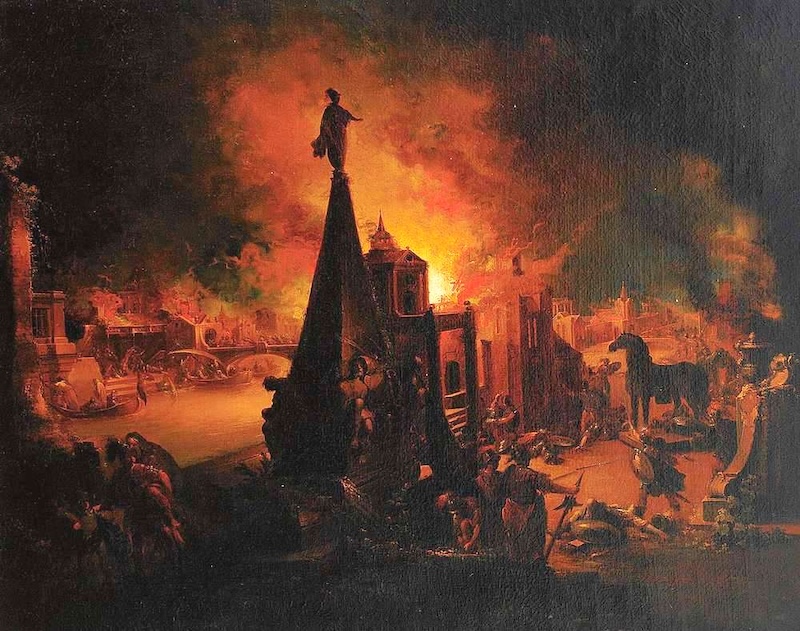
The Trojan War is the subject of two of the most famous works of ancient literature: Homer’s “Iliad” and “Odyssey.” His account contains much that is fictional: sirens and sea monsters, gods interfering in human affairs, and beautiful women over whom wars begin. According to legend, Troy was under siege for 10 years, after which the Greeks, with the help of the Trojan Horse, infiltrated the city, killed its defenders, and destroyed it.
For a long time, historians believed that Troy was a myth and that the stories about it were merely legends. For thousands of years, no one knew where it was located, until in the late 19th century, a group of archaeologists led by the eccentric Heinrich Schliemann found Troy in Anatolia (Turkey), at the entrance to the Dardanelles.
However, Schliemann was heavily criticized for not paying attention to the stratigraphy of the site. He dug down to the layer “Troy II,” destroying many historical remains in the process. Moreover, Schliemann became infamously known for his fake discoveries supposedly from Troy.
Today, we know that Troy was destroyed and rebuilt in the same location nine times, and in Homer’s works, the most likely reference is to the layer numbered VI.
Modern Greeks Are Not Descendants of the Hellenes
It is generally accepted in science that Hellenic civilization emerged based on the Minoan and Mycenaean civilizations of the island of Crete. They survived invasions by two Greek tribes: the Achaeans and the Dorians. As a result, the Minoans and Mycenaeans were fully assimilated.
However, despite the subsequent Roman and Turkish conquests, which lasted for centuries, the Greeks managed to preserve their national identity. A 2017 DNA study confirmed that, with minor external contributions, the blood of ancient Mycenaeans still flows in the veins of modern Greeks.