Was NASA on the Moon? Of course, most people — including myself — will respond in that manner. However, some critics question if Apollo 11 really landed on the Moon. We provide reasons why the “Moon hoax” idea is false. The theory of a “Moon landing conspiracy” has been popular since a 2001 documentary aired on the American television channel Fox TV. It claims that NASA manufactured the whole event for media impact in an effort to persuade the Russians and the rest of the world at the same time of their dominance in space. The photographs and video recordings made by the astronauts are allegedly full of proof of this fraud, according to skeptics supporting this hoax. But how credible is the whole argument?
Is the whole Moon landing just fake?
Even though the Moon landing remains one of the most impressive and successful feats in the history of human spaceflight, this very fact has been called into question more and more recently.
A “documentary” and its consequences
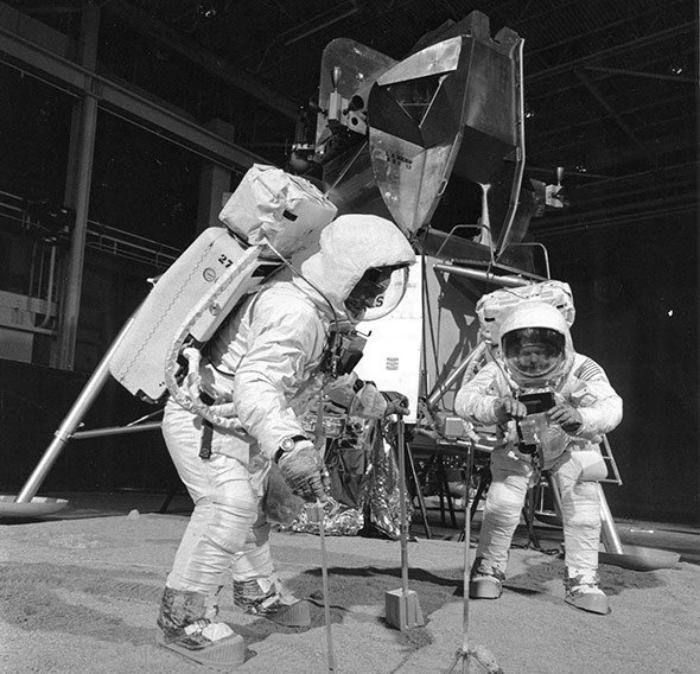
The program “Conspiracy Theory: Did We Land on the Moon” that was shown on February 15, 2001, by the American television network Fox-TV served as both the catalyst and the culmination of the campaign started by certain “skeptics.” In it, self-proclaimed experts attempt to demonstrate that the Moon landing could not have occurred and that all images and media stories are consequently faked based on supposed faults and hints in NASA photographs and interviews.
The creators of the idea claim that NASA simply lacked the technological capacity to carry out such a landing in the 1960s. The whole event was just fabricated in order to win the “race to the Moon”; Hollywood had plenty of acceptable backgrounds.

Contradictory evidence is abounding
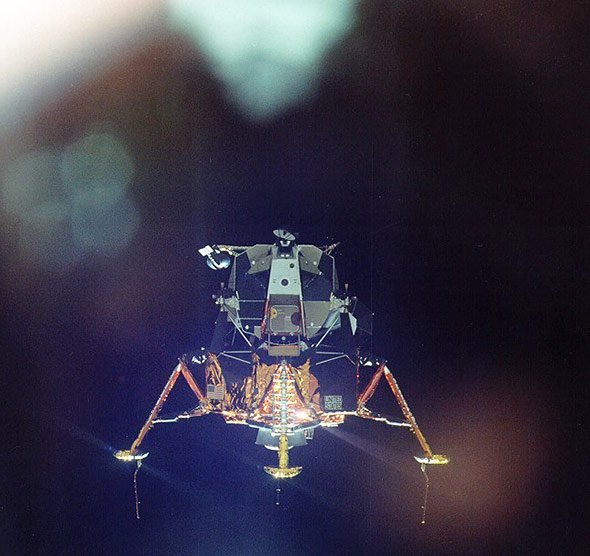
NASA and independent astronomers responded to the claims and categorically and unambiguously denied the purported “proof” before the episode ever aired. The majority of critics’ claims were just the result of poor research or ignorance of the lunar surface’s basic characteristics.
For instance, Bill Kaysing, one of the most persuasive proponents of a lunar landing conspiracy, said that NASA scientists had estimated the likelihood of a successful lunar landing at 0.017 percent, making it improbable that the project would really be implemented. However, even though these estimates could have been popular during the early stages of the Apollo program, various analyses carried out in the middle of the 1960s anticipated a success rate of at least 90%. Kaysing, of course, keeps this information private.
Persistent and long-lasting
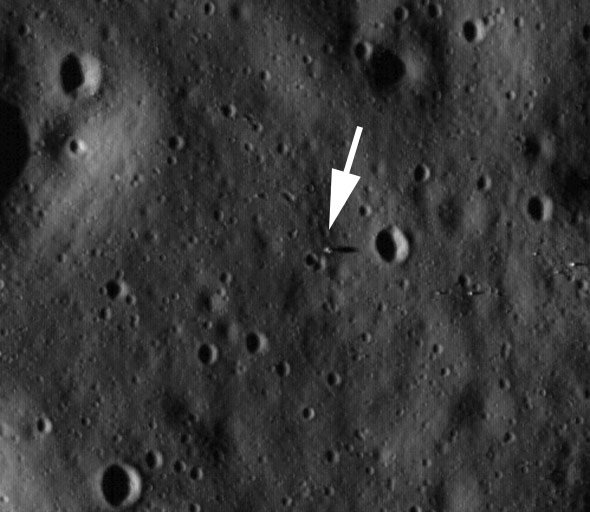
However, despite the evident ridiculousness of their claims, the “skeptics” were still able to unnerve at least some of the American public, which did not lessen the effectiveness of the “conspiracy theory.” The “Moon Hoax” theme persisted, especially in the USA, where more and more books and websites about it were produced.
These notions, which had long ago been disproven as illogical, were even spread in Europe, where they are genuinely taken seriously. The media businesses acquired the “documentary” from Fox and aired it on their networks many times, unmodified and often without any commentary.
The issue was ultimately brought up in court in the USA, where Bill Kaysing even charged NASA with purposefully causing the Apollo 1 catastrophe in an effort to silence any dissidents inside its own ranks. Jim Lovell, the commander of the Apollo 13 mission, was outraged by these ridiculous claims and referred to Kaysing as a maniac; Kaysing then filed a defamation suit against Lovell. But the presiding judge decided not to hear the case after the first hearing of the evidence.
Shadows and starry skies
The “indications” of a forgery put forward in the Fox documentary and the books of the “moon landing skeptics” can, in principle, be summarized as a handful of phenomena. Here, we’ve laid out the most important arguments for and against the Moon landing conspiracy theories.
The direction, duration, and form of the shadows in the NASA astronaut images are among the pillars of the doubters’ case. Kaysing argued that the pictures had to have been shot in a studio rather than on the Moon.
Shadow direction argument

The shadows cast by various items and individuals on the surface of the Moon do not run parallel in the photos, and their lengths vary. The shadows of both astronauts seem to be leaning toward one another in the photo of Armstrong and Aldrin hoisting the American flag, and Aldrin’s shadow is also longer. Skeptics claim that this is a blatant indication that the “studio” employed various light sources.
Answer: This argument fails to take into account fundamental principles of perspective and vanishing point distortion. Every time parallel lines are shown in a picture, a photograph, or other two-dimensional media, they seem to converge on a three-dimensional surface. This idea may also be seen in action on Earth, such as while seeing a road heading in its direction.
The shadows of Aldrin and Armstrong are similarly distorted. The fact that the ground is not level but somewhat undulating accounts for the variations in the length of the shadows. A slope visually shortens a shadow on a sloping plane while optically lengthening it. There is a tiny drop between where Armstrong is standing and the modest elevation in front of him.
Each rise would have had numerous shadows if the photos had really been shot in a studio with various light sources; this effect may be seen, for instance, at a soccer stadium when a game is played under floodlights: Each player is encircled by four shadows.
Shadow depth argument
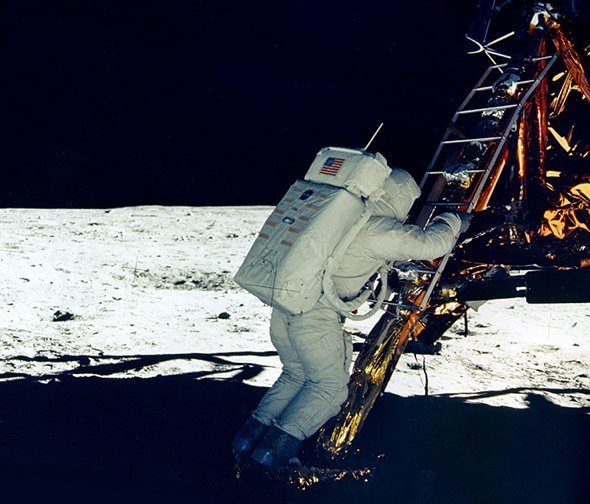
Why are the places that are under darkness still so brilliant if there is actually just one source of light, the sun, and no air to disperse the light? While Aldrin departs the LEM, for instance, why is he so easily visible when the ladder ought to be in deep shadow?
In response, this reasoning fails to take into account the fact that the lunar surface is extremely reflective due to its brightness and abundant microglass. As a result, it bounces the sunlight that strikes it back in its direction, illuminating the shadows.
Starry sky argument
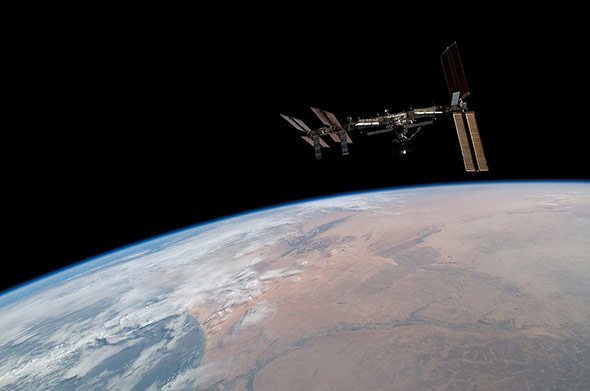
None of the NASA photos show any stars in the sky. But they ought to be present.
Answer: Although the skeptics’ main argument is the simplest to disprove, it is often raised. The photographic method is to blame for the alleged absence of stars: On the sun-lit, dazzling surface of the Moon, the astronauts recorded the happenings. They had to choose a short exposure time and a narrow aperture in order to make sure that these photographs weren’t overexposed. The stars, which were just extremely dim in comparison to the high-reflecting surface, were simply too faint for this exposure period.
Other conspiracy theories
Waving flag argument
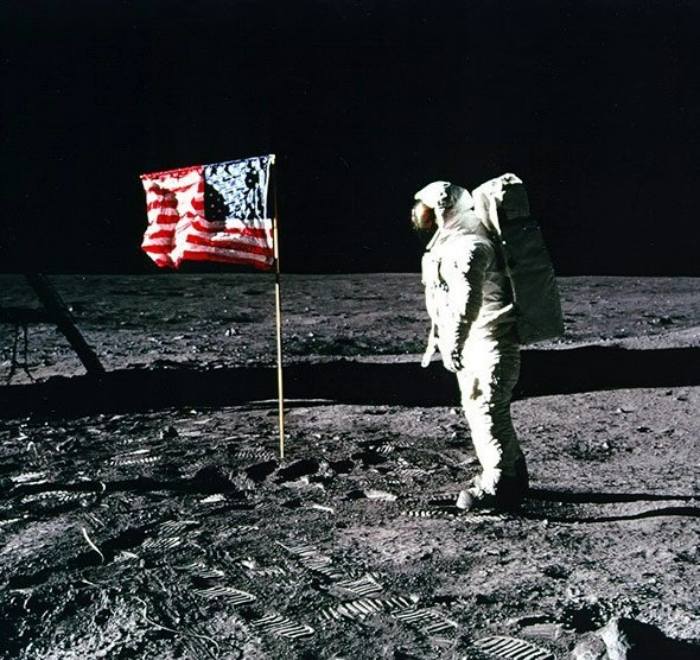
The American flag is another long-time favorite of conspiracy theorists: In certain TV scenes, the flag seems to be blown by a breeze or wind, and in photographs at least, it still exhibits unmistakable waves. However, because the Moon has no atmosphere, there is no wind.
Answer: If one carefully examines the TV records, they reveal that the flag only waves when a straight astronaut positions himself at its stalk. The vibrations produced by slamming the stem into the lunar surface are longer lasting than they would be on Earth because of the absence of an atmosphere.
The alleged ripples in the still photographs are not caused by the flag moving in waves, but rather by a setup error: The astronauts were unable to completely extend the pole that distributes the top of the flag widely, causing the flag fabric to hang down in folds rather than being taut. Later, NASA was so taken with the “natural” appearance of this folding that the crossbar was purposefully cut shorter on all following Apollo flights.
Moon dust argument
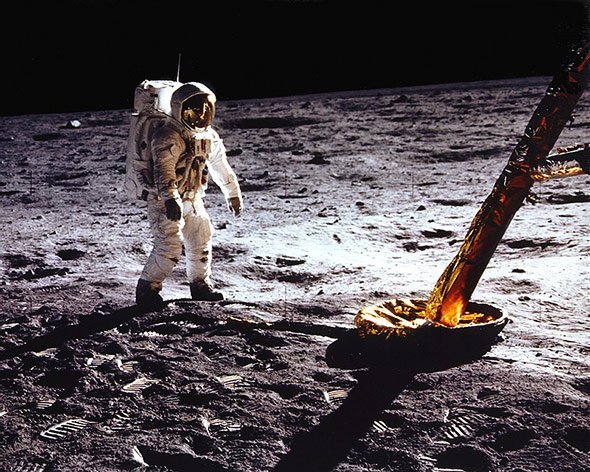
Although the “Eagle’s” touchdown created dust, the landing module’s foot pads are absolutely dust-free.
Answer: Because the Moon lacks an atmosphere, there is also no drag, which on Earth causes the whirled-up dust to hover for a very long period until it ultimately settles. On the Moon, the dust does not go far before falling back to Earth in a ballistic arc. As a result, the landing’s dust was blown away from the module and did not physically rest on the lander’s feet.
Footprints argument
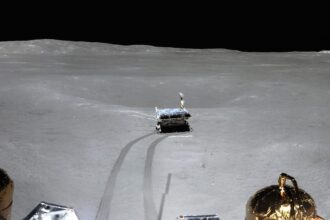
The lunar rovers’ tracks and the astronauts’ footprints are both very distinct and crisply detailed. But without water, dust is unable to leave these traces.
Yes, it is true. if the dust has very few grains. This is also conceivable with Moon dust, just as an impression is plainly discernible even in perfectly dry flour.
Backgrounds and crosshairs
Many different things can be argued about when it comes to photography techniques and hints of supposed retouching.
Crosshairs argument
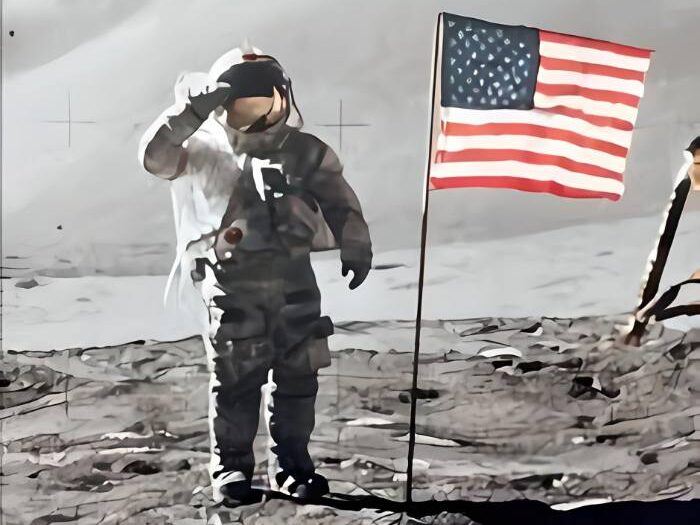
In order to make it easier to determine the magnitude of the things being shot in the future, crosshairs were included in the cameras’ design. But how else can this be explained, if not by shoddy post-processing, since in some images the crosshairs are hidden by items in the frame?
On the one hand, cameras with crosshairs might have been utilized in research right away, thus, even a hoax wouldn’t have required a second application of such crosshairs.
Second, these occlusions seem to always occur when a crosshair is close to a starkly white or brilliant item. Printers and photographers are aware of the “bleeding” effect: The thin black line seems to vanish because the white region is brighter than the black area on the film material. Using a camera, one may easily recreate this phenomenon on Earth.
Identical backgrounds
The same background, the mountains, and their placement appear in two NASA footages that were supposedly filmed three days and a few miles apart. Was this scene perhaps staged using a studio background? Similar patterns may be seen in two photographs, where the landing module is sometimes visible in the foreground and other times it is not.
Answer: The first “argument” once again stems from the filmmakers’ shoddy research: They did not directly copy both segments from NASA, but rather from another documentary where it was wrongly claimed that they were both filmed three days apart. This error may have been resolved with a quick NASA study. The sequences were captured during a lunar outing at roughly the same location and three minutes apart, as the astronauts’ accompanying voice remarks further demonstrate.
On the other hand, physical effects are the reason the landing module seems to be “missing” in the pictures: Since the Moon lacks an atmosphere, it also lacks a feature that allows humans to estimate distances on Earth—the blurring of landforms or objects as they get closer to the viewer. Even if a shot is taken a few meters in front of the lander and another a few meters behind it, the mountains in the distance that seem to be so near are really kilometers distant and consequently scarcely alter.
Micrometeorites, radiation, and weak computers
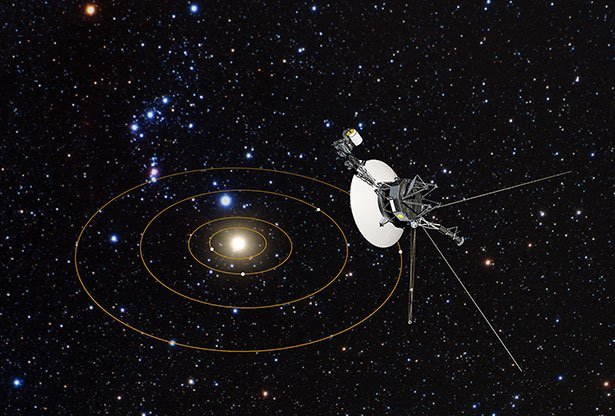
Was the Apollo mission technically possible?
The onboard computer of the Apollo lander module was incapable of controlling the lunar landing and had less processing capability than the microprocessor in a contemporary washing machine. Even the construction of such a compact but capable onboard computer was not possible in the 1960s due to the lack of computer technology.
Answer: While there were no current microprocessors in use in the 1960s, there were microchips that could do basic arithmetic calculations. Supercomputers on the ground handled a large portion of the intricate calculations required for navigation. A modest memory was adequate to temporarily retain the outcomes of the ground computations for the remainder of the navigation, leaving just a very small portion of the navigation to be handled by the onboard computer.
Radiation argument
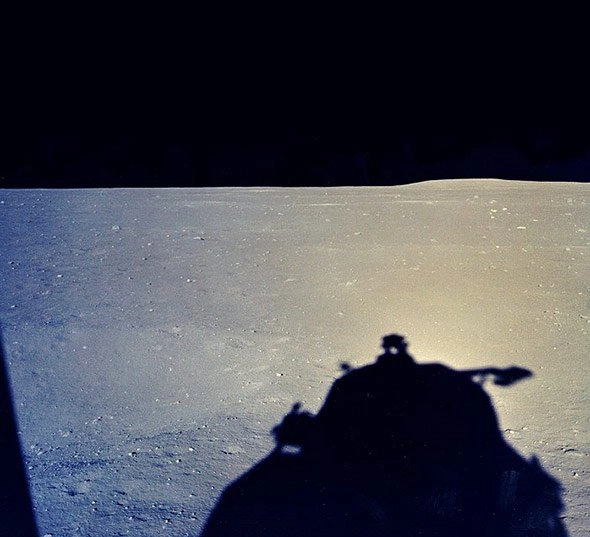
The Van Allen radiation band surrounding Earth, in particular, exposed the Apollo missions to lethal radiation without any safeguards. According to Kaysing, if the astronauts had really gone to the Moon, the radiation would have been so intense that they would have either died from radiation poisoning or suffered serious radiation damage.
The Apollo astronauts needed nearly an hour to get through the Van Allen belt, in response. The dosimeters indicate that they got a radiation dosage of roughly one SEM during the procedure. Only at levels of 100 and more than 300 SEM may radiation illness or even death occurs.
However, if a solar storm had happened while the journey was in progress, the cosmic radiation would have considerably risen. But happily, for NASA and the crew, there were no significant radiation bursts or plasma ejections throughout the lunar trip since the sun stayed quiet.
Meteorites argument
Inadequate shielding prevented the spacecraft from withstanding the continual barrage of micrometeorites. Therefore, if the spacecraft had really been launched, thousands of holes would have been carried away.
Answer: Despite having a relatively little mass, micrometeorites are quite quick. Therefore, they may be stopped by even a small covering of metal. Such micrometeorite defense layers were included in both the spacecraft and the crew’s spacesuits.
Conclusion
The actions of the Moon landing deniers are terrifying in two ways: In addition to the space that such theories obtain in the media without response, numerous comparable Internet sites and book releases make pseudoscientific claims that mostly avoid debate.
Even while the documentary’s creators instruct the audience to “make up your own opinion based on all the facts” at the outset, the spectator regrettably does not obtain this precise information throughout the program. The purportedly damning images or video clips are often shown and discussed.
The truth speaks for itself
The arguments put forward by NASA or other objective astronomers, as outlined below, do not, however, find much room. When compared to the in-depth interviews with doubters, the remarks of NASA officials are at most brief, noncommittal, and dismissive, which must create the impression that NASA has nothing to really contradict or may even have something to conceal.
In reality, NASA doesn’t generally reply to many charges since it doesn’t have to because it doesn’t take the doubters seriously. Because the plethora of images, videos, and background information that the space agency has provided online, among other things, speaks a language that is really adequately clear and disproves many arguments on its own.
Dissemination without reflection
Nevertheless, people who see such material without a lot of background information might sometimes get confused. especially when it is broadcast on apparently legitimate TV channels. The viewers’ confidence is exploited to provide a platform to a loud but doubtful minority.
The Apollo astronauts were on the Moon, and the “Eagle” truly landed. Certainly, one may debate the wisdom or folly of human space flight, particularly the Moon landing, but at least this fact is undeniable among the worldwide scientific community.