Rabbinic Judaism, Christian theology, and Islamic belief all agree that Moses existed. He was an Old Testament prophet who led the Hebrews out of Egypt and into the Promised Land, and who is credited with receiving the Ten Commandments from Yahweh (God). There is minor information available about Moses’s life outside of the canonical books. To the point that in 1906, historian Eduard Meyer proclaimed that Moses did not exist. Moses, who we mostly know from the Bible, and more specifically the Torah, where he parted the waters of the Red Sea and brandished the Tablets of the Law, has nevertheless played a significant role in the history of the Jewish people.
Who was Moses?
Moses, a member of the Hebrew tribe of Levi, was born in the Egyptian province of Goshen somewhere in the 13th century BC. It is one of the twelve Hebrew tribes that settled in Egypt in about the 17th century BC.
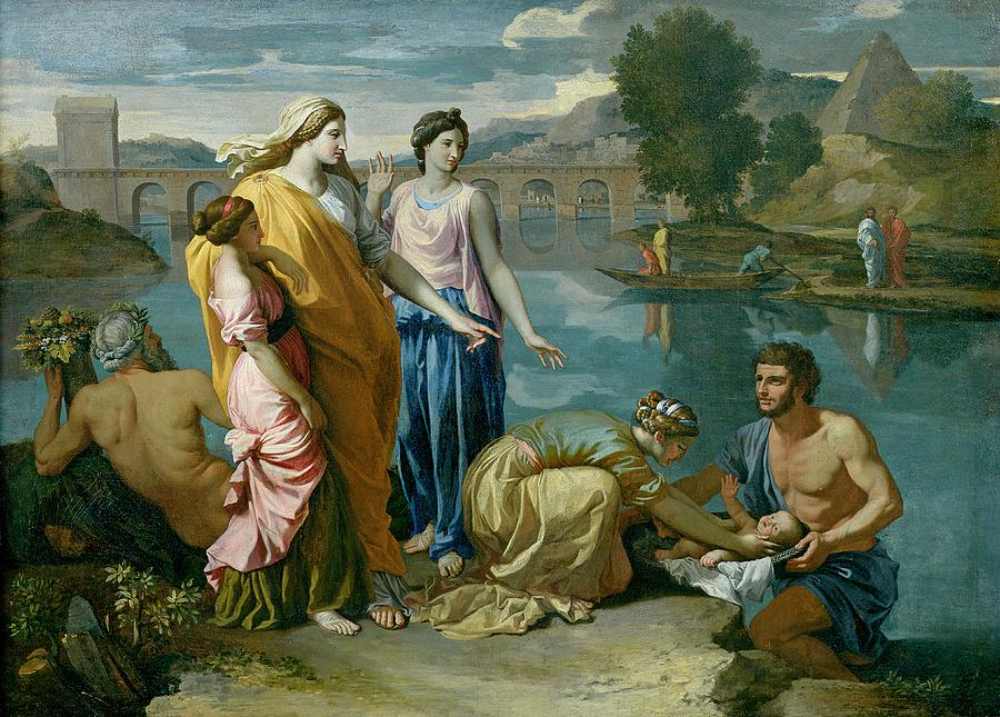
Moses’ birth was timed just before the pharaoh (perhaps Ramses II or his successor Merneptah) began killing off Hebrew infants to quell any potential insurrection. Moses’ mother put him in a basket and hid him among the Nile reeds so he would be safe. Pharaoh’s daughter feels sorry for the orphan and decides to adopt him, raising him in the palace as a prince.
She “drew him from the waters,” and therefore, the Bible says, she named him Moses. According to the most plausible theory, the name Moses derives from the Egyptian word mosu (“son” or “child”). The second theory says the name originates from the Hebrew verb, meaning “to pull out” or “draw out” [of water].
Moses and the Burning Bush
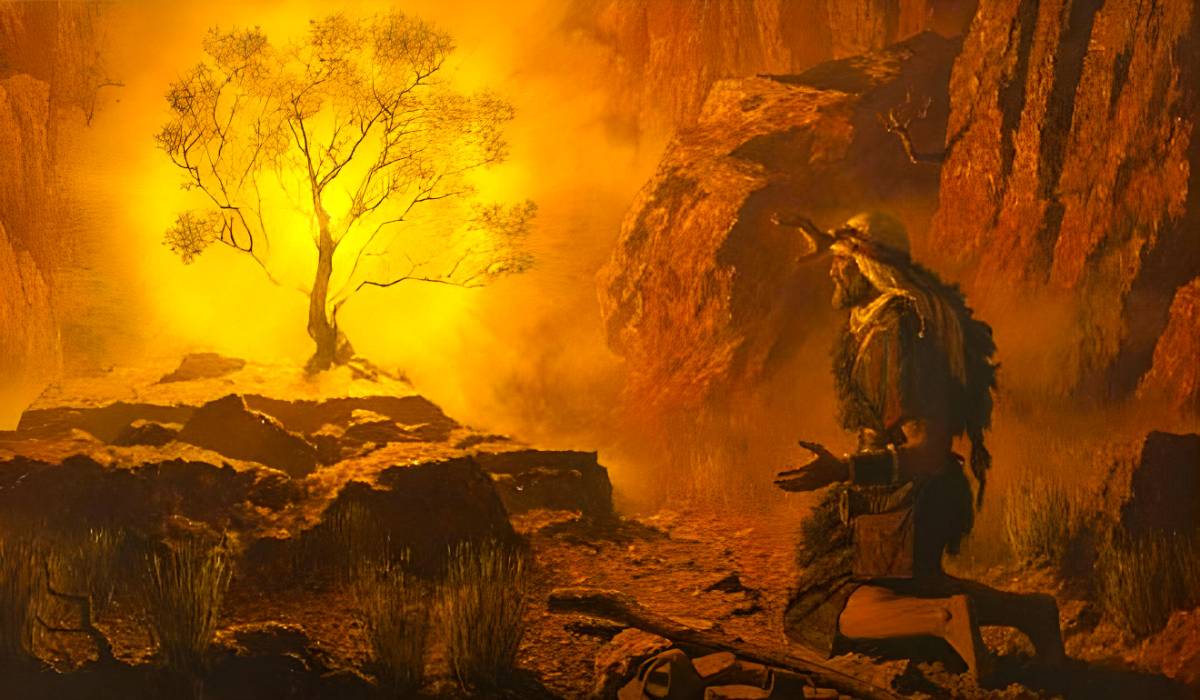
In his adulthood, Moses learns about his real origin and also the plight of the Hebrews while visiting a construction site. As part of his rebellion, he murdered an Egyptian who was oppressing his people. Moses departed Egypt for the land of Midian after committing the crime. To help him feel more secure, the local priest, Jethro, arranged a marriage between Moses and his daughter. During this time, God spoke to Moses in a “burning bush” on Mount Horeb (in Sinai), charging him with rescuing the Hebrews from slavery in Egypt.
Moses, fortified by God’s message at the Burning Bush, went back to Egypt to lead the Hebrews out of slavery and into Canaan, the Promised Land. With the help of his brother Aaron and the miraculous powers bestowed upon him by Yahweh (God), Moses was able to get a meeting with Pharaoh and convince him to allow the Jewish people to celebrate Passover in the desert.
The Pharaoh still refuses and ramps up his persecution of the Hebrews, despite the miraculous transformation of Aaron’s rod into a serpent. Not deterred, Moses makes another appeal to the king, which is once again denied.
The Nile’s water turns to blood, the plague strikes Egyptian cattle, locusts blanket the ravaged nation, darkness falls for three days, and eventually, all the first-born Egyptians perish in a single night as Yahweh actively intervenes to demonstrate his power. Pharaoh’s decision to release the Hebrews was likely influenced by the fact that Yahweh had killed his own son. This was the start of a forty-year migration known as the Exodus.

It is believed by scientists that fish in the Nile died from a lack of oxygen caused by a bloom of non-toxic, red algae at the time.
The leaving of Egypt and the crossing of the Red Sea
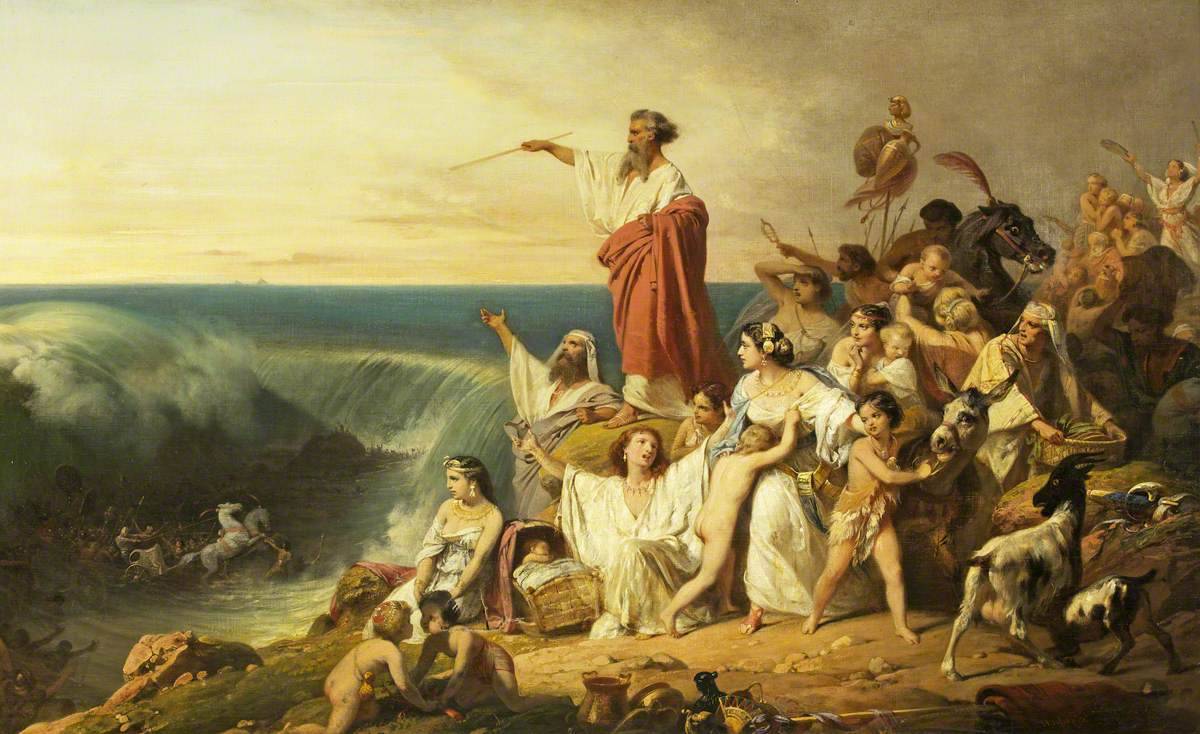
The Hebrews believe they have escaped the Pharaoh’s control, but the Pharaoh changes his mind and sends his chariots after them. The Egyptian army approaches as the Hebrews look out across the Red Sea (also known as the “Yam Suph”).
Moses stretched out his hand to the sea, and the waters parted, creating a channel between the liquid barriers through which the people could pass. When the Egyptians passed through, Moses asked Yahweh to bring the sea back to where it was, killing the pharaoh’s army.
The Israelites kept marching forward under Moses’ leadership. The Hebrews now had to cross the desert to get to their ancestral homeland. To appease his people’s hunger and thirst, Yahweh sent quails, then a dew that, once evaporated, turned hard as ice (the manna [an edible substance] of the desert, foreshadowing the Eucharist [the Lord’s Supper]), and lastly, water that Moses mustered from a rock.
Tablets of Stone
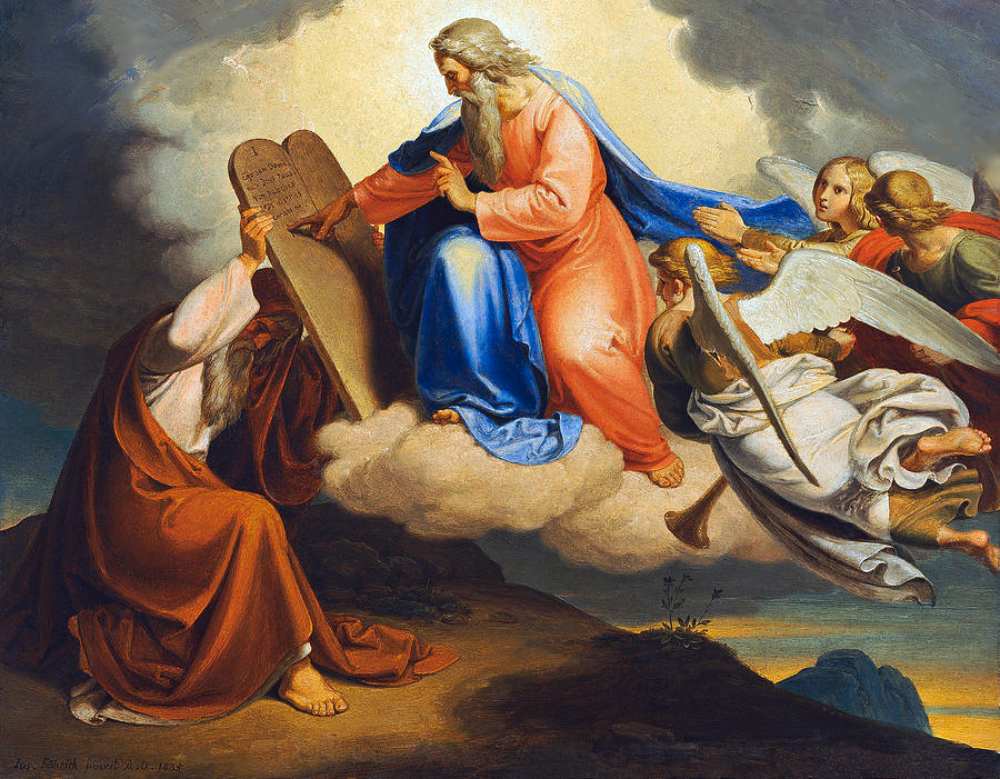
The Hebrews arrived in the Sinai desert three months after leaving Egypt. Moses left the people in the care of Aaron and walked to the base of Mount Sinai. After fasting for a total of forty days and nights, the prophet received the Ten Commandments from God.
These rules formed the basis of the covenant between Yahweh and his people. When Moses returned to the Hebrews, he found that they had abandoned their trust in God and instead worshipped a golden calf that they had fashioned with the aid of Aaron.
In his rage, Moses destroyed the Tablets of the Law he had received from God and set the idol’s statue on fire after doing that. The prophet, however, begged Yahweh not to turn away from his people and to forgive them, and Yahweh listened to his petition and asked the prophet to renew the covenant atop Mount Sinai. Forty days later, Moses descended from Mount Sinai with two rewritten Tablets of Stone.
The Hebrew people pledged allegiance to the Law of Moses, which promoted strict monotheism and reverence and awe for a God who is both unseen and almighty. Once in Canaan, Moses led the Israelites to Canaan.
At the age of 120, Moses passed away on the verge of the Promised Land. His legacy transcends Jewish history and has played a crucial role in the development of the early Judeo-Christian Church.