The Lyon Festival of Lights (Fête des lumières) is held annually on the evening of December 8. Even though this well-attended celebration was first devoted to the Virgin Mary, the custom of the illuminations would provide it with a new identity and permanently inscribe it into Lyon’s history. More than a few million people from all over the globe go to the ancient capital of Gaul for these four days to marvel at the city’s spectacular light display.
Origin of the Festival of Lights
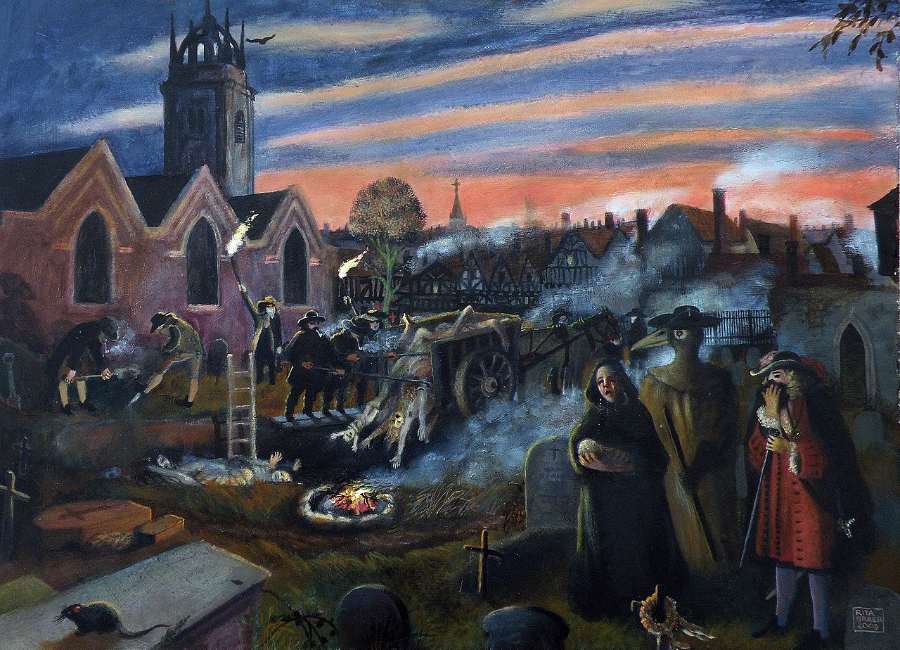
When the Great Plague, or Black Death, swept through Europe in 1643, Lyon was one of the cities in its path.
Since 1643, when the plague hit the south of France, the city of Lyon has put the Virgin Mary under its protection and has venerated her. Because half of Lyon’s population vanished as a result of the horrific plague that killed several thousand individuals. Surrounded by the deputy mayors of the period, Provost Alexandre Mascary prayed to the Virgin Mary and pledged to do so annually if the plague would end.
That year, the citizens of Lyon made good on their pledge, and the city’s plague crisis ended. The Vow of the Aldermen is a traditional ritual when city officials honor Mary on the feast of her Nativity, which is celebrated annually on September 8.
At the summit of the Fourvière hill, in a little chapel with a view of the city, the people of Lyon have made it a practice to pray to the Virgin Mary ever since they made their first vow. The Virgin Mary’s first chapel was constructed at Fourvière in 1168. It was repeatedly repaired after being destroyed in 1562 during the religious conflicts.
The subject of whether or not to restore the bell tower was raised as early as 1830. It was completed in 1849, and sculptor Joseph Fabish of Lyon, France, affixed a massive golden virgin to the top of it.
December 8th
Originally, the dedication ceremony for the statue of the Virgin atop the new bell tower was set to take place on September 8, 1852, which was the feast of the Nativity and coincided with the celebration of the aldermen’s promise. The statue’s original creator’s workshop was flooded by the Saône River, thus the unveiling had to be postponed.
The Feast of the Immaculate Conception on December 8 was selected as the date. The monument was installed on that day, but the celebrations (procession and fireworks) were canceled due to severe weather and the Saône River’s repeated threats.
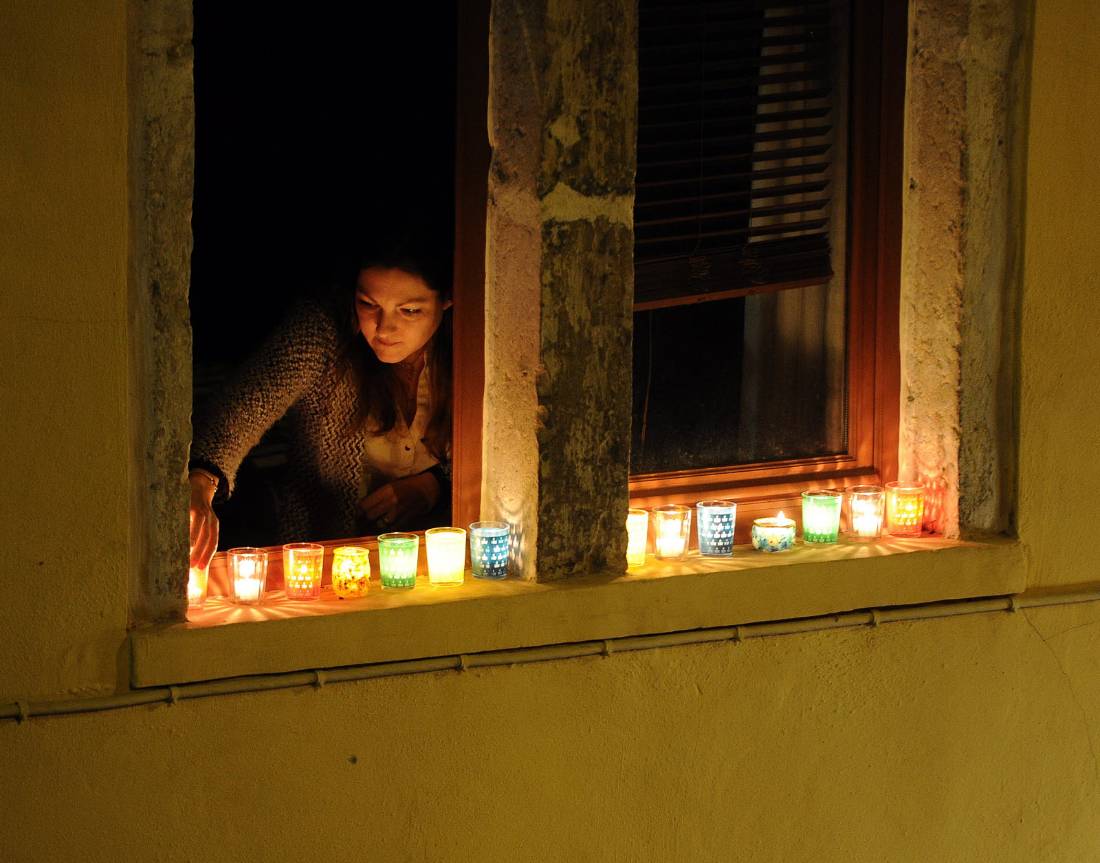
After the storm subsided, though, Catholics in Lyon lit candles in the windows of their homes and businesses to see by. This light is the inspiration for Lyon’s annual Festival of Lights, held on the eighth of December. While the custom of placing lights in a window on December 8 began as a religious gesture, it has now become ingrained in Lyon’s secular legacy.
The transition from a religious celebration to a secular one
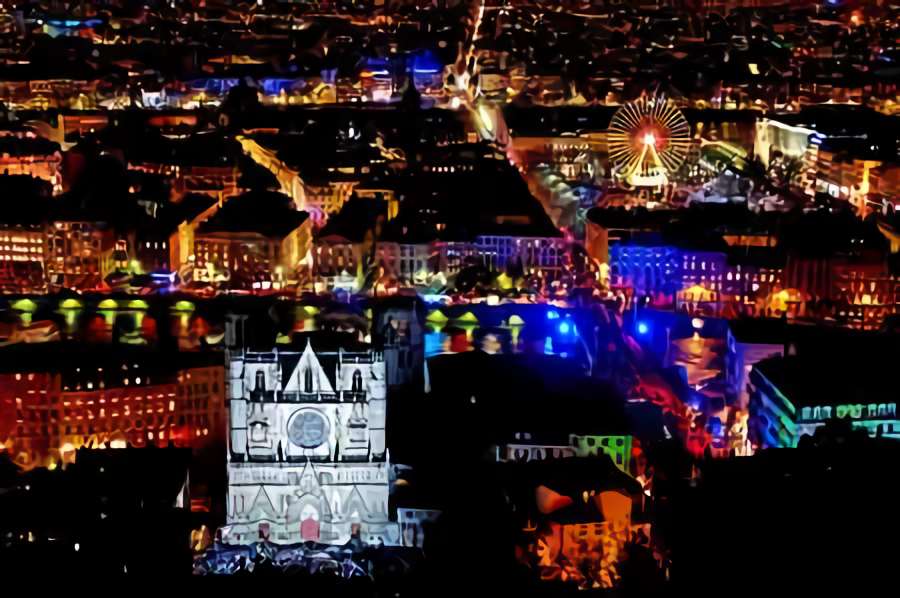
In 1989, the city was clothed for the night by the illumination of historical landmarks, natural landscapes like rivers and hills, and man-made features such as bridges and roadways. Several million people are expected to visit the city during the four-day Festival of Lights, which has been going on since 1999.
Multiple records are consistently broken at the Festival of Lights. Over the course of the 2014 edition’s four days, attendees could expect to see the unveiling of 80 light installations, the sale of 8 million bright lights over Lyon, and a complete hotel park.
Each year, a different charity is chosen to join in the Festival of Lights’ “Les Lumignons du Coeur” (The Lights of the Heart) operation, where visitors may purchase a lumignon candle and contribute to the festival’s gigantic light fresco. All of the money raised is sent to the organization.
In 2013, 310 journalists from across the globe visited Lyon for the Festival of Lights, which is now so well-known that even large cities like Berlin, Dubai, Turin, Montreal, and Rio de Janeiro have their own festivals of lights.
Visiting Lyon during the festival
From December 5 to 8, the city of Lyon is lit from every angle, so be sure to take your time wandering the streets to take in all the sights. Starting at the Parc de la Tête d’Or and ending at the Place Bellecour, this route takes you between the Saône and the Rhône rivers, past the monuments and emblematic squares of the Presqu’île. Along the way, you’ll see the Célestins Theater and the Place de la République square, as well as the Place des Terreaux square and its Bartholdi fountain.
A second path, beginning in the same area, leads to La Confluence and provides an opportunity to explore the urban marvels of Lyon. And the Renaissance District contributes a lot to the city, which would be very different without it.
The historic Lyon landmarks of Saint Jean Cathedral and Saint Paul Train Station, across the Saône, are illuminated remarkably at night during the festival. From the Basilica atop Fourvière Hill, you can take in a breathtaking view of Lyon.