What is the origin of the Nazi salute “Sieg Heil”? Harvard University is said to have played a central role in the history of the Sieg Heil salute. Ernst Hanfstaengl (1887-1975), an early supporter of Adolf Hitler who later turned against the Nazis, claimed that the Nazi battle cry “Sieg Heil” was actually stolen from Harvard. What evidence did Hanfstaengl use to make his case, and how convincing is his assertion?
Hitler’s Pianist as the Source of Sieg Heil
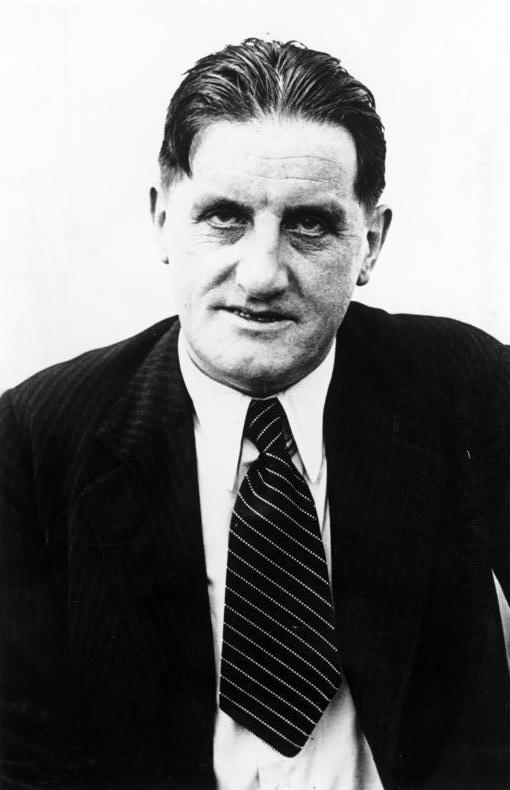
In Munich in January 1923, Adolf Hitler met a pianist named Ernst Hanfstaengl. This specific Hanfstaengl attended and graduated from the prestigious Harvard University in the United States. He wrote a couple songs for the Harvard football team while he was a student there. After World War I, the Hanfstaengl family moved back to Germany, where the musician eventually crossed paths with Adolf Hitler in early 1923. Hanfstaengl was introduced to Hitler and quickly became a fan of the Führer’s magnetic personality.
Hanfstaengl played some outstanding marches during his meetings with Hitler, which he had previously performed at Harvard. Tradition has it that as Hanfstaengl recited the football chant “Fight fiercely, Harvard! Fight, fight, fight!“—a slogan the cheerleaders always roared—Hitler yelled:
That’s it, Hanfstaengl! Excellent, just what our movement needs.
Adolf Hitler
According to historians, Hanfstaengl had replaced the droning “Fight fiercely, Harvard! Fight, fight, fight!” with the German “Sieg Heil” long before that. Hitler appropriated Hanfstaengl’s “Sieg Heil,” and as a result, the Nazis developed their terrifying catchphrase. At least, that’s what Hanfstaengl told the precursor to the CIA, the Office of Strategic Services (OSS), in 1942.

Hanfstaengl’s memoir Hitler: The Memoir of the Nazi Insider Who Turned Against the Fuhrer, published in 1970, detailed his American experiences. He said that the concept for the Hitler salute, with one arm raised in a diagonal motion, came from the United States. He said that the Nazi salute of outstretched arms was inspired not by Benito Mussolini and fascism but by the Harvard crowd and cheerleaders at a soccer game.
Different Opinions on The Origin of Sieg Heil
It’s reasonable to question Hanfstaengl’s assertion about the “Sieg Heil” motto. Historians Philip Gooden and Peter Lewis wrote convincingly in their book The Word at War: World War Two in 100 Phrases that Hanfstaengl’s assertions may have also been a form of retribution against Harvard University. The “Sieg Heil” claim was made eight years after Harvard awarded him an honorary degree and a $1,000 payment, in 1942.
In fact, Hanfstaengl went back to Harvard for a 25-year reunion in 1934. Around 1,500 New Yorkers staged a demonstration against his appearance there after learning of his friendship with Hitler. The university ultimately decided against giving Hanfstaengl an honorary degree due to student protests.
There have been numerous uses of the phrases “sieg” and “heil” in the past. For instance, we know that at least as early as 1906, according to Samuel Koehne, the motto “Heil and Sieg!” was widely used in the Thule Society (Thule-Gesellschaft) association.

It is believed that Adolf Hitler adapted the “Hitler salute” from Benito Mussolini’s fascists. Mussolini had already established himself as Italy’s dictator by late 1922, and according to historians Philip Gooden and Peter Lewis, Hitler copied Mussolini’s raised arm position.
How Did It Go with Hanfstaengl?
In November of 1923, Ernst Hanfstaengl took part in the Beer Hall Putsch (also known as the Munich Putsch), which ultimately failed. He then escaped to Austria. Actually, Adolf Hitler took refuge at the home of Hanfstaengl and his wife, who famously stopped Hitler from killing himself. Following this, Hanfstaengl gathered the necessary funding to have Mein Kampf published by Hitler.
As the 1930s progressed, Hanfstaengl became less and less popular with Hitler and Goebbels. He had a falling out with Joseph Goebbels and eventually escaped to Britain in 1937. In 1942, at Franklin D. Roosevelt’s request, Hanfstaengl made the journey across the Atlantic to the United States. As one of Roosevelt’s political advisors, he was able to supply the Allies with extensive information about the Nazi leadership.
Bibliography:
- The Word at War: World War Two in 100 Phrases: Gooden, Philip, Lewis, Peter: 9781472922489: Amazon.com: Books. (2015, September 24).
- Ernst Hanfstaengl. (2013). Hitler: The Memoir of the Nazi Insider Who Turned Against the Fuhrer.