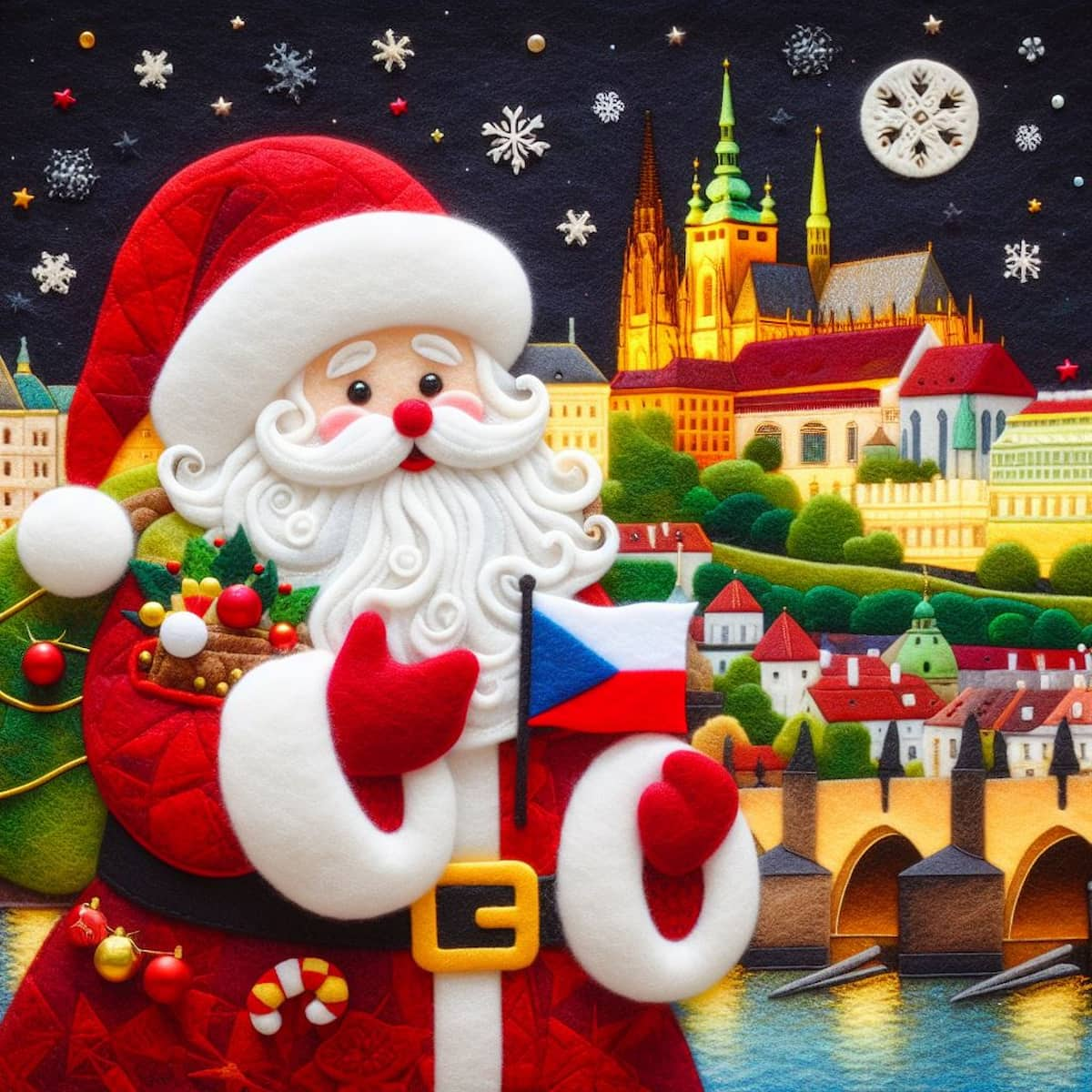
Every December across France, as bakery windows fill with chocolate yule logs and municipal carousels spin beneath strings of warm white lights, children write letters addressed to a tall, white bearded figure wrapped in a long red hooded cloak: Pere Noel, translating literally to Father Christmas. Although modern globalization has blended his visual appearance with the American Santa Claus, the French Pere Noel possesses a distinct, turbulent national biography spanning medieval winter personifications, nineteenth century literary reinventions, a fiery post war battle with the Catholic Church in 1951, and an official government postal law enacted solely to make sure every child in France receives an answer to their holiday mail.
From Gargantua and Bonhomme Noël to Saint Nicholas
Before the nineteenth century, French winter gift giving was sharply divided by regional geography. In the eastern and northern provinces of Lorraine, Alsace, and Flanders, December belonged to Saint Nicholas, who arrived on the sixth of December accompanied by his stern companion, Pere Fouettard. Across the rest of France, families celebrated the birth of the infant Jesus (le Petit Jesus) on Christmas Eve while personifying the winter season itself in folk songs and court masques as Bonhomme Noel (“Good Fellow Christmas”) or Pere Janvier (“Father January”)—a convivial old man wearing a long fur trimmed cape with a pointed hood (a capuchon) rather than a round pom-pom hat, who presided over hearthside feasting and warmth.
During the mid nineteenth century, as Parisian department stores like Le Bon Marche began displaying elaborate animated holiday windows in the 1850s and 1860s, the modern literary name “Pere Noel” entered wide circulation, notably appearing in an 1855 essay by the famous French novelist George Sand. Wearing a floor length hooded robe and carrying a woven wicker basket (hotte) strapped to his back with leather harnesses—just like a French vineyard harvester or chimney sweep—rather than a simple hand held sack, this distinctly French Pere Noel traveled from roof to roof accompanied by a patient grey donkey named Gui (“Mistletoe”).
The 1951 Dijon Scandal: When Priests Burned Père Noël at the Stake
Following the end of the Second World War and the arrival of American soldiers and Marshall Plan aid in the late 1940s, the commercial popularity of Pere Noel exploded across France. To many conservative French Catholic bishops and parish priests, however, the sudden omnipresence of this jolly, red suited figure in public squares felt like a pagan, commercialized invasion that was erasing the religious meaning of Christ’s nativity.

This tension boiled over into an international front page scandal on the afternoon of December twenty third, 1951, in the Burgundian capital of Dijon. Outside the historic walls of Dijon Cathedral, in front of a crowd of two hundred and fifty Sunday school children gathered for the occasion, local Catholic clergy condemned Pere Noel as a “usurper and a heretic.” Hanging a six foot tall straw and cardboard effigy of Pere Noel from the iron railings of the cathedral courtyard, the priests set the figure on fire, burning Father Christmas at the stake while issuing a statement declaring that he had not been executed, but merely “sacrificed” to expose a lie that could never awaken genuine religious feeling in a child. Instead of banishing Pere Noel, the Dijon burning provoked an uproar of affectionate defense across France—prompting the legendary French anthropologist Claude Levi Strauss to write his famous 1952 essay, Father Christmas Executed, analyzing why modern secular and religious adults alike needed children’s belief in Pere Noel to keep a sense of magic alive in the modern world.
1962: The World’s First Official Pere Noel Post Office in Libourne
Far from disappearing after 1951, Pere Noel was officially integrated into the machinery of the French state eleven years later. For decades, French postal workers had quietly opened letters addressed by children “To Pere Noel in the Clouds” rather than throwing them into the dead letter bin, most notably Odette Mennesson-Rigaud, a big hearted postmistress in the Normandy town of Veules-les-Roses who personally answered children’s letters by hand.
In 1962, the French Minister of Posts and Telecommunications, Jacques Marette, decided to turn this kindness into official national policy by establishing the Secretariat du Pere Noel inside the French postal service (La Poste), appointing the famous psychoanalyst and pediatrician Francoise Dolto—who happened to be the minister’s sister—to write the very first official postcard reply sent out to children. Relocated in 1967 to the southwestern wine town of Libourne near Bordeaux, a dedicated team of sixty multilingual postal “elves” opens more than one point two million letters and emails every single November and December from children in over one hundred and twenty countries. Under French law, no postage stamp is required to mail a letter to Pere Noel anywhere in France; as long as a child writes their return address on the back of the envelope, the French Republic guarantees that Pere Noel will write them back before Christmas Eve.