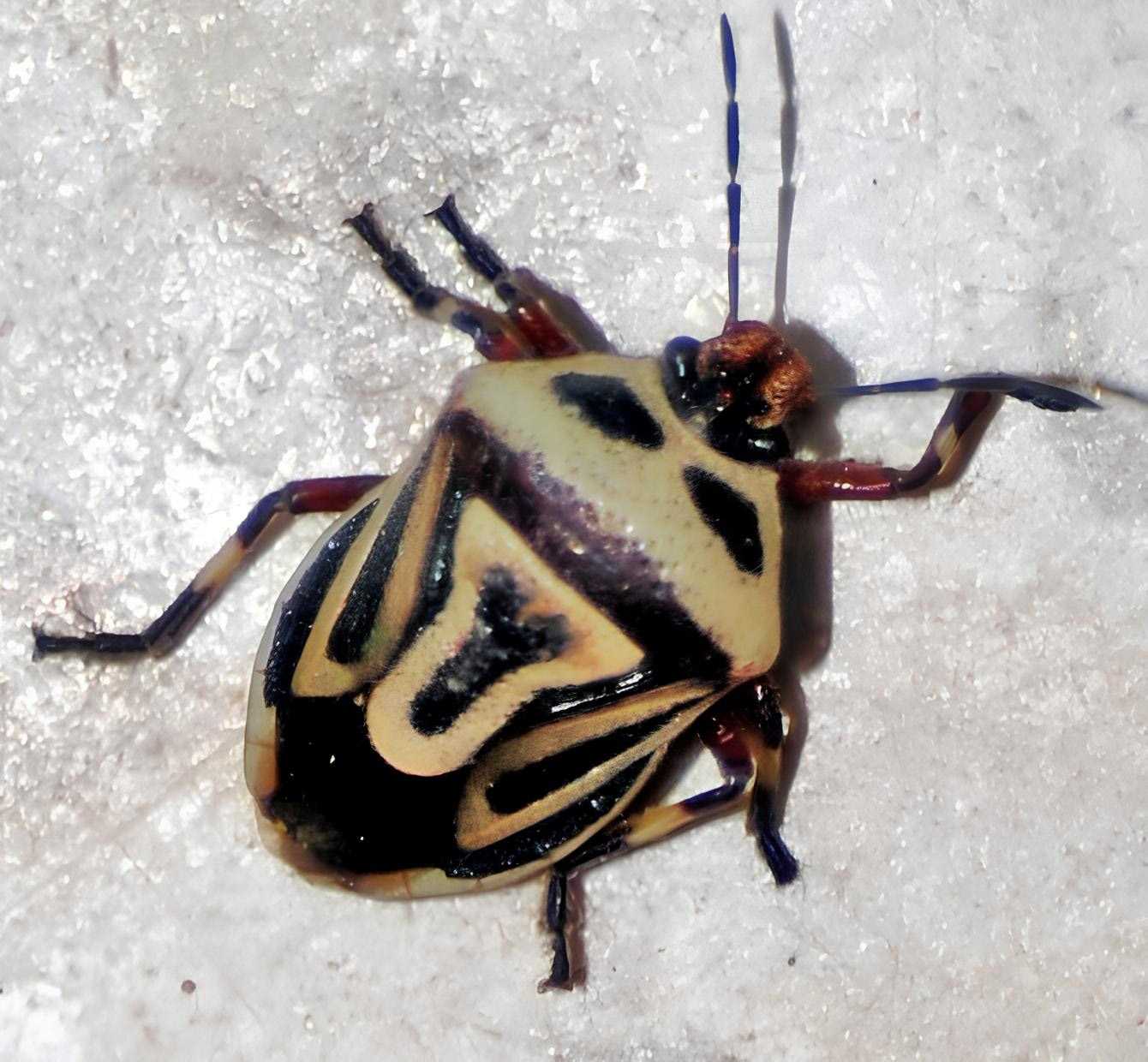
Perillus bioculatus is an insect that belongs to the family of stink bugs (Pentatomidae), specifically the subfamily Asopinae. In common language, this insect is also known as a two-spotted stink bug or a double-eyed soldier bug. The Danish zoologist Johan Christian Fabricius described this animal in 1775 and gave it its Latin name. Like other stink bugs, they are known for their distinctive stench, but they are also predatory.
Etymology
Latin is the source of the species name, bioculatus. The prefix bi signifies “two” or double,” and the name oculatus means “with eyes.” The genus name Perillus means “full of danger or risk.”
Together, the name Perillus bioculatus can be translated to mean “two-eyed perilous bug.” However, these animals are not dangerous to humans but are actually beneficial.
They Change Color by Feeding
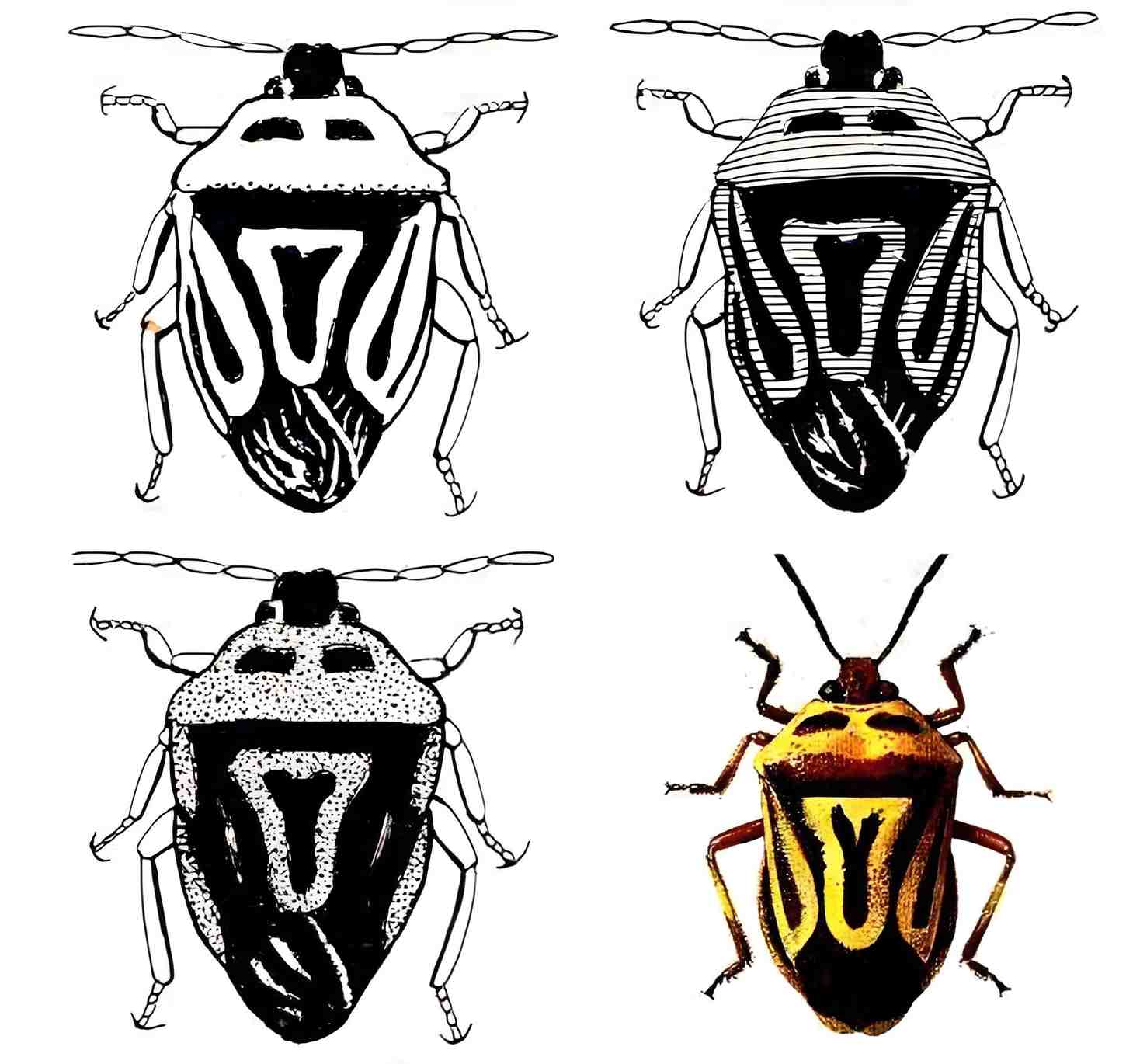
Perillus bioculatus undergoes color alterations in response to its diet. They get carotene from the animals they hunt. At temperatures between 88 and 90°F (31 and 32°C), carotene is oxidized and excreted. As a result, the bug looks all black and white.

However, at mild temperatures, carotene is deposited beneath the cuticle, and the animal appears black and yellow.
Carotene accumulates heavily beneath the epidermis at around 70–75°F (21–24°C), causing more melanin to be produced and giving the insect a red appearance.
Characteristics of Perillus bioculatus
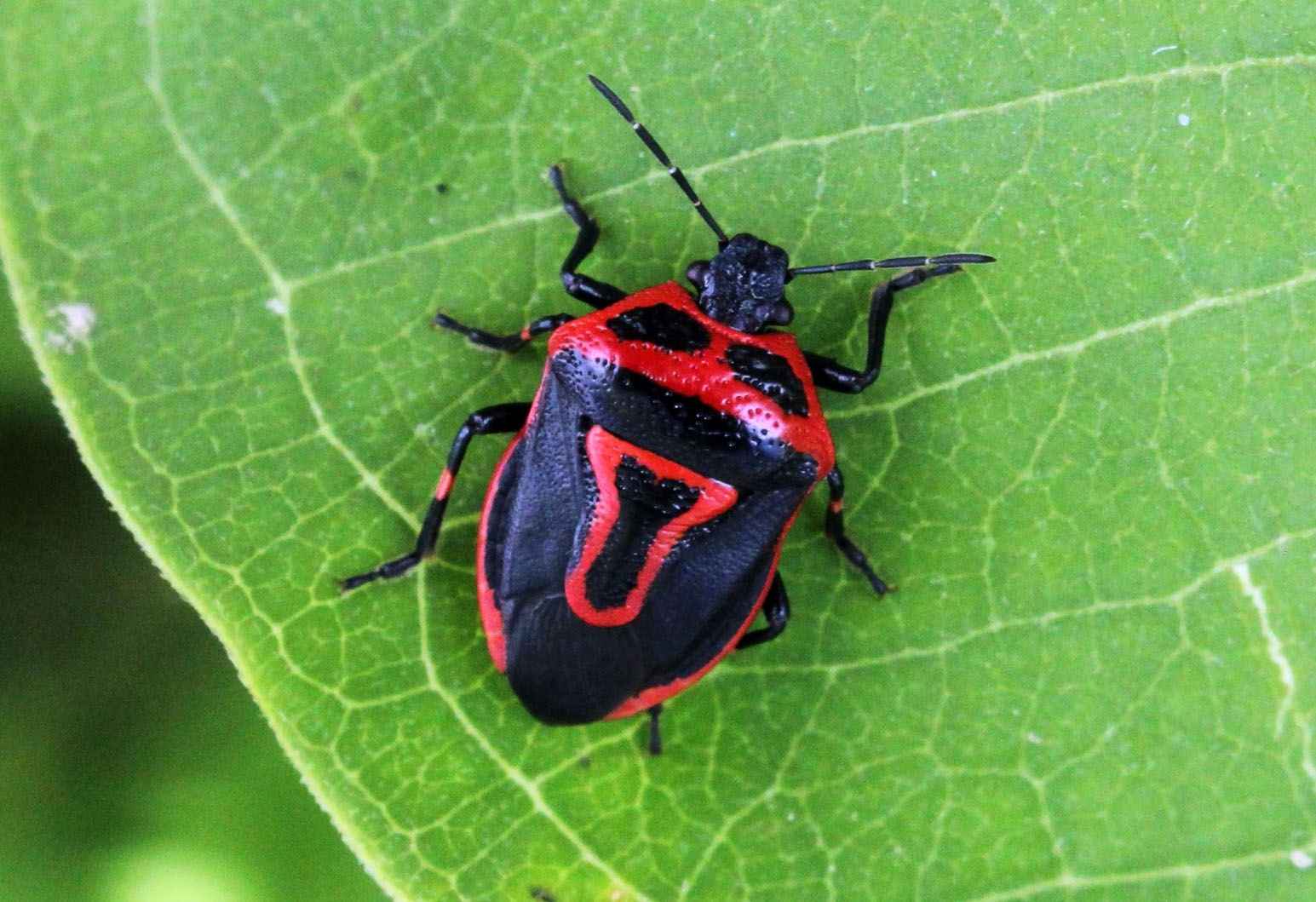
The size of Perillus bioculatus varies from 0.4 to 0.5 inches (10 to 12 mm). They also vary in coloration but have a quite characteristic pattern. The two-spotted stink bugs often seem to be black, dark brown, or even red and yellow.
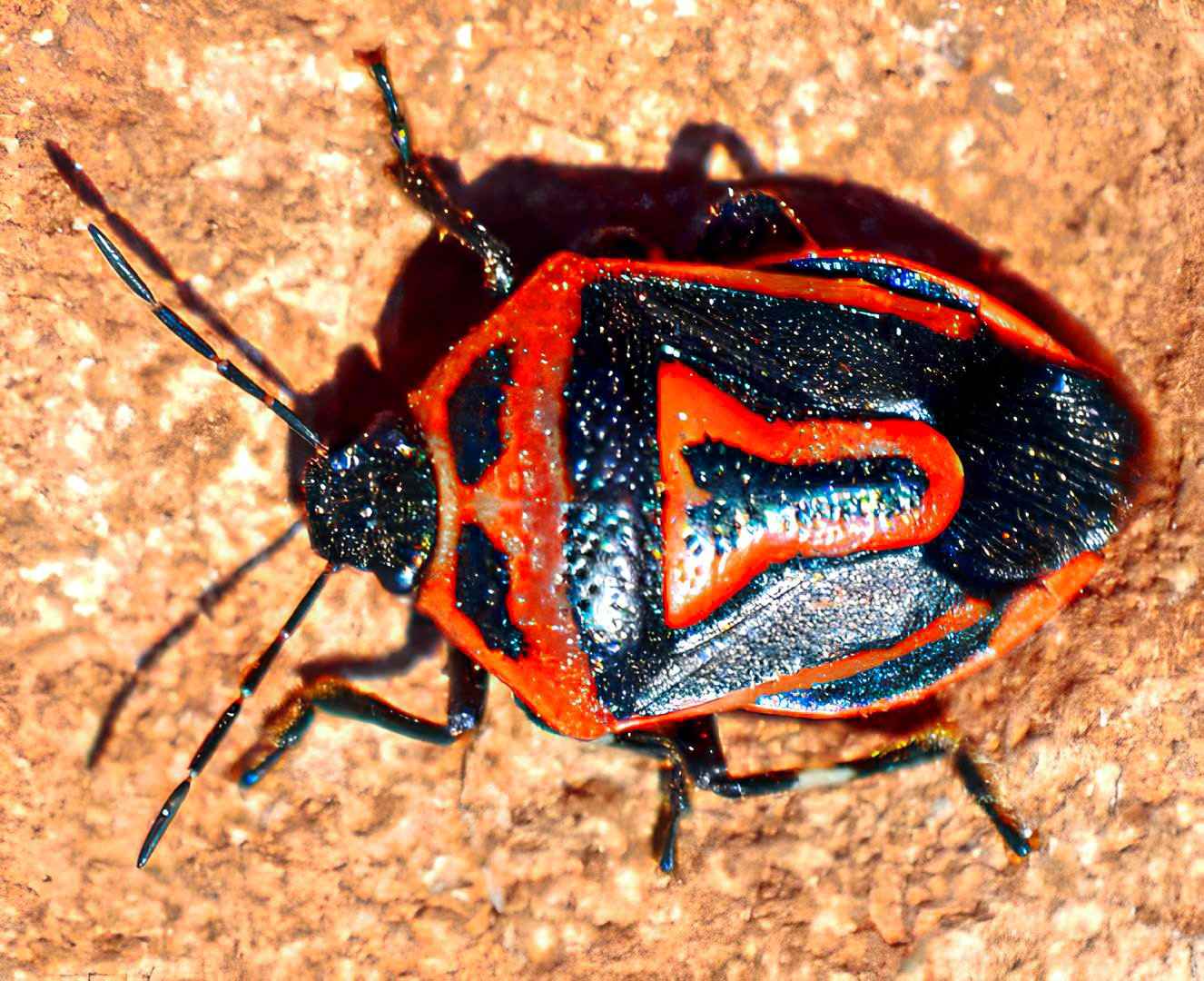
The two black dots on these bugs’ pronotum—the area directly behind the head—make them pretty simple to identify.
On the scutellum, there is a triangular marking surrounding a black Y-shaped pattern. This is the large, triangular, shield-shaped part on the back of the animal.
The front pronotum (chest) and scutellum (back) patterns are often a fiery red or orange on a Perillus bioculatus. However, there is also a cream-colored variation.
Distribution
Historically, the only place you could find Perillus bioculatus was in the Nearctic realm (most of North America, including Greenland, Central Florida, and the highlands of Mexico).
Today, the geographic distribution of two-spotted stink bugs includes southern Canada, all of the United States (east-to-west coast), and all of Mexico.
For the purpose of biological plant protection, this species was introduced to many European nations. But so far, it has only taken root in Turkey and the Balkans.
Originally from North America, they have now made their way to Eastern Europe and North India, thanks to human intervention.
Diet
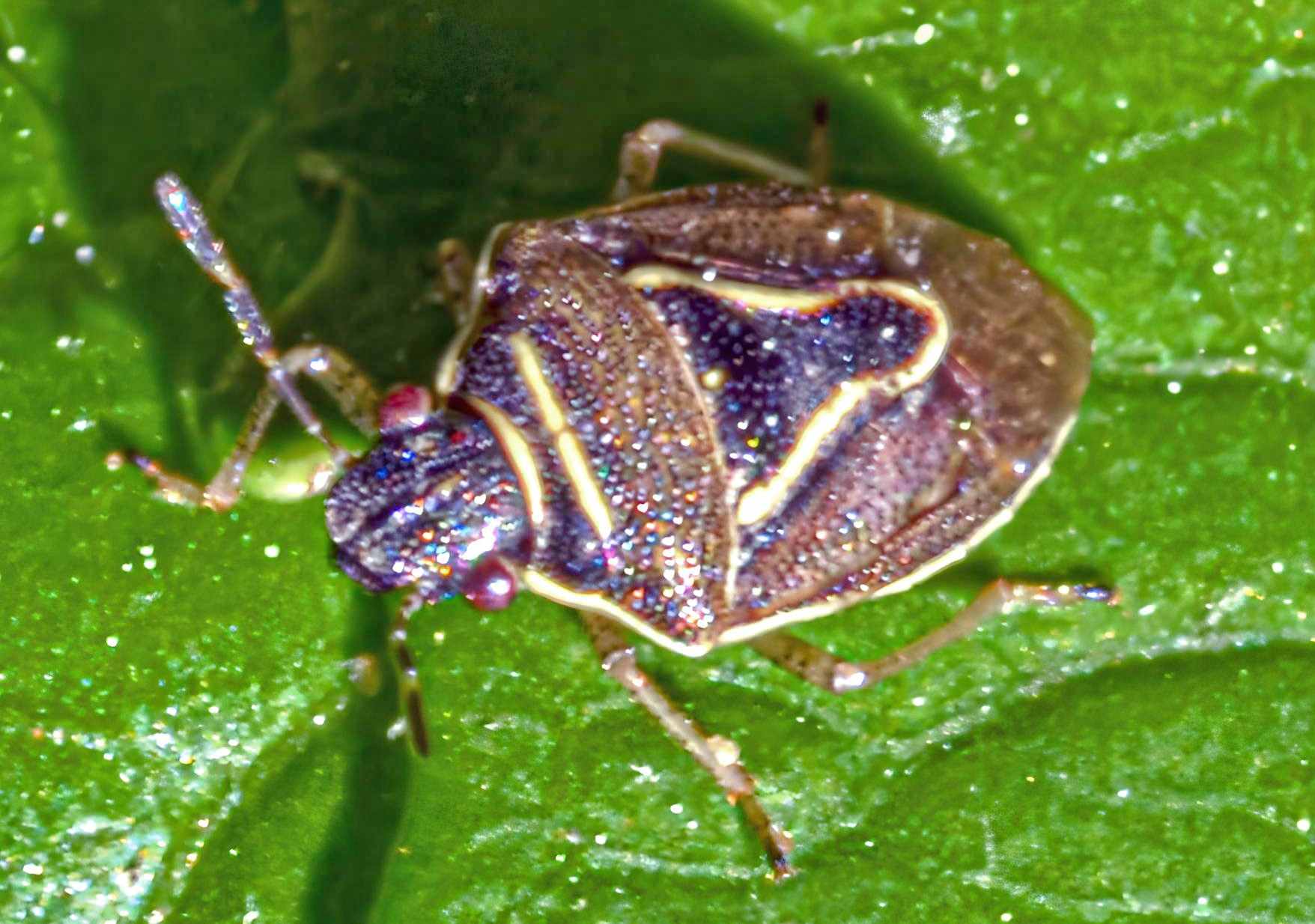
Perillus bioculatus’ diet mostly consists of arthropods. They specifically eat beetles and beetle larvae because these are their favorite foods.
The Colorado potato beetle (Leptinotarsa decemlineata) is an example of a valuable agricultural pest that falls victim to the two-spotted stink bug. That is why they are known as ‘predator stink bugs’ and considered a ‘beneficial organism.’
Eggs
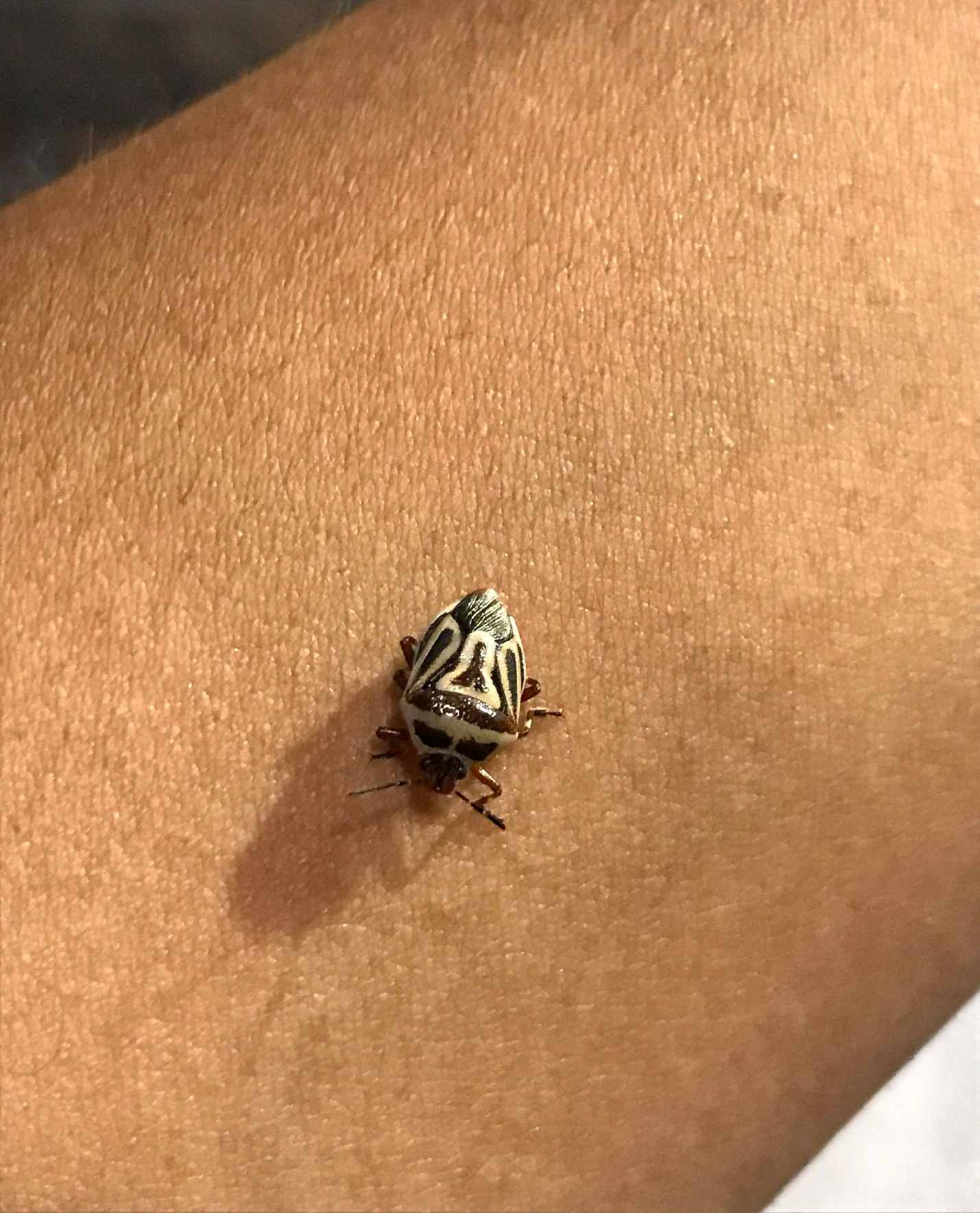
Perillus bioculatus often lays between 100 and 300 eggs in a clutch. There are five nymphal stages in their life cycle. After an egg is laid, a total of 25–30 days are required for its development.
Typically, there are two to three generations every year for this species. In other words, they manage to go from egg to adult and then to egg again two to three times a year.
In the wild, the species hibernates as an imago, the last stage an insect attains during its metamorphosis, and reaches maturity.
The Perillus bioculatus larvae are phytophagous (herbivore) in their initial nymph stage, sucking the sap from potato plant stems for food. There is gregarious activity or social grouping in their first four nymphal stages.
Is Perillus bioculatus Dangerous?
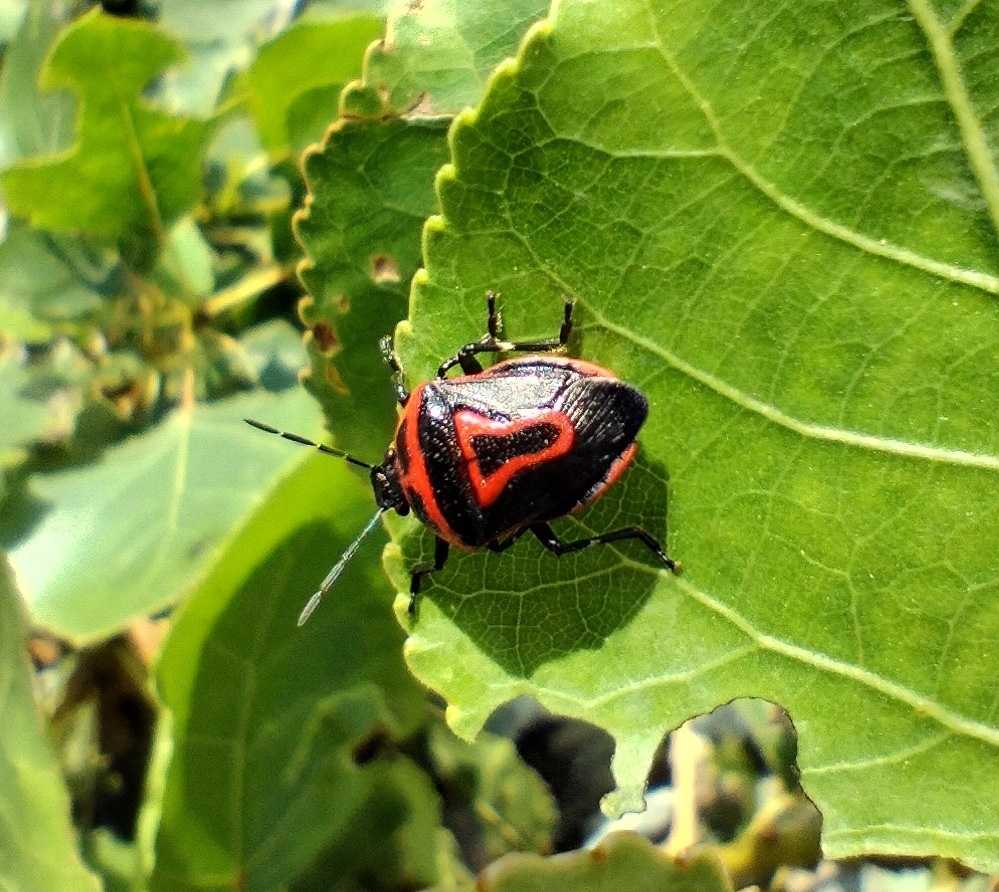
The answer is no; Perillus bioculatus poses no threat to humans. In fact, there are advantages to having them around. Native to North America, these bugs are expert predators of Colorado potato beetle eggs and larvae. In high numbers, they help control insect populations.
Perillus bioculatus in My House
These bugs belong to the family Pentatomidae, or stink bugs. There is no need for alarm if you have discovered Perillus bioculatus in your house. These insects pose no risk to human health.
References
- Featured Image: Whitney Cranshaw-Forestryimages.org, CC BY 3.0 US
- Impact of Perillus Bioculatus on the Colorado Potato Beetle and Plant Damage – By George Tamaki, Bill A. Butt – 1978 – Google Books
- Perillus bioculatus – an overview – ScienceDirect Topics