Deep within the riverbeds, misty willow groves, and tranquil lakes of East Slavic folklore dwells the Rusalka, one of the most complex supernatural beings of Eastern European tradition. Often compared superficially to Western European mermaids or Greek sirens, the Slavic Rusalka possesses a distinct cultural history spanning pagan agricultural fertility rites and later Christian cautionary tales. Across Ukraine, Belarus, and Russia, these water spirits embodied both the life giving moisture required for the summer harvest and the sudden, treacherous dangers of deep water.
Pre Christian Roots as Fertility Spirits
Before the spread of Christianity across Kievan Rus in the tenth century, early Slavic agricultural communities viewed the Rusalki not as malevolent demons, but as vital nature spirits directly connected to the cycle of rain and crop growth. The word itself traces back to the ancient festival of Rosalia, a late spring Roman tradition of rose offerings for the dead that merged with indigenous Slavic ancestor worship in the Balkans and Eastern Europe. During the spring thaw, these spirits were believed to emerge from their underwater crystal palaces to climb into the branches of weeping willows and birch trees along the riverbanks.
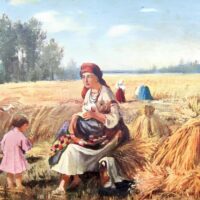
At night, the Rusalki would descend into the freshly planted rye and wheat fields to dance in circles under the moonlight. Far from damaging the crops, their presence brought heavy morning dew and gentle rain, ensuring that the grain would grow tall and abundant. Peasants observed that wherever the Rusalki danced, the grass grew thicker and greener than anywhere else in the meadow, linking these spirits directly to the vitality of the earth.
The Nineteenth Century Shift Toward Tragic Ghosts
As Christian theology reshaped rural folklore over the centuries, the perception of the Rusalka darkened significantly. By the eighteenth and nineteenth centuries, popular belief identified Rusalki as the restless, unquiet souls of young women who had died prematurely or violently near water. This included brides who passed away before their wedding day, women who drowned themselves after being abandoned by unfaithful lovers, and unbaptized infants who perished at birth.

Because they had died outside the sacramental grace of the church, their souls were thought to be trapped on earth until their natural allotted lifespan expired. In this later folkloric tradition, the Rusalka became a dangerous nocturnal seductress. Sitting along wooden mill wheels or grassy banks while combing her long, dripping wet hair with a bone comb, she would call out to solitary young men by name. Those who succumbed to her enchanting voice and hypnotic beauty were lured into the water, where the Rusalka would either entangle them in her long hair or tickle them relentlessly until they drowned in the cold current.
Appearance Across Northern and Southern Slavic Regions
Descriptions of the Rusalka vary dramatically depending on geography and climate. In the warm, fertile steppes of Ukraine and the southern Danube basin, Rusalki were almost universally envisioned as ethereal, captivating maidens with pale skin, flower crowns woven from sedge and water lilies, and garments made of translucent mist. Their beauty was their primary weapon, drawing travelers away from the safety of village paths.
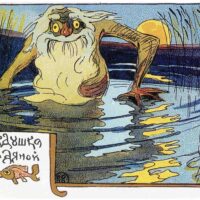
Conversely, in the dense, dark forests of northern Russia and Belarus, the water spirit took on a much more frightening physical form. Northern villagers described the Rusalka as an unkempt, wild figure with greenish hair, glowing eyes, and an elongated, emaciated body covered in river moss. Rather than relying solely on charm, the northern spirit would ambush careless bathers or fishermen who ventured out during forbidden hours without carrying protective herbs.
Rusalnaya Week and Protective Folk Customs
The height of the Rusalka’s earthly activity occurred during Rusalnaya Week, also known as Green Week, which took place in early June right around the Christian feast of Pentecost. During these seven days, the boundary between the spirit world and the human village dissolved as the Rusalki left the rivers to roam the forests and fields. Throughout this week, strict taboos governed rural life: villagers refused to swim in rivers at midday or midnight, women avoided spinning wool or sewing outdoors, and no one walked into the woods alone.

To protect themselves during necessary journeys, peasants carried sprigs of wormwood, lovage, garlic, or horseradish tucked into their belts, as the pungent aroma of these bitter herbs repelled the water spirits. At the conclusion of Rusalnaya Week, communities performed a ritual banishment ceremony. Young women constructed a straw effigy of the Rusalka, dressed it in colorful ribbons, and marched it in a solemn procession to the edge of the river or grain field, where the doll was torn apart or cast into the current to ensure the spirits returned peacefully to their watery realm until the following spring.