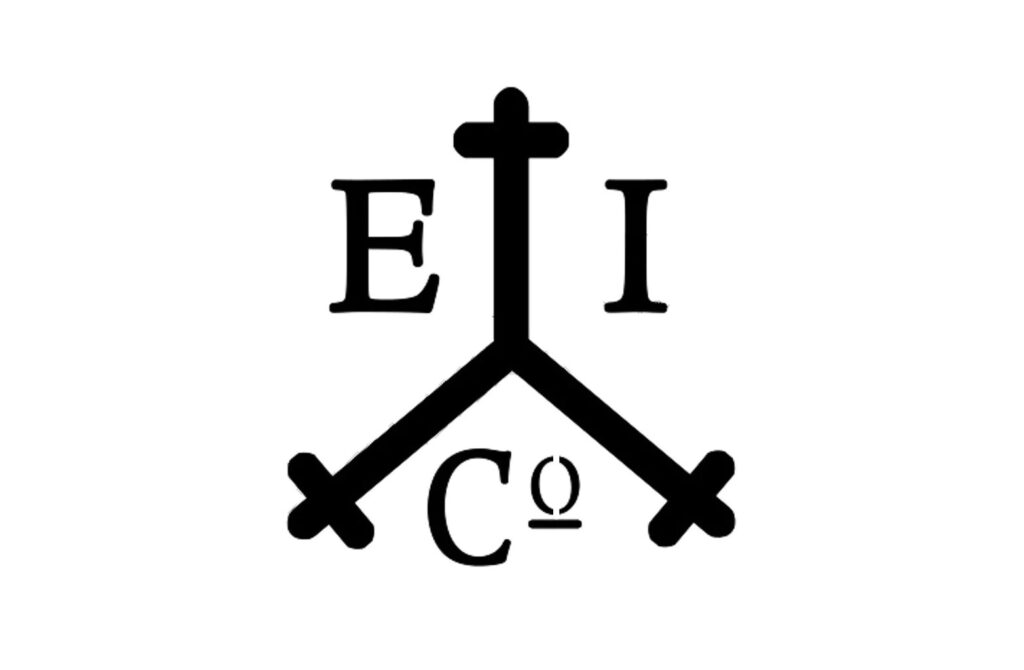
Initially chartered as the Governor and Company of Merchants of London Trading into the East Indies, the British East India Company (EIC) was founded on the last day of 1600. The company was granted a “royal charter” by Queen Elizabeth I, which gave it a monopoly on trade with the East Indies. South and Southeast Asia had poor relations with the region. Other countries established similar companies throughout the 17th century; the Netherlands established the Dutch East India Company in 1602, followed by France with the French East India Company, and Sweden with the Swedish East India Company.
Why Was the East India Company Founded?
Spices were indispensable and valuable consumer goods in those days. The first voyage of the British East India Company was made in 1601 to the islands of Sumatra and Java, where black pepper was produced. Four shiploads of crew members fought hard to barter England’s woolen products for black pepper. But in the region’s hot and tropical climate, there was little need for these products. So, during the expedition, James Lancaster captured a Portuguese ship and used its cargo of gold, silver, and Indian fabrics to buy 500 tons of black pepper. Before returning to England, Lancaster set up the first clearinghouse, or “factory,” in Banten, Java. The company organized two more trading voyages to Banten for the next nine years.
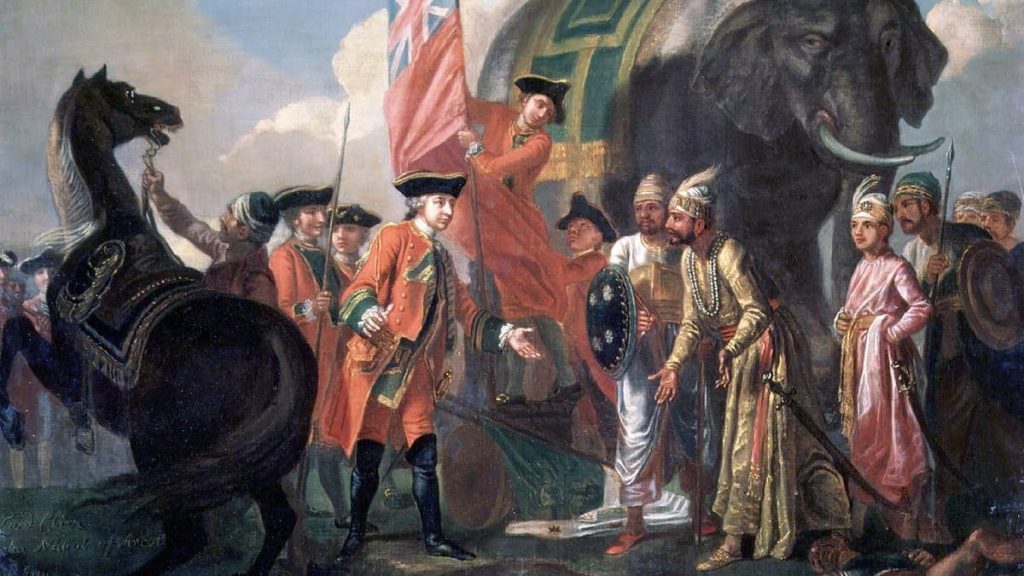
The British soon realized that Indian cotton had more barter power than English wool and established factories in India. The first of these Indian factories was established in 1615 in Surat, on the northwest coast of India, then ruled by the Mughal Empire. By 1690, the company had established trading centers along the west and east coasts of the country.
Among them, Madras, Calcutta, and Bombay became the most prominent, eventually turning into the main trading centers of the British colony. The East India Company protected its stations with its military force.
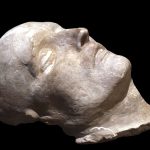
After the Battle of Plassey in 1757, which ended French colonial claims on India, the British East India Company started to put pressure on local governments. By 1833, the company had the power to rule over a very large area of India.
North American Independence
The East India Company had been trading regularly with China since 1699. Over the next century, tea became a popular drink in England and thus a lucrative commodity. In the 18th century, the demand for tea was growing in Europe, but China was unwilling to exchange this commodity for Western goods. China’s Manchu emperor Qianlong made this clear in a letter to King George III: “I set no value on objects strange or ingenious, and have no use for your country’s manufactures.” China thus expressed its willingness to be paid in silver ingots.
The British East India Company had a monopoly on tea imports to Britain, but smuggling was rampant due to high taxes on tea, and silver became increasingly difficult to obtain. In 1773, war and famine in India, coupled with the economic downturn in Europe, brought the East India Company to the point of collapse. To avoid this, the British government passed the “Tea Act” of 1773. The company could now sell its tea directly to the United States of America with a lower customs duty.
This outraged the colonists. Because the East India Company had already caused local merchants to undercut prices. In 1773, 342 crates of tea belonging to the East India Company were dumped into the sea in Boston Harbor. This protest is known as the Boston Tea Party. This seemingly small protest became the spark of the American Revolution, and eventually 13 British colonies in North America declared independence and formed the United States of America.
Even as the colonists began to make their own treaties with China, the East India Company maintained its monopoly on Britain’s trade with the East. However, it was becoming increasingly difficult to find the silver that the Chinese demanded in exchange for tea. In response, Chinese merchants began to be given Indian opium as barter. This illegal drug began to be smuggled into China.
In the early 19th century, some people in Britain started to feel uncomfortable with the company’s control of trade with the East while ruling over large parts of India. This giant company was controlling a private army of 260,000 men, twice the size of the many present-day armies. In their eyes, the company’s tea merchants were turning into the governors of British India.
In 1830, around 3 million Chinese had become addicted to opium. The East India Company sold opium for silver bullion. The British government earned £2 million a year (that’s £1 billion today) from the Chinese addicts. China’s efforts to stop this trade led to the Opium War (1840–1842). When the Chinese lost the war, they were forced to open five ports to the British and hand over Hong Kong. China then legalized opium. It granted various privileges to the British and other Westerners. One consequence of these two wars was that China became more accessible to “plant hunters.”
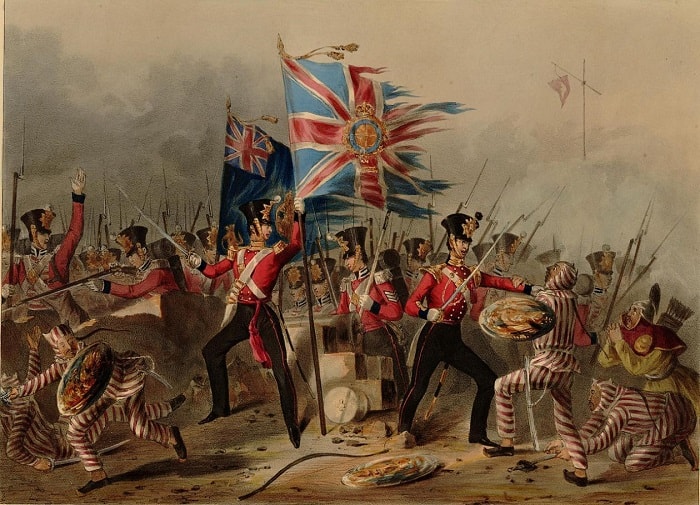
The British government took note of this situation in China and terminated the company’s trading rights in 1833. However, British India would still be administered by the company on behalf of the Crown. Because the company was no longer dependent on tea from China as it brought tea seedlings from China to India. Soon, an Indian tea industry began to develop, and the Chinese monopoly on tea collapsed. However, all was not well on the subcontinent either. The Indian Rebellion, which arose from the company’s armed Indian forces, paved the way for Indian independence and prompted the British government to nationalize the company in 1857. The Government of India Act of 1858 allowed the British Crown to take full control of India, marking the foundation of the British Raj.
The first international company in history, the British East India Company, helped lay the foundation for British rule on the Indian subcontinent while shaping the global economy by trading herbal goods such as spices, cotton, tea, and opium for nearly 300 years before officially dissolving in 1874. The company had accumulated £12 million in wealth in 1805, which is around £1.15 billion as of 2022.
Sources:
- Chaudhuri, K. N. (1965). The English East India Company: The Study of an Early Joint-Stock Company, 1600–1640. London: Cass.
- Chaudhuri, K. N. (1978). The Trading World of Asia and the English East India Company, 1660–1760. Cambridge, UK: Cambridge University Press. ISBN 978-0-521-21716-3.