Sometimes, everything falls out of your hands in the morning: the egg lands on the floor instead of the pan, and spoiled milk accidentally ends up in your coffee. In such moments, the thought slips through your mind: “If only I could turn back time and fix this ruined breakfast.” But the arrow of time—as scientists call its unidirectionality—only points from the past to the future.
Theoretically, if the flow of time went in the opposite direction—from the future to the past—the laws of physics, mechanics, the theory of relativity, quantum field theory, and all the other rules that describe our world would still work just as well.
For the fundamental laws of nature, it makes no difference in which direction the clock’s arrow moves.
The entire snag lies in a single rule that distinguishes the past from the future—the second law of thermodynamics. It states that in an isolated system, entropy either remains unchanged or increases. Still unclear? Let’s break it down.
Entropy is the measure of disorder in a closed system. The more disorder there is, the higher it is. Imagine a new deck of cards, where the cards of each suit are grouped together and arranged in order, from six to ace. When you shuffle them, they end up in a random order. At this moment, the entropy of the deck increases. The same thing happens when you drop an egg on the floor or add milk to your coffee.
So why doesn’t the egg gather itself back into the shell, and why doesn’t the coffee separate from the milk? Because in this case, entropy would decrease, which would violate the second law of thermodynamics, according to which it can only grow or stay unchanged.
Of course, you can sort the cards in the deck again or clean up the broken egg. But to restore order, you need to exert effort. In the process of this action, you increase the entropy of the surrounding environment—and, as a result, the entropy of the entire universe. Thus, the second law always remains in effect.
We know that the universe is constantly expanding, and its entropy is inexorably growing—as a result of these processes, it is becoming more chaotic and “diluted.”
It’s logical to assume that everything began at a point in the past when the entropy of the universe was low. Scientists believe that this point was the Big Bang.
13.8 billion years ago, our universe was infinitely dense and hot—this state is called a cosmological singularity. When the Big Bang occurred, entropy began to rise, and we still feel its effects to this day. No one knows for sure why the early universe ended up in such an orderly singularity and what happened before that. Nevertheless, cosmologists believe that the flow of time moving from the past to the future is a consequence of that initial state.
It is likely that the arrow of time, like many things that have a beginning, will eventually have an end.
One popular hypothesis suggests that the universe, along with time, will come to an end when a “heat death” occurs. This hypothesis was first proposed by physicist Rudolf Clausius in 1865. He extrapolated the second law of thermodynamics to the entire universe.
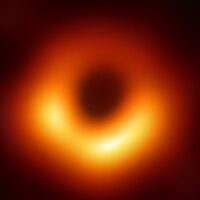
One day, all the stars will burn out, and black holes will evaporate. The universe will expand to the point where only emptiness remains. At this moment, it will reach a state of equilibrium, close to maximum entropy.
It is possible that by then, the direction of time will disappear. But until that moment, we must accept that reversing time is not an option.