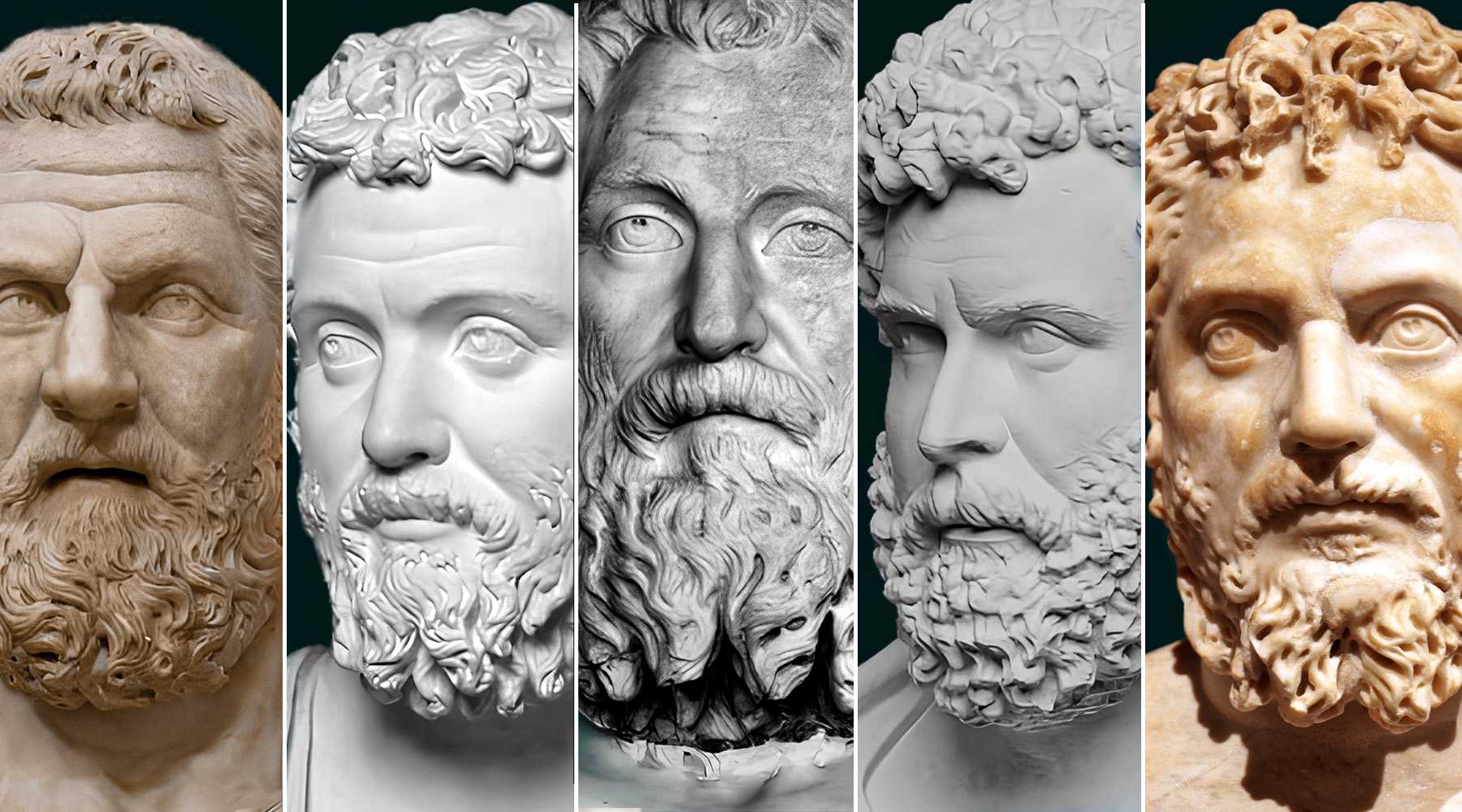
For precisely one hundred years after Augustus defeated Mark Antony and Cleopatra at Actium, the Roman Empire was governed exclusively by a single extended family: the Julio-Claudian Dynasty. Consequently, when the thirty-year-old Emperor Nero drove a dagger into his own throat in a suburban villa outside Rome on June ninth, 68 AD, with no biological children or designated successor, the imperial system plunged into an unprecedented constitutional vacuum. Over the next eighteen months—centering on the chaotic calendar year of 69 AD, immortalized as the Year of the Four Emperors—four ambitious generals seized the purple throne in rapid succession, revealing what the Roman historian Tacitus called the great secret of the empire: that an emperor could be made elsewhere than at Rome.
Galba: Old-School Austerity and Fatal Stinginess
The first man to step into the void left by Nero was Servius Sulpicius Galba, the seventy-year-old governor of Hispania Tarraconensis. Coming from one of Rome’s oldest aristocratic patrician families, Galba had been hailed as Imperator by his Spanish legions during the spring revolt against Nero and was quickly recognized by the Senate and the Praetorian Guard after the Praetorian Prefect, Nymphidius Sabinus, promised every guardsman a massive cash bonus (donativum) of thirty thousand sesterces in Galba’s name.
When the stern, arthritic Galba marched into Rome in the autumn of 68 AD, however, he immediately alienated every faction that had put him on the throne. Shocked that Nero’s lavish spending had emptied the public treasury, Galba ordered corrupt Nero appointees executed without trial, demanded citizens return gifts Nero had given them, and—most fatally of all—flatly refused to pay the Praetorian Guard the promised cash bonus, declaring famously that he levied his soldiers, he did not buy them. Even worse, when the legions stationed along the Rhine River in Germany mutinied on January first, 69 AD, Galba bypassed his loyal, charismatic supporter Marcus Salvius Otho and instead adopted an unpopular young aristocrat named Lucius Calpurnius Piso Licinianus as his heir.
Otho: Coup in the Forum and Suicide at Bedriacum
Furious at being passed over for the succession and buried under mountains of personal debt that only holding the imperial throne could pay off, the thirty-six-year-old Marcus Salvius Otho—a former drinking companion of Nero whose wife, Poppaea Sabina, Nero had taken for himself—organized a conspiracy among the disgruntled Praetorian Guards. On the morning of January fifteenth, 69 AD, after a reign of just seven months, Otho slipped away from an imperial sacrifice to the Praetorian camp, where the guardsmen hailed him as Emperor and marched back into the Roman Forum, hacking the elderly Galba and his heir Piso to pieces in the street next to the Lacus Curtius.
Once installed in the palace, Otho governed with surprising moderation and administrative skill, restoring statues and courting the Senate. However, he had inherited an unstoppable storm from the north: two weeks before Galba’s murder, the battle-hardened Roman legions on the German frontier had already proclaimed their own commander, Aulus Vitellius, as Emperor, and two massive columns of German-frontier veterans under Caecina Alienus and Fabius Valens were already marching across the snow-covered Alps into northern Italy. Riding north to meet them despite warnings from his best generals to wait for reinforcements arriving from the Danube, Otho engaged the Vitellian army on April fourteenth, 69 AD, at the First Battle of Bedriacum near Cremona. When his forces were defeated in a chaotic battle along the Postumian Way, Otho still commanded substantial reserve armies that could have protracted the civil war for months; instead, deciding smoothly that he would rather sacrifice his own life than spill another drop of Roman blood, Otho calmly said goodbye to his staff at Brixellum on the morning of April sixteenth and fell upon his dagger after a reign of exactly ninety-one days.
Vitellius: Gluttony in the Palace and Mutiny in the East
With Otho dead, the Senate duly recognized the fifty-three-year-old Aulus Vitellius as Rome’s third emperor of the year. Marching slowly southward across the corpse-strewn battlefield of Bedriacum—where he reportedly remarked that a dead enemy smelled sweet, and a dead fellow citizen smelled even sweeter—Vitellius entered Rome at the head of sixty thousand unruly frontier legionaries who treated the capital like a conquered foreign city.
Rather than preparing for the defense of his throne or disciplining his army, Vitellius handed administrative power over to his rival generals Valens and Caecina while indulging in legendary culinary gluttony that drained nine hundred million sesterces from the Roman state in just eight months. Feasting three and four times a day across the villas of wealthy senators, Vitellius dedicated a mammoth silver platter called the “Shield of Minerva” filled with pike livers, pheasant brains, peacock tongues, and lamprey milt shipped from across the Mediterranean by naval triremes. Meanwhile, on the eastern frontier of the empire, the formidable legions stationed in Egypt, Syria, and Judaea—along with the offended Danube legions that had arrived too late to help Otho—looked upon Vitellius with utter contempt. On July first, 69 AD, in Alexandria, Egypt, Prefect Tiberius Julius Alexander ordered his troops to swear allegiance to Titus Flavius Vespasianus (Vespasian), the sixty-year-old rugged general commanding the Roman war in Judaea.
Vespasian and the Founding of the Flavian Dynasty
Born into a humble tax-collecting family from the Sabine hills rather than the old Roman nobility, Vespasian was a tough, pragmatic soldier with a dry sense of humor and two grown sons—Titus and Domitian—ready to secure a stable dynastic succession. Leaving his elder son Titus in command of the siege of Jerusalem while he personally stayed in Egypt to cut off the grain ships that fed the city of Rome, Vespasian allowed his fiery Balkan commander, Marcus Antonius Primus, to march the Danube legions rapidly into northern Italy in the autumn of 69 AD.
In late October, fighting through the night by moonlight at the Second Battle of Bedriacum, Primus’s Flavian legions crushed the leaderless Vitellian army, sacked Cremona, and marched on Rome. Inside the capital, chaos erupted in mid-December when Vitellius’s soldiers besieged Vespasian’s older brother, Flavius Sabinus, on the Capitoline Hill, accidentally burning the sacred Temple of Jupiter Optimus Maximus to the ground while the eighteen-year-old Domitian escaped disguised as a priest of Isis. On December twentieth, 69 AD, Flavian troops stormed the gates of Rome. Discovered hiding inside a doorkeeper’s dog-kennel or gatehouse at the palace with a belt full of gold coins tied around his waist, Vitellius was dragged down the Via Sacra, Pelted with dung, executed on the Gemonian Stairs, and thrown into the Tiber River. The following day, December twenty-first, the Senate proclaimed Vespasian Emperor, ending the nightmare of 69 AD and inaugurating the Flavian Dynasty, which restored fiscal solvency to Rome and built the Colosseum over the ruins of Nero’s golden palace.