Charles III was officially declared King of the United Kingdom after the death of his mother, Queen Elizabeth II, on September 8, 2022. He is the 3rd Charles on the British throne. Charles’s accession to the throne was automatic. The declaration published by the Accession Council, which convened especially for the occasion, said, “Prince Charles Philip Arthur George” is now “King Charles III,” and “God bless the King!” Camilla, Prince Charles’s wife, and William, Charles’ son and heir apparent, were among the guests at the live-televised ceremony.
Profile of King Charles III
- Full name: Charles Philip Arthur George Mountbatten-Windsor
- Title: King of the United Kingdom and 14 other Commonwealth realms
- Born: November 14, 1948
- Place of birth: London
- Parents: Queen Elizabeth II , Prince Philip
- Spouse: Princess Diana (1981 to 1996), Duchess Camilla (since 2005)
- Children: Prince William, Prince Harry
- Siblings: Princess Anne, Prince Andrew, Prince Edward
From royal heir to King
Charles Philip Arthur George, now King Charles III, is a lover of environment who supports organic farming and demonstrates his ideas on his rural estate at Highgrove in Gloucestershire.
As the “eternal heir to the throne,” he was previously revered, in recent years, Prince Charles has increasingly acted as Queen Elizabeth II’s representative at formal events. He now succeeded her as King Charles III upon her death.
When the Queen will step down and whether Charles will relinquish his right to the throne in order for William to succeed him as king have been hotly debated topics. Charles’ close friend had even admitted to Time that the prince had no interest in the throne at all.
Charles has often advocated for environmental preservation, eco-friendly cooking, and corporate sustainability, whether in his books or personal letters to the government. Charles participates in a wide range of humanitarian projects and organizations in addition to his formal responsibilities. It would be interesting to see whether he can maintain this dedication after becoming king.
Charles’ early life
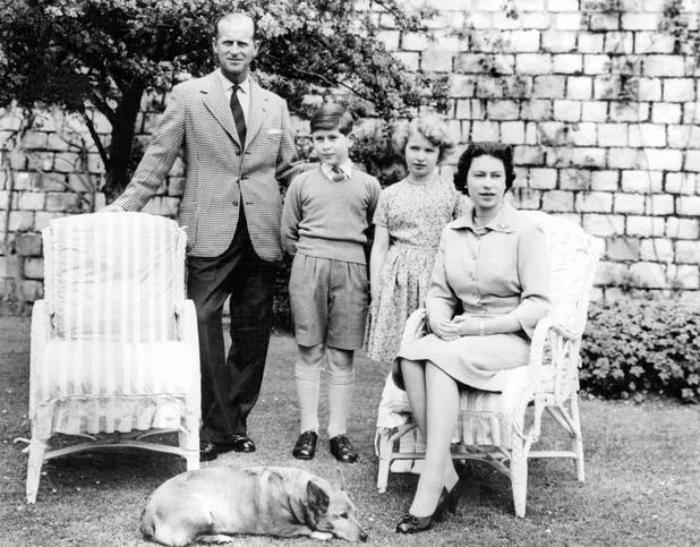
Charles was born on November 14, 1948, in London. The prince became the legitimate heir to the British monarchy when his mother, Queen Elizabeth II, was named as such in 1952. He has been anticipating the royal duty ever since. Charles made good use of his time. At the end of the 1960s, he enrolled at Cambridge to study anthropology, history, and archaeology. After that, he completed his military training in the Royal Navy and the Royal Air Force. In 1976, he left the Army to pursue other topics of interest. But in June 2012, his mother gave him a hefty promotion, making him a Field Marshal of the Army, Admiral of the Fleet, and General of the Royal Air Force. Charles is one of the rare royals who has a five-star officer rank.
The bond between Charles and his parents
Charles’ official biography includes a lengthy diatribe on his miserable childhood, during which he claims to have received not a single act of kindness. There were just two short opportunities for him to see his mom each day while he was in kindergarten. Upon parting ways, he always established a subordinate relationship with the Queen.
Charles remembered that once, while he was being washed by a babysitter, Elizabeth lingered a little longer just to be there: “She didn’t put her hands in the bathwater, but at least she watched the procedure.”
He feels his father’s responsibility for sending him to a boarding school where he was tormented by bullies for several years. It doesn’t take to be Sigmund Freud to understand that none of this did anything to improve communication between parents and children.
Conversely, even according to monarchist publications like the Daily Telegraph, the “eternal prince” often drove his mother “to despair.” Elizabeth II thought Charles was snivelling and eccentric, “if not a little crazy.” His father was even harsher to him, Philip allegedly calling his oldest son a “crank” and a “weakling,” while admitting that he and Charles were “very different characters.”
Lord Louis Mountbatten as a surrogate father to Charles
For many years, Charles looked up to his great-uncle Lord Louis Mountbatten as a father figure and confidant. When Charles asked Mountbatten for relationship advice, the lord reportedly told him, “I believe that in a case like yours, a man should sow his wild oats and have as many love affairs as possible.”
It’s unclear how much influence the lord really had on Charles’s women preferences but it is believed that had Charles’s marriage to Camilla Shand not gone through, Louis Mountbatten would have had a significant role in preventing it. Camilla Shand first wed Andrew Parker Bowles, then the heir apparent Charles in 2005.
Relationship problems in the House of Windsor
Charles’ life has historically been dogged by controversies, which have harmed his standing among his fellow Britons. But everything had started so well: millions of people had tuned in to see his ideal wedding to former nursery school teacher Lady Diana Spencer live on television at St. Paul’s Cathedral in London in July 1981. Princes William (born in 1982) and Harry (born in 1984), both princes, are the offspring of this union.
The popularly praised marriage, however, quickly started to fall apart because the crown prince kept in contact with Camilla Parker Bowles, his former love. Charles constantly claimed that their connection is a “purely friendly relationship” in public, but when audio recordings of him confessing that he wants to be Camilla’s “tampon” surfaced, his reputation was damaged.
Many Britons found it difficult to comprehend why Harry favored Camilla over the perennially popular Diana. Camilla was disparagingly referred to in the media as a “Rottweiler.” Charles would need years to fully recover from this humiliating public setback. The once-ideal pair Charles and Diana barely connected socially after 1987. In August 1996, they eventually got a divorce. A catastrophic car accident in Paris claimed the lives of Lady Diana and her lover Dodi Fayed one year later, on August 31, 1997.
Took up again with Camilla Parker Bowles
Despite how tragic it is, Diana’s passing opened the door for Charles to legally continue his romance with Camilla Parker Bowles. The Queen approved of the couple despite her long-standing, somewhat distant relationship with Camilla. When Camilla and Charles exchanged vows at Windsor on April 9, 2005, the British crowd was likewise polite. Camilla changed her title to “Duchess of Cornwall” instead of “Princess of Wales” to show her due respect to Diana. In addition, Prince Charles said that, in the case of his ascension to the monarchy, Camilla would not use the title “Queen.” Camilla was happy to be known as the “princess-wife” nonetheless.
What kind of person is King Charles?
Charles was already known as the “Eco-King” before he came to the throne, and he has gained a well-deserved reputation as an ardent environmentalist in recent years. Charles’ official dwelling doesn’t resemble a conventional English garden in terms of the flowerbeds. The Clarence House estate in the heart of London has an area with organically produced veggies, with the grass dotted with a few weeds and barren places. The first organic farmer to become king of the United Kingdom was Charles.
In addition to promoting ecologically friendly farming, he is a fervent advocate for human rights, a climate change activist, an architecture adorer whose obstinacy has derailed numerous contemporary construction projects, and he likes watercolor painting. Prince Charles is quite dedicated to social concerns as well. He is not a vagabond prince.
However, Charles is no longer permitted to meddle in politics as king. In a BBC documentary on his 70th birthday, he is seen conversing with turkeys. Many Britons think Charles is a little odd: What sort of prince and king is he, wandering about with a herd of sheep in the wastelands of distant British islands and the African Kalahari Desert?
But according to biographies, the Queen and Prince Philip also occasionally thought their son was strange. One time, when he showed up to a museum opening with an eye patch, he said, “But during a long career of talking to trees, you inevitably come across the odd argumentative Arbutus or a cantankerous Quercus.”
Charles did not adhere to the rules too much
Prince Charles is known for his unconventional behavior. Not only because he has a clear political stance. He sometimes transgresses the rules of behavior established by the House of Windsor, even while dealing with personal concerns. This occurred in the instance of Jonathan Dimbleby, a journalist for the BBC, when Charles revealed his adultery to his still-wife Diana in an interview and also shared personal letters and other documents.
This type of thing is truly not permitted to happen in royal households; such publications normally only happen after the person in question is deceased. Prince Charles also made some unflattering comments about his parents, further separating himself from them.
Charles was questioned whether, as a king, he would have the same freedom to express himself openly and stand up for particular causes as he did as a prince in a TV program honoring his 70th birthday in 2018.
Then-heir to the throne Charles responded: “I’m not that stupid. […] The idea somehow that I’m going to go on exactly the same way, if I have to succeed, is complete nonsense. Because the two situations are completely different.”
Charles as the King
In his first statement as monarch, King Charles III said he will follow in his mother’s footsteps and devote his life to “uphold the Constitutional principles at the heart of our nation.” He regarded his mother as an inspiration and a role model.
Charles made a point of highlighting how the world has changed since his mother was monarch. “In the course of the last 70 years, we have seen our society become one of many cultures and many faiths. The institutions of the state have changed in turn,” he declared. “Our values have remained and must remain constant.” At last, Charles addressed his mother and said, “Thank you for your love and devotion to our family and to the family of nations you have served so diligently all these years.”
King Charles may engage in greater political activity
On how Charles will carry out his duties, not much is currently known. There are rumors that he wants to get more active in politics, but the British monarchy does not allow for this. In any event, he cares deeply about the subject of climate change. He probably also has modernizing the royal family on his agenda. According to news sources, he wants to lower the number of participants. There have also been rumors that Buckingham Palace will no longer serve as a permanent home.
The Commonwealth’s foreseeable future
After the passing of Queen Elizabeth II, it is unknown what will happen to the Commonwealth, which consists of 56 nations, 15 of which have the British monarch as their head of state. Some members, most notably Barbados, have already renounced the throne and proclaimed themselves republics in 2021. In total, 17 countries left the Commonwealth during Elizabeth’s reign. At this point, the monarchy might also be abolished in Australia, Jamaica, and the Bahamas. In the end, it will be up to King Charles III and the character of his reign to maintain the unity of the Commonwealth nations.
Bibliography
- BBC – Prince opens £31m galleries, 2021.
- Express – Did Lord Mountbatten write a letter to Prince Charles? The Crown fact-checked, 2020.
- Benjamin Forgey Prince Charles, Architecture’s Royal pain, 1990.