What makes chocolate so addictive? Chocolate, in any of its many forms (dark, milk, or white), is a food that is consistently well-liked by a large number of people. It shouldn’t come as a surprise that, for many people, chocolate is inextricably linked to happiness. They feel the urge to consume at least one portion of this delectable delight by melting it in their mouths each day. They turn into “chocoholics” (chocolate addicts).
According to a study, those who are susceptible to chocolates may go through similar physiological changes to those who become dependent on substances like alcohol or drugs. Similarly, people who are addicted to chocolate have an unquenchable desire for it that nothing can fill.
More than 40 percent of women and 15 percent of men have a craving for chocolate that is comparable to addiction. In more severe cases, people may consume chocolate in secret or in large quantities, similar to the way that some people do it with alcohol.
People who are addicted to chocolate state that they become irritable when they are unable to indulge in their habit. The desire for chocolates is very comparable to these more common types of addiction. But it’s not clear if these similarities are enough to show a link between chocolate and the complex physical and mental effects of addiction.

Simply having a sweet is not sufficient
So, why is it that chocolate is so hard to turn down? There are a lot of hypotheses about it, but there isn’t much evidence to back them up, and there isn’t much agreement among specialists. Some researchers believe that the addictive qualities of chocolate are caused by the high amount of sugar that is contained in it. A preference for sweet foods is hardwired into the human brain, as well as the brains of many other animals. This is likely due to the high amount of energy that is contained in sweet foods.
However, 75 percent of people who identify as chocoholics claim that other types of sweets are unable to satisfy their cravings.
Some people may base their addiction on the typical flavor of chocolate, which can be described as the way it melts on their tongue. Other people may base their decision on the texture of the chocolate.
But for this to be true, white chocolate should be able to satisfy the needs of chocoholics too. Because its consistency is identical to that of cocoa, and it lacks cocoa’s flavor and, possibly, the elements of cocoa that are beneficial to the body’s physiological function. Experiments have been carried out to prove this theory. According to that, white chocolate temporarily reduces cravings for chocolate, but the effect is only temporary.
This suggests that either a biologically active component or the typical aroma of chocolate plays a role in the development of chocolate addiction.
Effects of chocolate addiction are comparable to those of cannabinoids
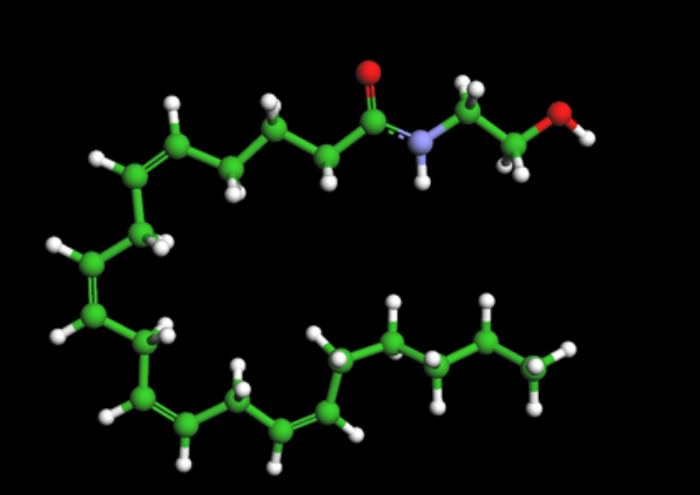
Researchers who specialize in the study of addiction note that chocolate contains several substances that affect a person’s body and mind. Among them are the precursors of anandamide, which is a molecule with an action in the brain that is analogous to that of the narcotic that can be found in cannabis. The coffee stimulants include caffeine, tyramine, and phenylethylamine, among others.
The euphoria you experience from eating chocolate may be due to the increased levels of anandamide in your brain. On the other hand, the physiologically active components of the chocolate may work together to produce this effect. There has been no investigation into whether or not this is the case. It is still unknown whether these substances found in chocolate are indeed sufficient to cause a biological impact.
Nevertheless, it is undeniable that the cravings that are reminiscent of chocolate addiction are real, even if the exact mechanism of action is unknown. Medical professionals and nutritionists need to take this into account when attempting to alter the eating behaviors of their patients, especially those who are overweight.